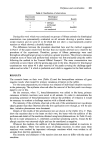
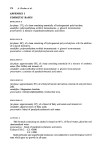
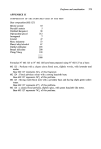
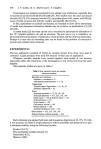
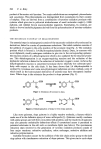
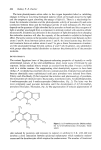
J. Soc. Cosmet. Chem. 28 407-412 (1977)¸ 1977 Society of Cosmetic Chemists of Great Britain Skin bleaching preparations S. S. BLEEHEN Sub-Department of Dermatology, Hallamshire Hospital, University of Sheffield, Sheffield SlO 2JF Presented at the Joint Symposium with the Pharmaceutical Society of Great Britain "Cosmetic and Pharmacological Aspects of Colour" 9-11 November 1976, at Stratford upon Avon. Synopsis A brief review is given of the search for an effective and safe depigmenting compound and the screening of topically applied chemicals. The possible modes of action of these compounds in producing cutaneous depigmentation are discussed. The results of treatment using several skin bleaching preparations including a new formulation of hydroquinone and 4-isopropylcatechol cream in the therapy of various hyper- melanotic disorders in man are stated. INTRODUCTION Hyperpigmentation of the skin in man can be the cause of much mental distress and hypermelanotic areas, particularly on the face, can result in a marked cosmetic disability. For a long time, there has been a search for a reliable effective and safe depigmenting compound that when topically applied will bleach away the excess pigment. The com- pounds that are currently used in the commercially available skin bleaching creams (Table/) are variable in their depigmenting effect and frequently irritate the skin, parti- cularly when used in high concentrations. These compounds are occasionally sensitisers and can produce an allergic contact dermatitis. However, in spite of these drawbacks, skin bleaching creams have a considerable world wide sale and vast amounts are pur- chased, particularly in the United States, Africa and in Asia, mostly over the counter without a doctor's prescription. Table I. Compounds used in skin bleaching preparations Hydroquinone Monobenzyl ether of hydroquinone Monomethyl ether of hydroquinone Ammoniated mercury Ascorbic acid Peroxides This paper gives the historical background of the search for an effective depigmenting compound and describes the screening of potent chemicals and their modes of action in producing depigmentation, particularly their melanocytotoxic effect. The clinical 4O7

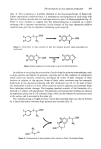
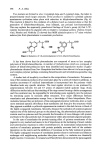
408 S. S. Bleehen experiences of the author are given in using various skin bleaching creams in the treat- ment of various disorders of pigmentation in man. HISTORICAL BACKGROUND--THE SEARCH FOR AN EFFECTIVE DEPIGMENTING PREPARATION In 1936 Octtel (1) noted that when hydroquinone was fed to black haired cats, their coats turned grey after about 6-8 weeks. Subsequently, in 1940, Oliver, Schwartz and Warren (2) reported a number of cases of depigmentation of the skin occurring among Negro workers in a tannery. This occupational leucoderma was due to an antioxidant, the monobenzyl ether of hydroquinone, which was present in the rubber gloves which these workers wore. The compound was later used in varying concentrations in creams for the treatment of melanin hyperpigmentation (3). It soon was apparent that it was variable in its depigmenting effect and frequently irritated the skin (4). Even more alarming were the frequent reports of confetti-like areas of &pigmentation occurring in the treated areas of skin as well as vitiligo-like areas occurring at distant sites which often spread, even after therapy was discontinued. These therapeutic cosmetic disa.sters are still common and in recent years, there has been an epidemic of monobenzone leuco- melanoderma in South Africa affecting perhaps over a thousand cases (5, 6). In addition to the known depigmenting agents--hydroquinone and the monobenzyl ether of hydro- quinone, the monomethyl ether of hydroquinone (7) and the monoethyl ether of hydro- quinone (8) were found by Brun to be effective depigmenting agents when applied to the pigmented nipples of guinea-pigs. Studies by Chavin and Schlesinger (9, 10) showed a number of groups of chemical compounds, when injected into black goldfish, had a selective destructive effect on the pigment cells. These workers found several mercaptoamines were potent depigmenting compounds. Two of these, 2-mercaptoethylamine hydrochloride (MEA) and N(2- mercaptoethyl)-dimethylamine hydrochloride (MEDA) were potent depigmenting agents when applied to the skin of black guinea-pigs (11). Both MEA and MEDA, however, are very malodorous and therefore could not be used clinically in man. Other compounds discovered by Chavin and Schlesinger to produce &pigmentation in black goldfish were later tested on black guinea-pigs and of these, 4-isopropylcatechol (4-IPC) was found to be the most potent (12). This compound was more effective than known depigmenting compounds, e.g. hydroquinone and the monobenzyl and monomethyl ethers of hydro- quinone. Outbreaks of occupational leucoderma have been reported in Russia by Chumakov, Babanov and Stairnov (13), in Japan by Okumuru and Shirai (14), in Holland by Malten et al. (15), in the United States by Kahn (16) and in the UK by Calnan and Cooke (17) among workers in contact with p-tertiary butyl phenol and with p-tertiary butyl catechol (18). However, these substituted phenols cannot be used in the treatment of hyper- melanosis in man since, like the monobenzyl ether of hydroquinone, they frequently produce a permanent leucoderma which extends from sites of application to distant areas and also because they often irritate the skin and produce sensitisation. 4-isopropyl- catechol has been used in the treatment of hypermelanosis in man (19) but though it is a potent depigmenting agent, it is irritant to the skin and should be used with caution. Recently, Kligman and Willis (20) have described a new formula for depigmenting human skin using 0'1•o tretinoin, 5•o hydroquinone and 0'1•o dexamethasone as a lotion or cream. These workers found it to be effective in the depigmenting of normal
Purchased for the exclusive use of nofirst nolast (unknown)
From: SCC Media Library & Resource Center (library.scconline.org)