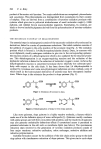
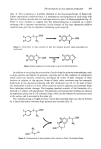
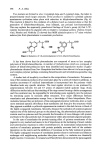
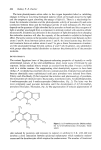
oe)•hancement of pigmentation 405 melanocytes increases as a result of proliferation and/or activation of melanocytes and increased arborization of melanocyte dendrites is usually also observed. The number of functional melanocytes increases within days and may remain raised for up to 60 days. There also appears to be an increase in the synthesis of melanosomes associated with a more rapid 'turnover' of epidermal keratinocytes, i.e. more epidermal cells containing more pigment than normal. Wt:ether this increase in pigmentation is due solely to direct stimulation of melanogenesis or 'sub-clinical' inflammation also---post-inflammatory hyperpigmentation--is not clear. The latter mechanism is not likely to be operative after topical application of a psoralen since generally speaking this mode of administration provides a more potent photosensitizing stimulus. METABOLISM Pure psoralens have been in use for almost 30 years but until recently very little was known of their metabolism after oral ingestion. Trisoralen, Methoxsalen and Psoralen are rapidly metabolized in the liver and excreted in several forms. Trisoralen is hydro- genated at the 4', 5' positions and excreted either as a carboxylated or aldehyde derivative of dihydrotrisoralen hydroxylation at the 3 position may occur leading to excretion of a glucuronide derivative. The metabolism of Psoralen involves glucuronidation, hydroxy- lation in the 3 position of the lactone ring and conversion to furocoumaric acid. In both •nan and animaAs, plasma levels are maximum between two and three hours and photo- sensitivity greatest 2 to 4 h after an oral dose, whilst 90• is excreted within 8-12 h. CLINICAL EFFECTS The increased pigmentation that follows topical or oral psoralens and graded UVR exposure has been studied by many groups. Arnold (6) showed that patients who nor- mally fail to tan and burn easily develop pigmentation within 2 to 6 months cf commen- cing 10 mgs Methoxsalen daily. 20 mgs Methoxsalen daily produces overt pigmentation of the skin within days of commencing treatment (7). Vitiligo patients receiving oral Trisoralen therapy always notice increasing pigmentation of the normal skin (8). Tri- soralen has a much greater pigment-inducing tendency than Methoxsalen and this is a major reason for preferring Methoxsalen for the treatment of psoriasis with long wave ultra-violet radiation (U.V.R. or P.U.V.A.) therapy. Imbrie et al. (8) have shown that the increased pigmentation and thickening of the stratum corneum produced by psoralens and U.V.R. act as protection against potential sunburn and possibly against skin cancer (10) though the latter, despite being theoretically likely, remains unproven. There is no doubt that psoralens and graded U.V.R. can lead to repigmentation of vitiliginous skin. The combination of 10 rags Trisoralen daily followed by exposure to long-wave U.V.R.' ('blacklight', U.V.A.) is probably the most potent repigmenting regime but in white and light-skinned individuals deepening pigmentation of normal skin very early in the course of treatment suggests that Methoxsalen is a better choice in all but negroid subjects. The follow-up studies of Kenney (11) have shown that much of the pigment regained during treatment had not receded 8-14 years later. In the decade 1950-60 psoralens were used in great quantities and largely from a failure to standardize both the psoralen used (particularly topical preparations) and the duration of U.V.R. exposure, burning was unfortunately common. The fact that psora- lens were widely thought of as 'suntan pills' also tended to encourage their misuse.

406 Rodney P. R. Dawber 'Non-specific' side effects such as nausea, vomiting, insommia, nervousness, fatigue and drowsiness have been reported from psoralens. However, a double-blind trial by Fitz- patrick (recorded by E1 Mofty, 1) found a slightly higher incidence of such complaints in the placebo-treated group! E1 Mofty (1) reported no untoward side effects in patients receiving up to 50 mgs Methoxsalen daily whilst Tucker (12) gave'70 mgs Methoxsalen daily to two patients with no clinical or laboratory evidence of toxicity. Elliott (13) described abnormal cephalic-cholesterol levels in three out of 27 patients receiving Methoxsalen. Since that report virtually all the clinical studies in the literature have outlined results of regular liver and renal function tests and full blood counts, none having proved abnormal whatever the psoralen used. Cloud et al. (14) induced cataract formation in mice following intra-peritoneal administration of Methoxsalen in doses 100 times higher than the normal therapeutic range. Cataracts have not been reported in humans but it still remains normal practice to recommend the wearing of protective goggles or sun glasses during treatment. Caucasian skin has a greater tendency to develop pre-neoplastic keratosis and epi- theliomata after many years of sun exposure, as exemplified by the high incidence of such changes in Europeans long resident in Africa or Australia. The theoretical fear that psoralens might accelerate the appearance of epitheliomatous skin changes has for- tunately not been realized in practice. Contra-indications to psoralens are few but it seems reasonable to exclude pregnant women, patients with diseases known to be associated with photosensitivity, e.g. pro- phyria and lupus erythematosus, and those with known heptaic or renal impairment. REFERENCES 1 El Mofty, A.M. In Vitiligo and Psoralens. 1st Edition, p. 107, Pergamon Press, Oxford. 2 Pathak, M. A., Daniels, F., Hopkins, C. E. and Fitzpatrick, T. B. Ultraviolet carcinogenesis in albino & pigmented mice receiving furocoumarins: psoralen and 8-methoxypsoralen. Nature 183 728 (1959). 3 Pathak, M. A., Fellman, J. H. and Kaufman, K. D. The effect of structural alteration on the ery- thema activity of furocoumarins: psoralens. J. Invest. Derrn. 35 165-183 (1960). 4 Oginky, E. L., Green, G. S., Griffiths, D. G. and Fowlks, W. L. Lethal photosensifization of bacteria with 8-MOP to longwave U.V.R.J. Bact. 78 821 (1959). 5 Fahmy, I. R. and Abu-Shady, H. A. A. Ammini majus Linn: Pharmacognostical study and isolation of crystalline constituent, ammoidin. Quart. J. Pharrn. Pharmacol. 20 281-291 (1947). 6 Arnold, H. L. Jr. Effect of methoxsalen on inability to tan. J. Invest. Derrn. 32 341-342 (1959). 7 Hoekenga, M. A. Experiences with methoxsalen in the American Tropics. J. Invest. Derre. 32 351- 353 (1959). 8 Hopkins, C. E. Psoralen prophylaxis against skin cancer: process of field trials. J. Invest. Derre. 32 383-386 (1959). 9 Imbrie, J. D., Bergeron, L. and Fitzpatrick, T. B. Follow-up study effect of oral methoxsalen (8- methoxypsoralen) on sunburn & suntan. Arch. Derrn. 82 617-620 (1960). 11 Kenney, J. A. Jr. Vitiligo treated by psoralens. Arch. Derrn. 103 475-480 (1971). 12 Tucker, H. A. Clinical and laboratory tolerance studies in volunteers given oral methoxsalen. J. Invest. Derre. 32 277-80 (1959). 13 Elliot, J. A. Jr. Clinical experience with methoxsalen in the treatment of vitiligo. J. Invest. Dertn. 32 311-313 (1959). 14 Cloud, T. M., Hakim, R. and Griffin, A.G. Fertile sensitization of the eye with methoxsalen. Part 2: Chronic effects. Arch. Ophthal. 66 689 (1961).
Purchased for the exclusive use of nofirst nolast (unknown)
From: SCC Media Library & Resource Center (library.scconline.org)