358 M. F. Brulos et al. A test suitable for use with most cosmetic substances must meet the criteria out- lined below. Elimination of risks of parasitic irritation. Detection of weak sensitisers. Protocol design to suit finished products, i.e. sufficiently sensitive to function without increasing the concentration of the test product - topical rather than intradermal appli- cation of the test substance. Intradermally injected substances are sometimes absorbed with difficulty, particularly in the case of such cosmetic products as talcum powder and pigmented cosmetics, and may give false positive results since the dermal-epithelial barrier is bypassed. Evaluation of reaction site by a simple but stringent test using only clearly positive macroscopic readings backed up by histological examinations. Interpretation of response so that an 'all or nothing' result is obtained. A bibliographic study of those factors influencing the induction of release of a hyper- sensitive reaction, coupled with a number of preliminary trials (2) has led to the develop- ment of a technique which meets the above criteria. PRINCIPLE Sensitisation in the guinea-pig is induced by intradermal injections of Freund's adjuvant and by topical applications of the test substance under occlusive dressings. After a rest period of 12 days a single challenge application of the test substance, again under an occlusive dressing, provokes the appearance of a sensitisation reaction. The use of occlusive patches to increase the hydratation of the skin and permeability of the stratum corneum (10) plus the administration of Freund's complete adjuvant to maximize the immunological response gives the technique sufficient sensitivity to detect even weak allergens. EXPERIMENTAL PROCEDURE Animals Albino Hartley guinea-pigs of both sexes are used. They weigh between 300 and 400 g. ACCOMMODATION AND DIET Two weeks before the start of the study, and for the 40 days duration of the study the animals are kept in an air conditioned animal house in cages of five measuring 600 x 540 x 315 mm. The cages have grilled bases to eliminate soiling with faeces, litter, etc. Each animal is fed 50 g of granules per day (granules Cobaye U.A.R. N ø 114). This diet is supplemented with carrots. Water is freely available. SCREENING FOR PRIMARY IRRITATION Before commencing the sensitisation study it is essential to check that the test substance does not cause primary irritation (application of test substance for 48 h under occlusive patch using six guinea-pigs). All substances producing primary irritation are eliminated unless destined to be used in a diluted form. For these latter cases the minimum dilution which does not cause

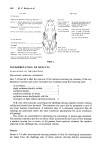
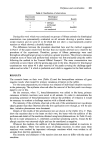
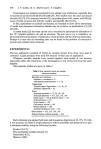
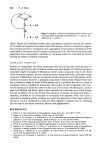
Evaluation of sensitisation potential 359 irritation is determined and used for the challenge application. Induction is always performed using the undiluted test substance. METHOD The usual physico-chemical and bacteriological tests are first conducted on the test substances. * The completion of the trial takes 6 weeks and uses twenty animals. ELIMINATION OF ANIMALS SHOWING INDIVIDUAL IRRITATION REACTIONS On day 0, 0.5 g or 0.5 ml of the test substance (or the dilution to be used for the challenge application) is applied to the back of the animal immediately behind the left scapulum. The test substance rests in place beneath an occlusive patch for 48 h. Animals are eliminated if any anomalies are revealed at the site after reading at 1, 7, 24 and 48 h following the removal of the patch. INDUCTION Induction consists of two intradermic injections of Freund's complete adjuvant• and ten applications of the test substance under occlusive patches. The first day of each week the animals are clipped in a region of the back just behind the right scapulum. On days 0 and 9 the guinea-pigs receive an intradermal injection of 0.1 ml of Freund's complete adjuvant diluted to 50•o in sterile isotonic saline solution. The two injection sites should be as close together as possible at the centre of the clipped area. On days 0, 2 and 4 (first week), days 7, 9 and 11 (second week), days 14, 16 and 18 (third week) and day 21, 0.5 g or 0.5 ml of the test substance is applied to the clipped test site of each animal. The test substance is covered by an impermeable occlusive patch 22 mm in diameter. This is held in place by a microporous adhesive border 10 mm wide (Neodermotest). The entire patch is covered between treatment times by an elastic sleeve. The tenth patch is removed on day 23. SUSPENSION OF TREATMENT Treatment is stopped between days 23 and 35, i.e. for a total of 12 days. CHALLENGE APPLICATION On day 35 an area of the abdomen immediately above the left groin is clipped free of fur. At this site 0.5 g or 0.5 ml of test substance (or the chosen dilution) is applied under an occlusive patch for 48 h using the same system as already mentioned A schematic summary of the procedure of the trial is given in Figure 1. * In particular the peroxide value must be determined for fats and essential oils to ensure freshness. t Biom•rieux.
Purchased for the exclusive use of nofirst nolast (unknown)
From: SCC Media Library & Resource Center (library.scconline.org)