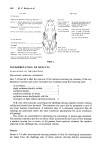
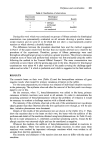
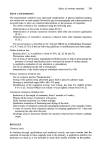
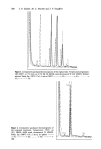
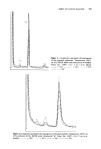
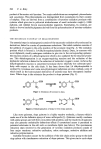
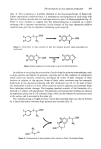
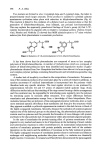
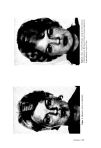
410 S. S. Bleehen CLINICAL EXPERIENCE OF VARIOUS SKIN BLEACHING PREPARATIONS Hydroquinone It is curious that the depigmenting effect of hydroquinone on the skin of man was dis- covered by chance. The manufacturers of a sunscreen containing this compound found that their preparation was mainly being bought for its effect as a skin bleaching cream (26). Though many workers Spencer (27) and Fitzpatrick et al. (28) have found prepara- tions containing 25/o to 5•o hydroquinone to be effective in producing cutaneous de- pigmentation, our own experience has been most disappointing. Higher concentrations of hydroquinone, while they are more potent, frequently irritate the skin and if used for a protracted period, can induce an exogenous ochronosis and produce pigmented colloid milium as shown by Findlay et al. (5). A suggested formula using 5•o hydroquinone, 0'1•o retinoic acid and 0'1•o dexa- methasone (20) does seem to be promising and is effective in producing depigmentation of human skin. Over the past year, a similar formulation of hydroquinone has been used but instead of dexamethasone, 1 •o hydrocortisone has been substituted. The formulation used in Sheffield is as follows :- Hydroquinone Hydrocortisone B.P. Retinoic Acid Butylated hydroxytoluene Methylated spirit 74 o.p. } Polyethylene glycol 300 •o w/v 5'00 1.00 0.10 0.05 q.s..100 ml 47.00 This preparation has been found to be effective in the treatment of various hypermelanotic conditions. A total of sixteen patients have been treated (Table II), thirteen of these being female and three male. Most of the female patients had melasma (chloasma) and this was mainly due to taking the contraceptive pill (Fig. 1). Two of the male patients had melasma, the other had post-inflammatory hyperpigmentation. The preparation was applied once or twice daily to the hypermelanotic areas and of the twelve patients with melasma, ten were significantly improved (Fig. 1), (Fig. 2). Two of these patients did not show much change even after 3 months of therapy. One patient with post-inflammatory hyper- pigmentation following lichen planus failed to respond and thought that she was made worse. Most of the patients have complained of skin irritation, especially during the early weeks of therapy. In some, erythema and scaling of the treated areas of skin were apparent. A skin bleaching effect was noted within 1 month in a third of the patients but the majority took much longer to respond to treatment and in one case, satisfactory depigmentation occurred only after 3 months of therapy. Table 1I. Disorders of pigmentation treated with new formulation of hydroquinone No. of patients Disorder treated No. improved Melasma 12 10 Post-inflammatory hyperpigmentation 2 1 Vitiligo 2 0

Facing p. 410
Purchased for the exclusive use of nofirst nolast (unknown)
From: SCC Media Library & Resource Center (library.scconline.org)