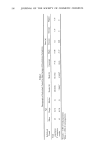
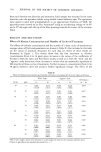
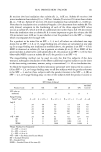
j. Soc. Cosmet. Chem., 33,225-228 (August 1982) Infrequent and transient nature of colonization of Pseudomonas aeruinosa on normal human skin RAZA ALY and HOWARD I. MAIBACH, Department of Dermatology, University of California, San Francisco, CA 94143, JOSEPH M. MADDEN, Division of Microbiology, Food and Drug Administration, lVashington, D.C. 20204. Received February 1, 1982. Synopsis Pseudomonas aeruginosa was isolated intermittently from naturally occluded and moist skin of only 6% of 166 individuals. This finding suggests that P. aeruginosa is a transient resident of human skin. INTRODUCTION Microbial contamination of products that come into contact with the skin and mucous membranes is a major concern of regulatory agencies and the cosmetic industry. Fresh unopened cosmetics seldom yield evidence of bacterial contamination however, with use, they may become contaminated with a variety of microbes (1,2). Seven Pseudomon- as-induced corneal ulcers were associated with the use of four brands of mascaras contaminated with P. aeruginosa (1). It was not known whether the source of the bacteria was the surrounding environment or human skin. The objective of our study was to ascertain the prevalence of P. aeruginosa on the skin of normal healthy adult volunteers. METHODOLOGY Over a 6-month period, various skin sites of 166 individuals (58 males, 108 females) were examined for the presence of P. aeruginosa (Table I). Four body sites (axilla, groin, finger web, and toe web) were sampled at least four times. In addition to the non-hospital population (156 subjects), nurses working in a burn unit or in pediatrics were included to determine the incidence of P. aeruginosa also around the eye. A sample of the microbial flora was removed with a sterile cotton swab dipped in 0.075 M sodium phosphate buffered saline (PBS), pH 7.9, to which 0.1% Triton X-100 was added. A sterile swab dipped in sterile distilled water was used for sampling bacteria around the eyelids. Areas measuring 2x 2 cm of the axilla and groin were 225

226 JOURNAL OF THE SOCIETY OF COSMETIC CHEMISTS oo
Purchased for the exclusive use of nofirst nolast (unknown)
From: SCC Media Library & Resource Center (library.scconline.org)