j. Soc. Cosmet. Chem., 33,259-262 (August 1982) Sun protection factor (SPF): a range-finding technique LYNNE B. HARRISON, Ph.D.,, ALICE V. HEALY, R.N., and NICHOLAS BORYS, B.A. Harrison Research Laboratories, Inc., 1814 Springfield Avenue, Maplewood, NJ 07040. Received May 6, 1982. Synopsis A range-finding Sun Protection Factor (SPF) testing technique has been developed. Using a 25 x 2 cm template instead of the conventional 5 x 10 cm, seven subsites can be irradiated. The technique permits the determination of the SPF value through three expected SPF targets. The theoretical, expected SPF value can thus be bracketed and a determination made of the true SPF value of the formulation. In a blind test of five labelled sunscreens the validity of the technique was demonstrated. Five subjects may be used to determine the expected SPF testing can continue in the conventional manner. INTRODUCTION Cosmetic chemists occasionally formulate a product with a relatively unpredictable Sun Protection Factor (SPF) value. A given formulation may reach a full value higher or lower than its theoretical target. The causes of such alteration of the SPF value include the opacity or physical blocking characteristics of other ingredients, effects of the base (e.g., mineral oil), etc. This paper presents an efficient, cost-effective method to perform a range-finding SPF assay to test for three succeeding SPF values. RATIONALE The FDA Proposed Monograph for OTC Sunscreen Drug Products (1) calls for a 50 cm 2 area to be spread with 100 mg or 100 pl (assuming a specific gravity of 1) to obtain a standard 2 mg/cm 2 test application. The suggested template for such a 50 cm 2 is a 5 x 10 cm template. Under "normal" testing circumstances, such a template is efficient. The Monograph (1) calls for at least three test subsite areas that are at least 1 cm 2 to be irradiated at 25% increment/decrement time intervals. It is customary to use five subsite areas of irradiation, with the subject's unprotected Minimal Erythema Dose (MED) multiplied by the expected SPF at the middle subsite, subsite//2 to be irradiated with 25% less (simulated) sunlight, and subsite//1 to be irradiated with 25% less than subsite //2. Similarly, subsite//4 is irradiated with 25% more (simulated) sunlight than subsite//3, and subsite//5 with 25% more than subsite//4. The subject's '*'protected" MED divided by his/her unprotected MED equals the SPF value. It is usual to have the template 259

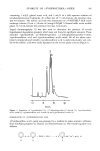
260 JOURNAL OF THE SOCIETY OF COSMETIC CHEMISTS openings for the subsite measure at least 1• cm x 1• cm for ease in centering the 1 cm diameter beam of the solar simulator (see Light Source, below). Thus, no more than six subsites can readily be used with the "standard" model template. The range-finding technique permits the irradiation of seven sites, with a range through three expected SPF values. MATERIALS AND METHODS TEST MATERIALS Five sunscreen products, ranging in SPF values from 2 to 15, were tested together with 8% homosalate (HMS) (SPF = 4), which was used as the control. The sunscreen products were transferred to coded laboratory bottles and tested blind. 100/xl of each product was drawn up into a 100/xl syringe (Model MB, Drummond Scientific), and spread evenly with a finger cot in the 50 cm 2 template area, which was previously outlined on the subject's skin with gentian violet surgical marker. LIGHT SOURCE The Solar Ultraviolet Simulator Model 10S (Solar Light Company, Philadelphia, PA) (2) consisting of a 150 watt xenon arc lamp, all required optical elements, and a regulated power supply was used. SUBJECTS The subjects were five healthy volunteers of Skin Types I (always burn easily never tan) II (always burn easily tan minimally) and III (burn moderately tan gradually). All subjects gave informed consent and had no medical condition preventing their participation. All test products were used on all subjects. The placement of products was random on each subject, using a programmed-calculator-generated table of random numbers. Template anatomical placement sites were designated one through six from left to right, top to bottom, of the subject's back. RANGE-FINDING METHOD The Monograph (1) requirement of a 50 cm 2 test area is satisfied by using a 25 x 2 cm template. In a range-finding assay testing for an SPF -- 4, 6, or 8, irradiation times are calculated as follows: Let X = subject's unprotected MED. The seven subsites receive the following irradiation times: #1 = 3.0X #2 = 4.0X #3 = 5.0X //4 = 6.0X #5 = 7.5X if6 = 8.0X #7 = 10.OX. RATIONALE The second, fourth, and sixth subsites receive "expected" SPF values of 4, 6, and 8, respectively, i.e., subsite #2 is irradiated for 4.0X sec, subsite #4 is irradiated for 6.0X sec, and subsite #8 is irradiated for 8.0X sec. As per Monograph (1) requirement, subsite
Purchased for the exclusive use of nofirst nolast (unknown)
From: SCC Media Library & Resource Center (library.scconline.org)