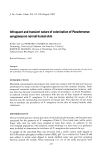
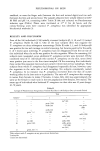
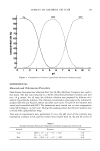
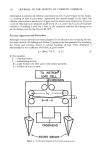
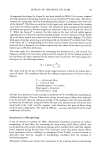
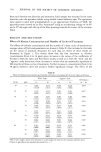
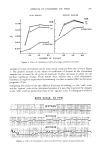
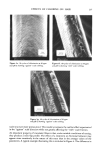
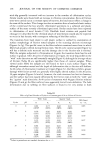
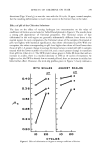
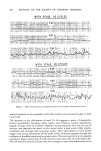
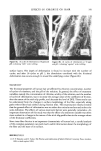
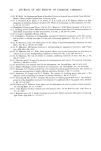
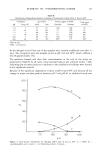
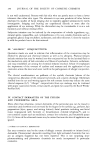
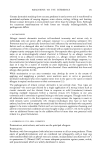
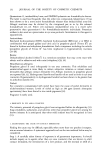
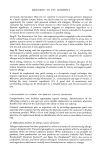
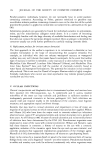
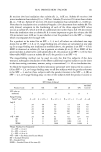
EFFECTS OF CHLORINE ON HAIR 239 directions (Figs. 5f and g), as was the case with the 20 cycle, 50 ppm, treated samples, but the resulting deformation is much more severe in the former than in the latter. Effect of pH of the Chlorine Solutions The data on the effect of varying hydrogen ion concentration on the value of coefficient of friction are included in Table III and plotted in Figure 6. The results show a strong pH dependence of frictional properties. The frictional values of hair chlorinated in the acid region are generally substantially different from those in the neutral region. In every comparison, the frictional values of the samples chlorinated at pH 2 are higher, with statistical significance, than those chlorinated at pH 8. With one exception, the values corresponding to pH 4 are higher than those of 8 and lower than those of pH 2. A greater change in average frictional values is noted with pH in samples treated with the lower number of cycles (10), and a much greater change in transition from pH 8 to 4 than 4 to 2. The DFE (static) values given in Table III show that with an increase in acidity, there is a marked decrease in DFE at 10 cycles of treatment. At higher cycles, the DFE is already low at neutral pH and, thus, an increase in acidity has little further effect. However, the stick-slip profiles given in Figure 7 clearly indicate a WITH SCALES AGAINST SCALES pH 0.40 0.32 0.28 0.24 - 2 0.'0 I pH I I I I IO 2o IO 2o CYCLES Figure 6. Effect of chlorination at 50 ppm on average coefficient of friction.

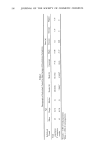
240 JOURNAL OF THE SOCIETY OF COSMETIC CHEMISTS WITH SCALE, 10 CYCLES .... ' ':[ - : l! l/','[li',ill II[-[l' '!l['•i'='" - . , li•11•::l:i: ll:: , •. ..... ,r.i 'l•l : : 'l•l ,•_.-:.+__.? 'n'titLTlll-l.•'ri'ifiTi-•ll i.:•.' '.'rrlIT-!•.'i'i'iTYiT: i'r•T• IT, :I .K.: :l::,, i, I:: ]'lllll'!l•11:F•l •Lk[lil!llllllli'iLll [:" Ill ]l'.i! !.'ill,.l,l{!i:l!',:ßß"'.....'.-,-.---.iß:::.:::....:.,,:"-:,':.,,l,":I.-i-•l.!"-:..•l-:.•,,,.
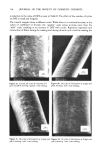
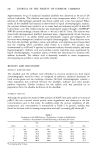
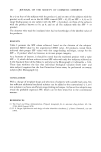
I-rri'i'.r'-'F.'-I-I--TT•'"I:,,:l•'.,,l't•ll:: 'liT] TF 'ill !•.1:1'1111 i]iTriTiI'F , ,:..•:-:-rr r:"r,• l,,.l,i,.lil •':•ll.l,, , . tl Iii I il:' :. , : IllI. I. I[ i-I I:1:,/ 'l'tU-[I,•i , ,. . p.. L. I- ß [ •.::..-• - :.r-i hT, [:.:.: :.l I: i 1 '.1 •1 I :" L' :•i II!1•':•"•'.' I•. : ."•--': ':' I'-[I ,,--I .... , .,:-:•..-! .:.:-- • pH --•" .... rl:'" •"l• :' , :1,,!, I: t•: I ,.i] i I, :l: :., i,,I !, !:,1 :., :.l., '-:-'.. • :-I-..-.: •1 -"' ......•: :.. i il :' I '11 •!I.: .,l:, ..... ,:l.,. ,,,.,: ,,,,.,...: :, •:,l•:!...,: ..• :::•l.i:::l:: •,H lllll:::i!',!11!!i:11. l.i'-: ": ": HI'Ill/I/, i l ,.i, I]: i i i I :IJ_L• • i: I, I •" L4•, ILL': i-• 1.1• -.•- • -•-•- l•- - I"-' • ? 1, I ' ', : i I.' '---" ::' , :,.i,I i [ i I--I.-- -,- • I i..[. t-%-I-1-1 -•,i4.-',--•--•- .ll• • llil• •'ll•l, ,'--l--•l'•l, ,l'•'•--: :: ',l'. : ! I .-.'.1 ' •::' ': _[.l_!.•:m•., •,,,,, :,, :, :1•! :-•.::I'•-I-I'•.':'."-.•,:'i:!1[,..,::'lti,...i_LLir,i,,.-.':LI_:::.:,-,..:_l.l.11-H-ilrf.:' i!11:11 !•il l!l l .... -_... "- • ---•. ,--, .-• l , :.•'•r"' ",-,, r,. -:,... '• [ , , i l •:' "l,': i I i '••. :]t !". L [. I-i-l-p•-i-•' ] I r' ': I-:' i '., ,,"-.-, ..' L.-,: .'•-F. Ilt. LI.I.I.LI._LI •-•-:-I-•-• • ' :.-i ' !-:.3 I :11,!,l,i'!11,:i':ll ,ill':ll!i!li •PH! ii:. i :,1 I '! ":, I"1 I:• I •.] I: i I I ..... i, ",,•: I ' , '•. ,• LI,:,I: I I,, , . I, ,.: ß _.,•. ..... •. -•4-, ..... t' ..... I I I !l[I.l,:l, LIll: ]'I-:.TI'[ I: I-, rl-r',-IT!-! i TFI'i-,FT. • ß •iõure 7. Effect of chlo•i.•tio. •t }0 pp• o. [.st•o- © oeo•c½ pattcr• du•]• oe•iction teStS. marked alteration in the properties of the fiber surface with increased acidity at both cycle levels. The literature on the chlorination of wool (12-20) suggests a variety of degradative reaction possibilities, including cystine rupture and oxidation, tyrosine degradation, peptide cleavage, and loss of protein substance during treatment. As a rule, the rate of reaction, and especially the attack on the cystine bond, is least under mildly alkaline conditions and increases with increasing acidity. These observations in wool keratin suggest that during chlorination of hair under acidic conditions, peptide cleavage and oxidation of disulfide bonds may have taken place. The scanning electron micrographs included in Figure 8 show that all scale character is lost after only 10 cycles (Figure 8a). The low forces involved in friction tests were enough to cause bulk deformation of the
Purchased for the exclusive use of nofirst nolast (unknown)
From: SCC Media Library & Resource Center (library.scconline.org)