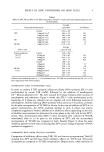
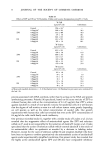
j. Soc. Cosmet. Chem., 34, 13-19 (January/February 1983) A new occlusive patch test system with a plastic chamber R. A. QUISNO AND R. L. DOYLE, Hill Top Research, Inc. Miamiville OH 45147. Received November 30, 1981. Synopsis A new patch test system, based on an inert flexible plastic chamber,* is described and its occlusive properties are demonstrated. The system (designated HTC) is fabricated from the chamber, containing a cotton insert, and a semipermeable tape. The occlusivity of the HTC has been demonstrated following 24-hour and 48-hour applications to the skin of human panelists who showered, swam, or undertook mild or moderate exercise. Essentially no change in weight of the HTC occurred. The system was well tolerated by the panelists. INTRODUCTION The human patch test technique has been in use for many years as a tool for predicting the sensitization and/or primary irritation potential of materials which come into contact with human skin (1-5). Most of the testing has been accomplished using a variety of adhesive tapes (cloth, plastic, or paper) to hold an absorbent material (gauze, nonwoven cotton, or filter paper) containing the test material against the skin. Experimentation with devices to render the system more occlusive in order to achieve better derreal absorption, more uniform skin exposure, and better reproducibility and to prevent interaction between the test material and the adhesive material began as early as Rattner's work in 1938 (6) and has continued sporadically until the present (7-12). The devices have generally been referred to as "chambers." Materials used in fabrication of these chambers have included glass, celluloid, various plastics, and aluminum. The purpose of this paper is to describe a system (designated HTC) based on a flexible plastic chamber, which in combination with certain adhesive tapes has excellent occlusive properties. BACKGROUND ON PATCH TEST SYSTEMS Some patch test systems which have been used commonly include (a) the Duke Elastopatch ©, which is an elastic cloth tape with a Webril © swatch in its center (b) the *The HILL TOP CHAMBER ©, patent pending. 13

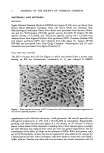
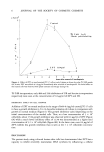
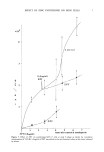
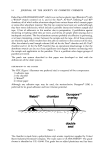
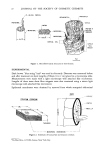
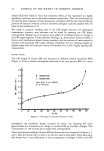
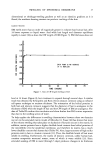
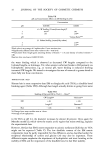
14 JOURNAL OF THE SOCIETY OF COSMETIC CHEMISTS Parke-Davis READI-BANDAGE ©, which is an occlusive plastic tape (Blenderin ©) with a Webril © swatch centered on it and (c) the Finn ©, AI-Test ©, Duhring, © and KI © chambers, all of which utilize aluminum shaped into various forms which contain paper or some other absorbent material. The first two systems have been very useful although they have some deficiencies, which include 1) possible interaction between sample and tape, 2) loss of adherence in hot weather due to perspiration, 3) prohibition against showering or bathing while they are worn, and 4) loss of sample while wearing due to inadequate occlusion. The four aluminum systems probably are effective in preventing, or at least minimizing, contact between the sample and the tape. All of these systems are relatively rigid, which renders them less able to conform to the contours of the skin. Also, the relatively small sample volume (0.05 ml for the Finn © chamber and AL-Test © chamber and 0.1 ml for the KI © chamber) has an operational disadvantage in that the absorbent swatch can dry out if any significant time elapses between moistening with the sample and application to the panelists. This is a problem when larger groups of panelists are tested. The patch test system described in this paper was developed to deal with the deficiencies of the older systems. DESCRIPTION OF THE SYSTEM The HTC (Figure ! illustrates one preferred size) is composed of four components: 1) adhesive tape 2) the chamber 3) Webril © 4) release paper Although any adhesive tape may be used, the semiocclusive Durapore © (3M) is preferred for its good adhesion and low irritation potential. Durapore TM Webril © chamber overlay double seal Figure 1. The chamber is made from a polyethylene-vinyl acetate copolymer supplied by United States Industrial Chemical Company. The trade name is ULTRATHENE ©. The grade chosen is identified as U.E. 634-00. This grade has no added plasticizers and has been
Purchased for the exclusive use of nofirst nolast (unknown)
From: SCC Media Library & Resource Center (library.scconline.org)