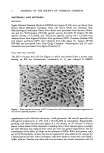
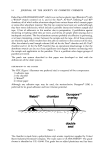
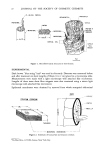
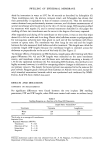
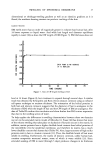
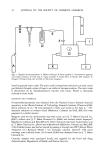
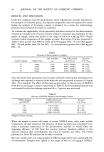
2 .JOURNAL OF THE SOCIETY OF COSMETIC CHEMISTS MATERIALS AND METHODS MATERIALS Eagles Minimal Essential Medium (EMEM) and trypsin (0.25%) were purchased from Grand Island Biological Company. Fetal calf serum (FCS) was obtained from Microbiological Associates. Plastic Petri dishes were purchased from Becton, Dickin- son and Co. 3H-Thymidine (3H-TdR, specific activity 2Ci/mM), 3H-Uridine (3H-UR, specific activity 2-5 Ci/mM), and 3H-Leucine (specific activity 0.5-1 Ci/mM) were obtained from New England Nuclear. Zinc pyrithione (ZPT), Omadine disulfide (DS) and sodium pyrithione (SPT) were obtained from Olin Japan Inc. Irgasan DP-300 (DP-300) was purchased from Ciba Geigy Company. Amethopterin and all other chemicals were purchased from Sigma Chemical Co. CELLS AND CELL CULTURE The JTC-17 human skin cell line (Figure 1), which was derived from a human male bearing an XX sex chromosome constitution (4, 5), was cultured in EMEM Figure 1. Phase contrast microscopy of JTC-17 human skin cells. Note that morphological appearance of the cells has epithelial properties. x 300 supplemented with 10% fetal calf serum, 4 mM glutamine, 100 unit/ml penicillin and 100/•g/ml streptomycin at 37øC with a 5% CO2/95% air atmosphere. Exponentially growing cells were harvested and plated at a cell density of 105 cell/cm 2 in Falcon plastic culture dishes (35mm diameter) containing three 15mm diameter glass coverslips per dish. Medium was replaced three times per week for growth experiments. For the examination of the effect of drugs on the synthesis of DNA, RNA, and protein, 1/•Ci per ml of 3H-thymidine, uridine, and leucine respectively were added to the cultures for a desired period of time. After incubation, cells were washed 3 times with cold Hank's buffer solution. Fixation was done with two successive ten minute treatments with 5%

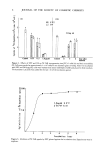
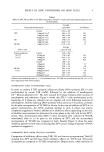
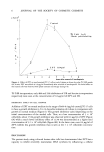
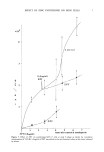
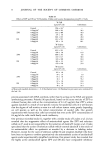
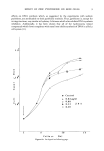
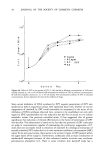
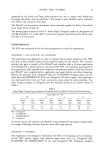
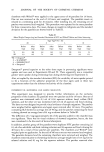
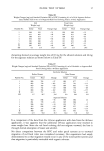
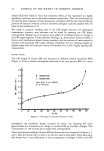
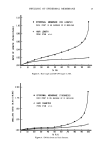
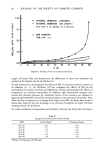
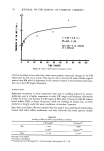
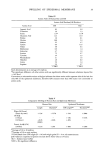
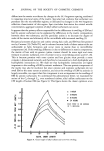
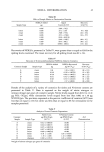
EFFECT OF ZINC PYRITHIONE ON SKIN CELLS 3 cold trichloroacetic acid (TCA), followed by successive treatments with 70%, 90% and 100% EtOH for dehydration. The TCA insoluble fraction was dissolved in 0. Sml of Soluene©-350 (Packard) and mixed with 10 ml of toluene based scintillation fluid. The radioactivity was counted in a liquid scintillation spectrometer. Cell counts were carried out using a hemocytometer after trypsinization of cells adhering to the glass coverslips. KERATINOCYTE CULTURE Primary cultures of keratinocytes were initiated from the ears of guinea pigs (Hartley strain) according to the method of Christophers (6). The ear skin was floated overnight on 0.25% trypsin in Hank's buffer solution (pH 7.2) at 4øC. The epidermis was separated from the skin, and the epidermal cells were removed by very gentle scraping with a scalpel and filtered through cotton into a tube containing the medium. At 72 hr after seeding at 105 cell/cm 2, incorporation experiments were carried out in the same manner as described above. SYNCHRONOUS CULTURE To obtain synchronized cells in S-phase, a double treatment with excess TdR and amethopterin was used according to the method of Ebina et al. (7). Briefly, JTC-17 cells were first synchronized with excess TdR (2raM) for 24 hr. After replacement with fresh medium for 10 hr, medium containing 10-6M amethopterin and 5 x 10⁻⁵M adenosine was added for 16 hr. Then the cultures were washed rapidly with Hank's solution 3 times and received fresh medium for starting DNA synthesis in early S phase. RESULTS INHIBITORY EFFECT OF ZPT ON DNA SYNTHESIS Figure 2A shows the effect of ZPT on the incorporation of 3H-TdR intoJTC-17 cells. Results indicated that ZPT added at the level of 0.25-1.0 •g/ml is effective in suppressing the DNA synthesis of the cell by approximately 20-90%. This inhibitory effect at 1.0 •g/ml was maximal after a 2 hr period (Figure 3), and was found to be diminished within 3 to 6 hr after removal of ZPT from the culture medium (Figure 2B). A similarly active antidandruff agent, DS also exhibits a similar dose dependent inhibition of DNA synthesis with a reversible effect (Figure 2). However, an active antimicrobial agent, DP-300, which has been found to have no antidandruff effect in vivo (1), shows no significant inhibition even at the level of 2.0/xg/ml, although it demonstrates reversible inhibition at high doses of 5/xg/ml and 10/xg/ml (Table I). Table I also shows that ZPT and DS but not DP-300 have a similar reversible anti-DNA synthesizing effect on keratinocytes from the guinea pig ear. Sodium pyrithione, a Zn lacking derivative of ZPT, was also highly effective in suppressing the DNA synthesis of the JTC-17 cells with a similar dose dependence (Table I). Observation of cultures with phase contrast microscopy demonstrated that there was no lethal or cytotoxic appearance occurring at least within 8 hr of our experiments.
Purchased for the exclusive use of nofirst nolast (unknown)
From: SCC Media Library & Resource Center (library.scconline.org)