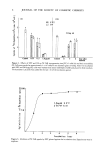
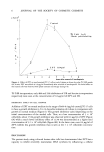
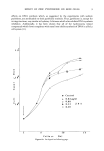
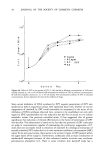
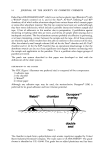
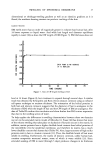
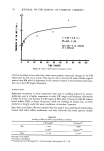
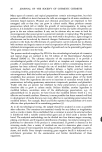
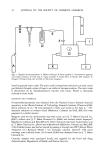
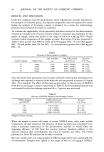
4 JOURNAL OF THE SOCIETY OF COSMETIC CHEMISTS (A) [ (B) I•] ZPT [] DS Control 0.25 0.5 1.0/tg/ml hour after removal 1.0•og ml Control 0 3 6 Figure 2. Effects of ZPT and DS on 3H-TdR incorporation into JTC-17 cells (A) and their reversibility (B). Cells were seeded at approximately 2 x 10 • cells/15 mm diameter glass coverslip. After 3 hr incubation with ZPT and DS (13tg/ml), cells were washed three times with Hank's buffer and placed in fresh medium. 3H-thymidine (! 3tCi/ml) was added for the last ! hr of the incubation period. 3100 - 050 - 1.0/tg/ml z P T J TC-17 Cell 2 3 4 5 6 Incubation hour Figure 3. Inhibition of 3H-TdR uptake by ZPT plotted against the incubation time. Experiments were in triplicate.

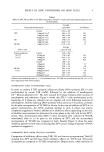
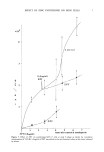
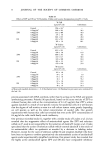
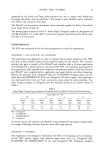
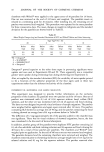
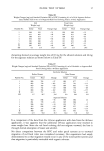
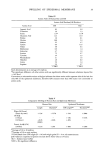
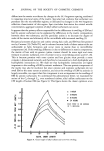
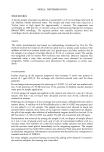
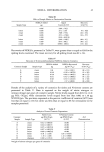
EFFECT OF ZINC PYRITHIONE ON SKIN CELLS 5 Table I Effect of ZPT, DS and SPT on 3H-TdR Incorporation intoJTC-17 Cells and Guinea Pig Keratinocytes and Its Reversibility 3H-TdR Guinea Pig Keratinocytes (cpm/dish) % Inhibition ZPT DS DP-300 JTC-17 cells Control 11854 _+ 263 a 1.0/xg/ml (3 hr b) 4963 + 174 58.1 1.0/xg/ml wash c 8423 + 168 28.9 0.5/xg/ml (7 hr) 1380 + 273 88.4 1.0/xg/ml (3 hr) 5966 _+ 30 49.7 1.0/xg/ml wash 11028 + 132 7,0 1,0/xg/ml (3 hr) 11245 + 414 5.1 3H-TdR (cpm/104 cell) Sodium pyrithione Control 1936 + 286 - (S P T) 0.25/xg/ml 1739 -+ 345 10.2 (3 hr b) 0.50/xg/ml 1073 _+ 241 44.8 1.00/xg/ml 256 + 67 86.8 Control 2306 + 234 1.00/xg/ml 2178 + 240 5.5 2.00/xg/ml 2196 + 98 4.8 DP-300 5.00/xg/ml 1814 _+ 146 21.3 (3 hr) 5.00/xg/ml wash 2353 + 716 -2.0 10.00/xg/ml 1302 _+ 354 43.5 10.00/xg/ml wash 2513 + 147 -8.9 a) Mean and standard deviation n = 9, b) Incubation hour. 3H-TdR was incubated for the last 1 hr. c) 5 hr after replacement with fresh medium. EXAMINATION USING SYNCHRONIZED CELLS In order to confirm if ZPT primarily influences cellular DNA synthesis, JTC-17 cells synchronized by excess TdR (2mM), followed by the addition of amethopterin (10 -6 M) and adenosine (10-' M), were assayed for S phase initiation after removal of amethopterin and adenosine. Figure 4 shows that JTC-17 cells synchronized at the beginning of S phase are released into an original cell cycle following removal of amethopterin, thereby inducing DNA synthesis within about an 8 hr period, as shown by the pulse incorporation of 3H-TdR for 30 min. In the case of addition of ZPT at 1.0 •tg/ml concentration, the DNA synthesis starting in early S phase was almost completely suppressed. Further, differences in inhibitory effects depending on the time of addition were examined to determine the active phase in the cell cycle for the ZPT's action. Thus, synchronized cells of JTC-17 were incubated with 1 •tCi/ml of 3H-TdR immediately after or 2.5 hr prior to the addition of ZPT, and the accumulated incorporation of 3H-TdR was compared in both. Results (Figure 5) show the same inhibitory pattern in both cases, indicating that ZPT can act during all periods of DNA synthesis to suppress it. COMPARISON WITH OTHER CELLULAR SYNTHESES Comparison of inhibitory effects using TdR, UR, and leucine incorporations (Table II) revealed that ZPT and DS have fewer inhibitory effects on 3H-UR and 3H-Leucine incorporations compared to 3H-TdR incorporation. Despite about a 90% inhibition of
Purchased for the exclusive use of nofirst nolast (unknown)
From: SCC Media Library & Resource Center (library.scconline.org)