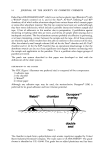
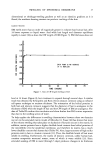
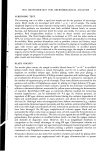
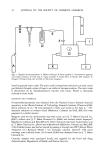
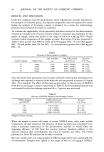
NDELA DETERMINATION 43 PROCEDURES A known weight of sample was diluted or suspended in a 50 ml centrifuge tube with 40 mL distilled, double deionized water. The sample and water were then mixed on a Vortex mixer at high speed for approximately 3 minutes. The suspension was centrift•ged at 2500 rpm for 10 minutes using an International Equipment Company (Model SBV) centrifuge. The aqueous portion was carefully removed from the centrifuge tube by decantation or transfer pipets and retained for analysis. NITRITE The nitrite determination was based on methodology introduced by Cox (8). The method involved the reduction of nitrite by iodide ion in a weakly acidic medium. One milliliter of 10% (w/v) sodium iodide and 3 mL glacial acetic acid were added to the 20 mL sample or an aliquot of sample diluted to 20 mL in a reaction vessel. The sample was outgassed until no further NO evolution was observed. Detector response was monitored using a strip chart recorder peak areas were obtained by electronic integration. Nitrite concentrations were determined by comparison to nitrite stan- dards. N-NITROSAMINE Further clean-up of the aqueous suspension was necessary if nitrite was present in excess of 1 ppm NO2-N. Ion exchange and chemical removal were used for these purposes. Ion exchange resin was prepared by slurrying in 2 N HC1. A 5 mL bed was washed with two 25 mL portions of 2 N HCI and two 25 mL portions of distilled, double dionized water prior to sample application. A 10 mL aliquot of sample was applied to the column and eluted at a rate of ! mL per minute. The first 3 mL of eluate were discarded and the next 20 mL collected and retained for analysis. Following ion exchange or if ion exchange was unnecessary, sulfanilamide was used to remove nitrite. A solution of 0.10 M sulfanilamide in 10% (v/v) HCI was prepared and 0.2 mL added to a 5 mL sample. The sample was mixed and allowed to stand two minutes before analysis. Since many of the aqueous cosmetic suspensions are alkaline, the pH of the sample after addition of sulfanilamide reagent should be checked. If the pH was above 3.5, 10% (v/v) HC1 was added. The pH was monitored with pH paper. Denitrosation was achieved by mixing the sample (5 mL) or aliquot of sample diluted to 5 mL, 13 mL of glacial acetic acid, and 3.5 mL of concentrated sulfuric acid in a reaction vessel. One milliliter of a 10% (w/v) sodium iodide solution was then added and the reaction vessel placed immediately on the outgassing apparatus. The sample was outgassed until no futher NO evolution was observed. Peak areas were determined by electronic integration. Nitrosamine concentration was determined by comparison to standard solutions of NDELA. For many samples, excessive foaming occurred. By adding a few drops of 2-octanol to the reaction solution, the foaming was controlled.

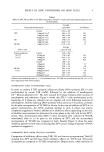
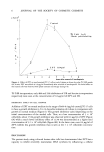
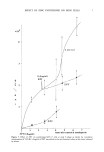
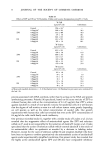
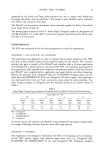
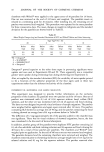
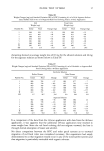
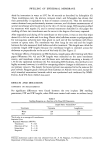
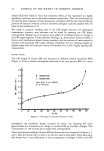
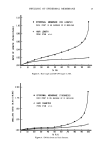
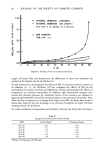
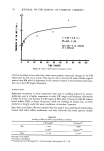
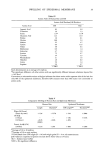
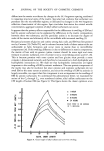
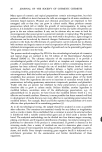
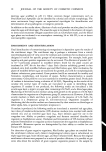
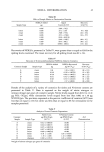
44 JOURNAL OF THE SOCIETY OF COSMETIC CHEMISTS RESULTS AND DISCUSSION Under the conditions used for denitrosation, nitrite represented a positive interference. For samples of unknown purity, the aqueous suspension must be analyzed for nitrite before the analysis of N-nitroso content is initiated. As a result the methodology presented was evaluated for nitrite in cosmetics. To evaluate the applicability of the previously described method to the determination of nitrite in cosmetics, the recovery of nitrite added to cosmetics was examined. To two grams of sample, nitrite was added in the range of 0.010 to 0.100/xg NO2--N/gm cosmetic before suspension of the sample in water. Recoveries of nitrite, presented in Table I, were greater than 80% for levels of 0.010/xg/gm NO 2-- N and 0.024/xg/gm NO 2-- N and greater than 95% for NO 2-- N concentrations greater than 0.049/xg/gm NO 2 -- N. Table I Recovery of Nitrite Added to Cosmetics NO2-N Added NO2-N Recovered Recovery Cosmetic Sample Sample Type ttg ttg (% CV^D) % (% CV^D) A cream 0.021 0.018 + 0.001(6) 86 _+ 4(6) B cream O.049 O.040 + O.002(5) 83 + 3(4) C lotion 0.098 0.095 _+ 0.003(3) 98 + 2(2) D lotion 0.182 0.180 + 0.019(10) 100 + 10(10) Once the nitrite level was known, the necessity of further clean-up was determined. Ion exchange was required to remove nitrite when the ion was present in excess of 1.0 ppm NO2--N in solution. The effect of this clean-up procedure on the recovery of NDELA from the ion exchange columns is presented in Table II. N-nitrosodiethanolamine was not retained by the ion exchange resin and 96 + 7 percent was recovered. Table II Recovery of NDELA Applied to Ion Exchange Column NDELA Applied NDELA Recovered Recovery ,u,g NNO-N* ,u,g NNO-N (% CV^D) % (% CV^D) 6.95 6.34 + 0.15(2) 91 + 2(2) 1.51 1.45 _ 0.01(1) 96 _ 1(1) 0.666 0.709 _ 0.003(0) 106 _+ frO) 0.110 0.098 __ 0.012(12) 90 -+ 10(12) *weight of nitroso nitrogen When the sample is mixed with water to extract NDELA many other water soluble components are also extracted. The presence of these materials was considered to be either a potential interference in the denitrosation reaction or would affect the degassing efficiency of NO from the reaction mixture. Standard addition to the aqueous solution after centrifugation was used to examine any effect. The results presented in Table III indicate that no effect occurred. Recovery studies were run using samples of different types which were analytically free of nitrosamine. Samples were spiked in the range of 0.07 to 1.10 /xg/gm NDELA.
Purchased for the exclusive use of nofirst nolast (unknown)
From: SCC Media Library & Resource Center (library.scconline.org)