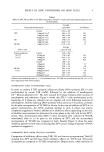
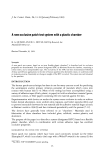
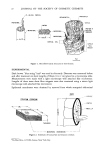
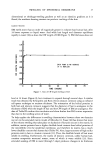
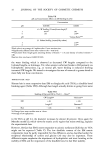
J. Soc. Cosmet. Chem., 34, 41-46 (January/February 1983) Rapid determination of N-diethanolnitrosamine in cosmetics S. BRENNAN and C. W. FRANK,* Department of Chemistry, University of Iowa, Iowa City, IA 52242. Received.July 30, 1982. Abstract A method for rapidly estimating the N-nitroso content of cosmetic products is presented. For a water extract of a two gram sample a detection limit of 2 ppb NNO-N is obtained with a reproducibility of less than thirteen percent. Nitrite can be determined using the same methodology. INTRODUCTION The presence of nitroso compounds, namely, Nonitrosodiethanolamine (NDELA), has been reported to occur in cosmetic products at levels ranging from 1 ppb to 48 ppm (1). Other investigators reported that the level of this nitrosamine in cosmetic and dermopharmaceutical preparations was in the range of undetectable (50 ng NDELA/ mL) to 380/xg/kg (2). Recently, the nitrosamines, N-nitrosomethyldodecylamine and N-nitroso-methyltetradecylamine, were found in hair-care produ•cts ranging in concen- tration from 8 to 873 ppb (3). The methodologies used in the determination of NDELA in cosmetic products include HPLC (1,4,5,6), gas chromatography (2,7), and ion exchange chromatographic tech- niques (8). These methods are reported to be specific for the detection of NDELA. Recently, a colorimetric method for the screening of nitrosamines in numerous consumer products has been published (9). With a 2.5 gram sample, a sensitivity of 3-5 ppb was reported. However, long sample analysis time was required. This paper presents a screening method for N-nitroso compounds which is sensitive and rapid. The instrumentation can also be applied to the determination of nitrite. EXPERIMENTAL APPARATUS The analytical system used has previously been described (10) and is presented in Figure 1. This technique is based on chemical cleavage of the nitrogen-nitrogen N-nitroso *Author to whom correspondence should be addressed. Current address: E.G. & G.-Idaho, P.O. Box 1625, Idaho Falls, ID 83415. 41

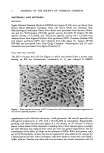
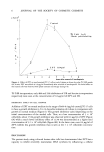
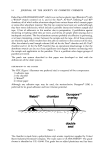
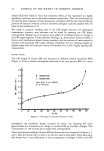
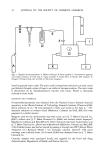
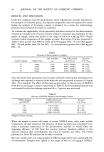
42 JOURNAL OF THE SOCIETY OF COSMETIC CHEMISTS Fig. 1. Diagram of Instrumentation. A. Helium carrier gas, B. Flow regulator, C. Denitrosation apparatus and sample container, D. Cold trap, E. Vapor scrubber, F. Teflon filter, G. Bendix NOx Analyzer, H. Oxygen, I. Pump, J. Strip chart recorder, K. Electronic integrator. bond to generate nitric oxide. The nitric oxide is swept from solution by an inert carrier gas (helium) through a series of traps to an oxides of nitrogen analyzer. The nitric oxide is determined via its chemiluminescent reaction with ozone. Nitrite is chemically reduced to nitric oxide. REAGENTS AND CHEMICALS N-nitrosodiethanolamine was obtained from the National Cancer Institute chemical repository at the Illinois Institute of Technology Research Institute (Chemical #208). Stock solutions of 10 -2 M were prepared in water and stored in the dark at -5øC. Standard solutions of sodium nitrite (Matheson, Coleman and Bell, #SX 665) were prepared in a similar manner. Reagents used for the denitrosation step were acetic acid (J. T. Baker Chemical Co., ff9507), sulfuric acid (J. T. Baker Chemical Co., ff)681) and sodium iodide, Suprapur © (Matheson, Coleman and Bell, #SX 623). Other chemicals used were hydrochloric acid (J. T. Baker Chemical Co., ff9535) and sulfanilamide (Matheson, Coleman and Bell, #SX 1150). Distilled water was further treated by passing it through two IWT (Illinois Water Treatment Co.) Research Model 1 ion exchange columns. Dowex © l-X8 anion exchange resin (chloride form, 20-50 mesh, #1904) was obtained from the J. T. Baker Chemical Co. Cosmetic samples were purchased locally and supplied by the Food and Drug Administration, Department of Health and Human Services.
Purchased for the exclusive use of nofirst nolast (unknown)
From: SCC Media Library & Resource Center (library.scconline.org)