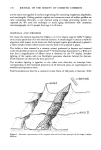
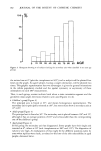
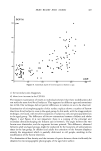
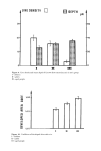
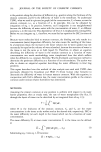
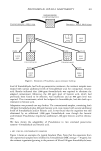
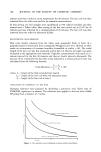
186 JOURNAL OF THE SOCIETY OF COSMETIC CHEMISTS LINE DENSITY DEPTH 3O 20' 10 ! TT TTT Figure 7. Line density and mean depth of furrows from principal axis in each group: I--children II--adults Ill--aged people. jim 6o .4o .2o surface varies between 8 to 30%. This means that 1 cm 2 of skin represents an area of exchange of 1.08 cm 2 to 1.30 cm 2 (Figure 10). DISCUSSION The cutaneous region studied, the forearm, is a relatively covered area. It could be that changes detected in this site are provoked by aging and actinic radiation. Our results show that, until the age of forty, furrow depth does not change (Figure 8). After this age, modification of C.R. appears, and the principal furrow direction of the forearm is formed. At the age of fifty, the skin furrow depths start to increase continuously, to reach more than 100/•m after the age of eighty. In the same period (between 50 and 80 years) the secondary direction disappears and the furrow density of the principal direction is diminished. Looking at the aged skin, we can notice simultaneously four aspects related to surface structure: a) furrows in the principal direction are well marked by deep depressions b) the furrows in this direction are small in number compared to young and adult skin

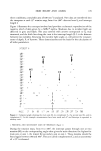
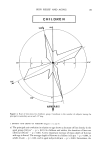
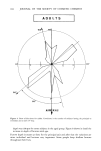
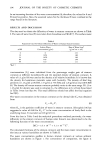
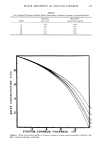
SKIN RELIEF AND AGING 187 lOO 8o 60 ÷ 40. DEPTH prn ß ßß ß ß ß ß ß ß ß ß : . _oo- 0_00 ß 210 ß ß ß ß ß ß ß ß ß o ß ß ß ß ß ß ß ß ß ß ß ß ß AGE 20 I I 0 60 80 1•)0 Figure 8. Individual depth of furrows (/am) in relation to age. c) the secondary axis disappears d) there is an increase in the C.D.S.S. The separate examination of results in individuals showed that these modifications did not reach the same level for all subjects. They appeared at different ages and sometimes late in life. Our technique did not permit differences in relation to sex to be observed. Examination of microphotographs of skin surface replicas shows a number of furrow directions for all subjects, even in the aged group. In this work, with the image analysis technique, we found, with very few exceptions (7 subjects), only one principal direction in the aged group. The difference of furrow orientations between children and adults (Figure 3 and Figure 4) is not important: there is a joining of the principal and secondary directions keeping the forearm axis in between. The angle between the two furrow axes diminishes, and the segments become pointed. This difference, observed between adult and aged groups, might be explained by the looseness of subcutaneous tissue in the last group. In children and adults the extension of the forearm displaces entirely the integument which is partially dislocated in old people, resulting in the modification of the furrow direction. The diminution of line density and the increase of spaces between them could easily be observed in microtopographic photographs of the aged skin surface.
Purchased for the exclusive use of nofirst nolast (unknown)
From: SCC Media Library & Resource Center (library.scconline.org)