j. Soc. Cosmet. Chem., 34, 197-203 (July 1983) Pseudomona$ cepacia: growth in and adaptability to increased preseruatiue concentrations GAYLE E. BOROVIAN, Lever Research Incorporated, Edgewater, NJ 07020. Received June 7, 1982. Presented at the SCC-SIM Microbiological Seminar, New York, NY, Dec. 9, 1981. Synopsis Investigative studies on a Pseudomonas cepacia isolate illustrate its adaptability characteristics. During a routine microbiological examination of a stored product prototype, we encountered P. cepacia which was able to survive and grow in the formulation which had a pH of less than 3.2. Since the organism adjusted to a pH which would have normally been considered as bactericidal, it became important to test the effect of a preservative in this type of formula in view of marketing interest. The results showed that the contaminant was not only capable of adapting to two unrelated preservative systems, but increased its resistance to both. INTRODUCTION Numerous articles have been written on the subject of Pseudomonas contamination. Past experiences have indicated that certain species can be a problem in toiletry products. Pseudomonas aeruginosa, in particular, is viewed as a pathogen in eye cosmetics. More recent attention has been focused specifically on Pseudomonas cepacia, which has been cited as a problem in debilitated hospital patients and has even been found as a contaminant in hospital disinfectant solutions. This organism is both opportunistic and adaptable to normally hostile conditions (1,2). Recent Lever studies with a Pseudomonas cepacia isolate illustrate the organism's adaptability. During a routine microbiological examination of a stored product prototype, we encountered P. cepacia which was able to survive and grow in the formulation even though the pH was less than 3.2. The source of contamination was traced to the make-up water (3). The organism adjusted to a pH which would normally have been considered bactericidal. Because of marketing interests, it became important to measure the effect of a preservative on this isolate in this type of formula. Both a Contaminated Product Treatment procedure and the Gradient Plate Method were employed to determine the preservative effectiveness of formaldehyde and benzoic acid. 197

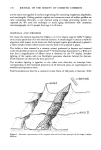
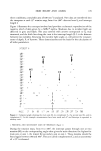
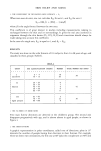
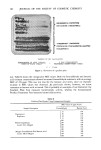
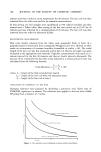
198 JOURNAL OF THE SOCIETY OF COSMETIC CHEMISTS MATERIALS AND METHODS 1. ENUMERATION OF PROTOTYPE CONTAMINANTS The Microbial Content/Sterility (MC/S) Test, routinely employed at Lever Research, was utilized to determine whether the formulation was contaminated. This method involves transfer of a 10 g sample into 90 ml of appropriate inactivating broth (Difco © Letheen Broth). This 1:10 dilution of the sample is used both for pour plating (Difco © Tryptic Soy Agar ) as well as a 10 g enrichment for sterility testing. Enrichments are incubated with pour plates provided no colonies develop on the 1:10 plate, the contents are swabbed onto test media for detection of either low level contamination or 10 g sterility. 2. IDENTIFYING THE CONTAMINANT Approximately 50 colonies, isolated from pour plates, were first Gram-stained, and then 17 were put through the API © 20E Enterobacteriaceae Identification System (Analytab Products). As set forth in the Analytical Profile Index, the number of positive biochemical reactions governs the incubation time. Test strips were incubated 36 to 48 hours. The API © Oxidase Test Kit was employed to determine cytochrome oxidase reactions. Colonies were also inoculated onto Difco © Pseudomonas Isolation Agar. 3. TREATMENT OF CONTAMINATED PRODUCT Approximately 100 g amounts of the contaminated formula were treated with formaldehyde and benzoic acid at levels of 50 ppm and 100 through 1,200 ppm (using 100 ppm increments). Preservative activity was measured by using the MC/S Test and evaluating the treated and control samples initially and after a storage period of 2 to 3 days, followed by weekly evaluations for approximately 1 month. The level of preservative which was considered as potentially effective yielded sterility of a 10 g sample in less than one week. 4. MINIMUM INHIBITORY CONCENTRATION BY GRADIENT PLATE The Gradient Plate procedure was employed in this study to determine the preservative resistance of the organism (4). In brief, a square phage-type Petri dish (90 ram) is placed on an inclined platform so that a base layer of agar is hardened in the form of a wedge. A second layer of agar containing preservative is hardened with the plate in a level position. The top layer of preservative is diluted by diffusing into the base layer. The end result is a concentration gradient at the surface. For the Gradient Plate procedure, preservatives were prepared in concentrations of 1,000, 500, 250, 100, 50, 25, 10, 5, and 1 ppm active. Difco © Tryptic Soy Agar was employed since it readily supported the contaminant's growth and does not contain inactivators of antibacterials. Twelve contaminated samples were streaked across the surface of the agar using an apparatus which holds 12 small brushes for simultaneous and multiple inoculations (5). The plates were incubated at 32øC for 3 to 4 days to enable the more antibacterial- resistant cells to develop into colonies. After incubation, resultant growth streaks were
Purchased for the exclusive use of nofirst nolast (unknown)
From: SCC Media Library & Resource Center (library.scconline.org)