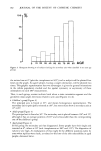
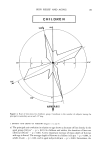
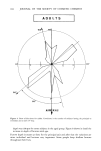
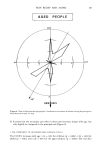
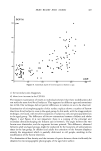
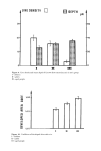
SKIN RELIEF AND AGING 189 The depth of furrows increases with age. This result correlates with those found by the profilometric technique (5). The lines observed in this study are the primary lines which were described by Hashimoto (6). According to Pierrard, these lines are found in the superficial dermis which can be observed in the form of plexus around the papules (7). The dermis designs and organizes the surface structure. Kligman suggests the close relationship between the dermis architecture and the skin surface pattern (8). We suppose that the progressive atrophy of the superficial dermis during aging explains the increase of the distance between primary lines. This atrophic form, which has been observed by a number of authors, may explain the relation between the thickness of the skin and its easy deformability under stress. The cutaneous relief could be modified under the influence of the directional arrangement caused by the superficial dermis, coming from imposed stresses on the skin by the muscular tissue during life activities. One possible role of the furrow plexus is to constitute a reserve of tissue to facilitate skin deformation. It is also designed to protect the middle dermis against stresses applied to the skin (9). This reservoir of extensibility is 16% for children, 18% for adults, and 20% (sometimes 30%) for the aged subjects. The disappearance of a number of furrows in this last group and the conservation of one main direction gives rise to an increase in furrow depth. It seems that this direction would probably be due to mechanical stresses which are applied to the skin during life. REFERENCES (1) S. Makki, J. C. Barbenel, and P. Agache, A quantitative method for the assessment of the microtopography of human skin, Acta Dermatovener, 59, 285 (1979). (2) A. Brun, I.. Aubert, P. Anthoine, andJ. L. Leveque, Nouvelle m•thode de quantification du microrelief de la peau (Anaglyphographe-Int•grateur), ler Congrbs Europ•en de Dermocosmbtologie, Lyon (1981). (3) T. H. Cook, Profilometry of skin--a useful tool for the substantiation of cosmetic efficacy, J. Soc. Cosmet. Chem., 31,339 (1980). (4) P. Cotcuff, j. De Rigal, and J. L. Leveque, Image analysis of the cutaneous microrelief, Int. Conf. on Bioengineering and the Skin, Philadelphia (1981) Bioengineering and the skin, 4 (1), 16 (1982). (5) S. Makki, P. Agache, J. C. Barbenel, and Ph. Masouy, Quantitative assessment of skin aging through surface microtopography measurements,J. of Invest. Dermatol., 76, (5), 428 (1981). (6) K. Hashimoto, New methods for surface ultrastructure: comparative studies of scanning electron- microscopy, transmission electron--microscopy and replica methods, Int. J. Dermatoloy, 13, 357 (1974). (7) G. E. Pierrard, C. Franchimont, and C. M. Lapiere, Aging as shown by the micro anatomy and the physical properties of the skin, Int.•J. Cosmet. Science, 2 (4), 209 (1980). (8) R. M. Lavker, F. Kwong, and A.M. Kligman, Changes in skin surface patterns with age, J. of Getontology, 35,348 (1980). (9) J. L. Leveque,J. De Rigal, P. G. Agache, and C. Monneur, Influence of aging on the in vivo extensibility of human skin at a low stress, Arch. Dermatol. Research, 269, 127 (1980).

Purchased for the exclusive use of nofirst nolast (unknown)
From: SCC Media Library & Resource Center (library.scconline.org)