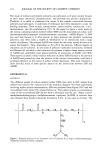
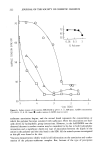
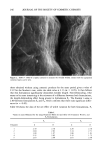
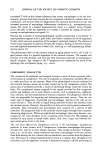
236 JOURNAL OF THE SOCIETY OF COSMETIC CHEMISTS MATERIALS AND METHODS HUMAN STRATUM CORNEUM Skin was obtained from the extensor surface of the amputated thigh of a 17-year-old girl. Sheets of stratum corneum were isolated by the method of Kligman and Chris- tophers (18). THE STRATUM CORNEUM SIMULATION MODEL The model (17) utilizes a single 1 x 1-cm square of stratum corneum sheet placed over seven layers of circular filter paper 6 mm in diameter. The filter paper was mounted on a glass slide and wetted with 30 IXl of phosphate-buffered saline (PBS). This was then covered by a sheet of stratum corneum and sealed with a vinyl adhesive tape in which a 6-mm-diameter hole was cut out. The water gradient across the stratum corneum is comparable to that existing in vivo (Figure 1). Environments with relative humidities (RHs) of 33%, 69% and 90% were produced in sealed chambers containing specific saturated salt solutions as described before (17). The model was allowed to equilibrate at predetermined relative humidities for at least two hours before making measurements that were repeated three times on each sample. SKIN SURFACE HYGROMETER We used the lBS hygrometer (Hamamatsu, Japan) to measure the conductance against a high-frequency electric current of 3.5 MHz (3). We incorporated an improvement that employs a probe having an outer cylindrical 4-mm-diameter electrode and an inner 2-mm one. Conductance was expressed as micro-mho (Ix o). EXPERIMENTAL DESIGN We examined the effect of occlusion at 2 iøC and 27% RH, the ambient conditions of our laboratory. Occlusion was obtained by covering the model with a polyethylene film for up to 30 minutes during which time measurements were made. We then evaluated three emollients, which were spread evenly over the surface at a surface dose of 1.25 mg/cm 2, an amount just sufficient to cover the whole applied area. ST. COHNEUM SHEET FILER PAPER+PBS i ADHESIVE TAPE SLIDE GLASS Figure 1. Stratum corneum simulation model: a water-diffusion chamber equipped with a human stratum corneum sheet that simulates both hydration state and electrical properties of in vivo skin.

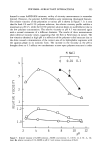
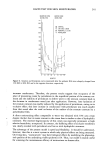
RAPID TEST FOR SKIN MOISTURIZERS 237 These were petrolatum (hydrophobic and occlusive), hydrophilic ointment (oil-in- water emulsion containing 70% water), and 10% urea cream containing 65% water in its base (Urepearl ©, Otsuka Pharmaceutical, Japan). The change in conductance under environments of 33%, 60%, and 90% RH was mon- itored 0, 30, and 60 minutes after application of the test agents. The probe was inserted through a tiny hole in the chamber, allowing the RH to remain undisturbed. The test agents were swiftly applied to the model, which was then instantly put into the chamber. In order to study any "buffer effect," the same specimen was used for the change of RHs in both directions, from low to high and high to low. For in vivo comparisons, we made measurements on the flexor forearms of ten normals, 18-24 years of age, at ambient conditions of 18øC and 27% RH, as described previously (11). The water sorption-desorption test (16) was also performed. This was carried out before and 60 minutes after application of the test agents, similar to measurements made in vivo (16). Briefly, a drop of distilled water was spread over the surface for 10 seconds and quickly blotted with tissue paper. Conductance was measured before and immedi- ately after blotting, and then 30, 60, 90, and 120 seconds after. STATISTICS The statistical significance of the results was evaluated by Student's t-test. RESULTS EFFECT OF OCCLUSION Conductance increased linearly, reaching a value nine times greater than the original after 30 minutes of occlusion with a polyethylene film (Figure 2). HYDRATION AFTER APPLICATION OF TEST AGENTS Figure 3 shows the values obtained in vivo at ambient conditions of 18øC and 27% RH. Application of 10% urea cream and hydrophilic ointment resulted in an immediate increase in hydration followed by a slow decrease. With urea cream, the values 120 minutes after application were still three times higher than those at pretreatment skin. In contrast, although petrolatum did not induce any initial increase, a slow but steady increase up to 60 minutes took place, reaching a plateau between 60 and 120 minutes, showing a fourfold increase in conductance. Figure 4 shows the results obtained with the in vitro models. At 33% RH, the curves were similar to those obtained in vivo at 27% RH. More dynamic changes occurred at higher humidities, particularly at 90% RH. With 10% urea cream, high conductance values, like those noted just after application, were maintained even after 60 minutes. On the other hand, such sustained high levels of conductance at higher RHs were not demonstrated with hydrophilic ointment in fact, values were even lower than the con- trols. With petrolatum, at high humidities conductance decreased greatly just after application, followed by a gradual recovery.
Purchased for the exclusive use of nofirst nolast (unknown)
From: SCC Media Library & Resource Center (library.scconline.org)