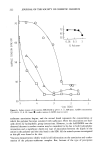
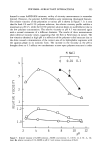
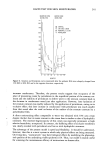
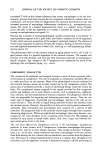
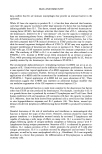
240 JOURNAL OF THE SOCIETY OF COSMETIC CHEMISTS 1200 1100 1000 •00 700 600 500 400 200 lO0 P,H 33% • 69% I: CONTROL O: 10% UREA CREAM -: HYDROPHILIC OINT •: PETROLATUM PRE 0 30 60 PRE O 30 60 MINUTES PRE O 30 60, Figure 4. In vitro hydration change after application of topical agents examined at 33%, 69%, and 90% RH. GX CONTROL 10• UREA P -ETROLATUM p e 0 30 00 90 120 p e 0 30 0 90 120 pr'e 0 30 60 90 120 MINUTES Figure 5. Water sorption-desorption test on the simulation model, performed at 21øC and 27% RH. --, before application. - - - -, 60 minutes after application.

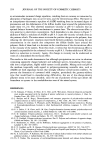
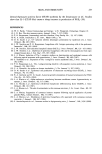
RAPID TEST FOR SKIN MOISTURIZERS 241 DESORPTION CURVE SORPTION CURVE (RH 90%•33%) (RH33%•90%) mU O: CONTROL O: 10% UREA CREAM a: HYDROPHILIC OINT •: PETROLATUM 0 11] 20 30 0 10 20 30. M I NUTES Figure 6. Sorption and desorption curves monitored after the ambient RHs were abruptly changed from 33% RH to 90% RH and to the opposite direction, respectively. increases conductance. Therefore, the present results suggest that occupancy of the place of preexisting water by petrolatum in the superficial portion of the stratum cor- neum and the inability of petrolatum to deliver water to the stratum corneum leads to the decrease in conductance noted just after application. However, later hydration of the stratum corneum was readily induced by the application of petrolatum, owing to its occlusive effect this later increase in conductance with petrolatum was much smaller than that noted after the total occlusion of the surface of the stratum corneum by a polyethylene film. A direct moisturizing effect comparable to water was obtained with 10% urea cream despite the fact that its water content in the cream base is similar to that of hydrophilic ointment. The extreme hygroscopicity of this cream was especially prominent at high relative humidities, as expected. In contrast, the buffering effect of occlusive emollients was clearly revealed with petrolatum and less so with hydrophilic ointment. The advantage of the present model is speed and flexibility. It should be understood, however, that this is a static system in which only physical effects are being measured. On living skin, "moisturizers" may have biological effects by modifying the physiolog- ical qualities of the underlying viable epidermis (19). Thus, our model is mainly useful for screening the instantaneous efficacy of moisturizers on human skin.
Purchased for the exclusive use of nofirst nolast (unknown)
From: SCC Media Library & Resource Center (library.scconline.org)