2 JOURNAL OF THE SOCIETY OF COSMETIC CHEMISTS predicted by routine toxicologic procedures. Surveys have shown that many women who have no skin disorders describe themselves on questionnaires as having "sensitive skin" (3). Fragrances, sunscreens, and moisturizers are often singled out as causative. Green and Bluth have comprehensively reviewed the psychophysical methods for measuring adverse sensory reactions to chemicals (4). They suggest the term "chemosensory irri- tability," rather than subjective irritation. Since a substantial number of women report that they have "sensitive" skin (3), it is a daunting challenge to identify these women prior to marketing. By definition, "sensitive" skin refers to women without preexisting skin disease. Der- matologists are well aware that patients with rosacea, atopic dermatitis, ichthyotic disorders, and other dermatoses experience subjective irritation with much greater frequency (5) than other women. These patients can be identified by history and ex- amination. Identifying persons with sensitive skin has been the object of serious inves- tigation in our laboratory for many years. It is important to define stinging explicitly to avoid confusion with other subjective responses. A prototype for burning is the chloroform:methanol (20:80) model described by Soschin and Kligman (6). When applied to the cheek in a glass cup, intense burning develops in a minute or less. The end point is the time to experience intolerable burning. An example of itching is the sensation provoked by histamine, prompting an urge to scratch. Lactic acid stinging develops in a crescendo-type pattern. It begins to be perceived after a few minutes, gradually intensifying to peak intensity in about 3-5 minutes. It then disappears after 15 to 20 minutes. There are usually no clinical signs of irritation. A mild, transient erythema may appear in unusually susceptible persons. Stinging must be differentiated from pain, as exemplified in the model used by Arm- strong eta/. (7). They applied irritating chemicals to the bases of unroofed cantharidin blisters. Pain was rapidly induced. Green and Bluth have emphasized that individuals differ greatly in their responses to chemical stimuli (4): A response to one stimulus does not predict subjective irritation to others. Different sensations may occur concomitantly for example, stinging may be accompanied by itching. There is some evidence that strong stingers are more readily damaged by known irri- tants. Dimethylsulfoxide induces larger wheals in stingers (1). Lammintausta eta/. found that stingers were more vulnerable to irritating chemicals (8). Thus, the lactic acid test might provide a way to identify persons with hyperirritable or delicate skin. In the original model, stinging was most consistently provoked when the subjects were brought to a state of profuse sweating in an environmental chamber at 120øF. A 5% solution of lactic acid on a soaked cotton swab was then rubbed briskly over the nasolabial fold and cheek. Stinging was scored at 2.5, 5.0, and 8.0 minutes on a 0 to 3 interval scale. The mean of these three readings comprised the final score. Frosch and Kligman suggested a facial sauna as a convenient substitute for inducing sweating. Finally, they suggested that increasing the concentration to 10% would provoke equiv- alent stinging in the absence of sweating. Grove eta/. subsequently proposed guidelines to standardize performance of the test (9). The lactic acid stinging model has come under sharp criticism. Mayne et al. could not obtain reproducible results when the procedure was repeated at different times on the

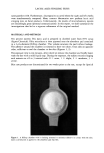
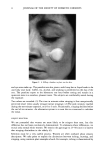
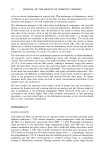
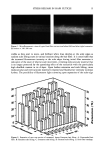
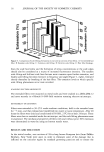
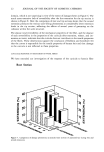
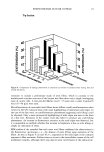
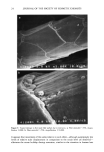
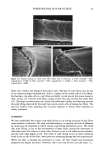
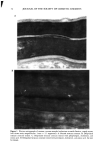
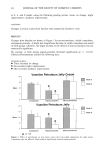
LACTIC ACID STINGING TESTS same panelists (10). Furthermore, discrepancies occurred when the right and left cheeks were simultaneously compared. Many contract laboratories now perform lactic acid stinging tests on facial products. Unfortunately, the results of inter-laboratory reports are disturbingly great (personal communication). In this report, we shall summarize the investigations that led to a rigorous refinement of the original method. MATERIALS AND METHODS Ten percent racemic D-L lactic acid is prepared in distilled water from 85% syrup (Sigma Chemical). Fifty microliters is then pipetted onto the absorbent pad contained in a 2-cm-diameter Hilltop chamber. This volume saturates the pad without leakage. The adhesive around the chamber is trimmed to leave two short 2-mm tabs on opposite sides, sufficient to seal the chamber to the skin (Figures 1, 2). The exposure time is ten minutes, after which we remove the chamber and briefly hand- wash the face with a mild liquid soap. During the exposure, the subject records stinging each minute on a 0 to 3 interval scale: 0 = none, 1 -- slight, 2 = moderate, 3 = severe. Skin care products are discontinued for two weeks prior to the test, except for lipstick Figure 1. A Hilltop chamber with its backing trimmed to minimize adhesive in contact with the skin Lactic acid solution is applied to the absorbent pad that fills.
Purchased for the exclusive use of nofirst nolast (unknown)
From: SCC Media Library & Resource Center (library.scconline.org)