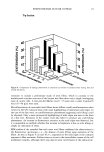
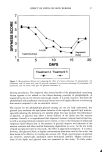
EFFECT OF LIPIDS ON SKIN XEROSIS 37 7 "'6 o34 z3 P0.05* Treatment phase 0 5 10 15 DAYS Regression phase i 20 Treatment 4 Treatment 5 Figure 5. Moisturization efficacy test comparing the effect of a lotion containing 1% phospholipid, 2% cholesterol, and 1% stearic acid, plus 5% glycerol (treatment 4) to a lotion containing 1% petrolatum, 2% cholesterol, and 1% stearic acid, plus 5% glycerol (treatment 5). forming petrolatum. The improved skin xerosis benefit of the phospholipid-containing lotions appears to be related to the bilayer-forming potential of phospholipids, as supported by the in vitro electron microscopy results. It is noted, however, that both the phospholipid and petrolatum-containing lotions were still highly effective in alleviating skin xerosis compared to the no-treatment control. The reasons for the phospholipid-glycerol synergy are not yet fully understood, but glycerol may modulate the lipid-phase behavior of the topically applied lipid mixture, especially allowing the formation of a lameliar phase that may increase the performance of glycerol, or glycerol may allow a better delivery of the lipids into the stratum corneum. Overall, it is hypothesized that improved stratum corneum barrier function, as well as increased stratum corneum water content, is due to the formation of additional exogenous lipid bilayers that in the presence of glycerol improve the hydration of the stratum corneum and allow normal desmosome degradation to occur. At the low levels of lipids and glycerol used in this study, this effect is apparently synergistic. It is noted, however, that glycerol alone, at higher concentrations than those used in this study, has been found to be effective in treating skin xerosis (23). High concentrations of glycerol are, however, aesthetically unpleasant unless formulated carefully. Higher concentra- tions of the lipids and glycerol were not examined in this study. To fully under-

38 JOURNAL OF THE SOCIETY. OF COSMETIC CHEMISTS stand the reasons for the glycol-lipid synergy, however, physical characterization of the lotions will be required, especially in situ on the skin surface after evaporation of excess water. In conclusion, glycerol-based lotions, with bilayer-forming lipids, phospholipid, cho- lesterol, and stearic acid, restored xerotic skin conditions to normal more rapidly com- pared to those with petrolatum, cholesterol, and stearic acid. Such lotions, through their ability to optimally restore stratum corneum moisturization by enhancing barrier func- tion and improving humectancy, should permit or reestablish normal desquamation, thereby facilitating the rapid alleviation of skin xerosis. ACKNOWLEDGMENTS We wish to thank Miss A. van den Berg of the School of Pharmacy, Medunsa, Ms Joan Lane, and Mrs Helen McArthur of Unilever Research, Colworth Labs, for assistance with logistical arrangements and assessment and statistical analysis. REFERENCES (1) (2) (3) (4) (5) (6) (7) (8) (9) (10) (11) (12) (13) (14) (15) (16) (17) A. V. Rawlings, I. R. Scott, C. R. Harding, and P. A. Bowser, Stratum corneum moisturization at the molecular level, J. Invest. Dermatol., 103, 731-740 (1994). R. O. Potts and M. L. Francoeur, The influence of stratum corneum morphology on water perme- ability. J. Invest. Dermatol., 96, 495-499 (1991). P.M. Elias and D. S. Friend, The permeability barrier in human epidermis, J. Cell Biol., 65, 180- 191 (1975). P. W. Wertz, Epidermal lipids, Semin. Dermatol., 11, 106-113 (1992). S. A. Long, P. W. Wertz, J. S. Strauss, and D. T. Downing, Human stratum corneum lipids and desquamation, Arch. Dermatol. Res. 277, 284-287 (1985). A. V. Rawlings, J. Rogers, and J. M. Mayo, Changes in lipids in the skin aging process, Biocosmet. Skin Aging, 1, 31-45 (1993). A. V. Rawlings, J. M. Mayo, J. Rogers, and I. R. Scott. Aging and the seasons influence on stratum corneum lipid levels,J. Invest. Der matol., 101, 483 (1993). S. Motte, S. Mellesi, and M. Sesana, Study of interlamellar lipids in psoriatic scales, Proceedings of the 18th World Congress of Dermatology, Abstract 159 (1992). P. W. Wertz, K. C. Madison, and D. T. Downing, Covalently bound lipids of human stratum corneum, J. Invest. Dermatol., 92, 109-111 (1989). A. Yamamoto, S. Srizawa, M. Ito, and Y. Sato, Stratum corneum lipid abnormalities in atopic derma- titis, Arch. Dermatol. Res., 283, 219-223 (1991). Y. Werner, M. Lindberg, and B. Forslind, Membrane-coating granules in "dry" non-eczematous skin of patients with atopic dermatitis, Acta Derm. Venereol., 67, 385-390 (1987). M. L. Williams, "Lipids in Normal and Pathological Desquamation," in Advances in Lipid Research, P.M. Elias, Ed. (Academic Press, New York, 1991), pp. 211-262. D. Saint-Leger, A.M. Francois, J. L. Leveque, T. K. Stoudemayer, A.M. Kligman, and G. Grove, Stratum corneum lipids in winter xerosis, Dermatologica, 178, 151-155 (1989). A. V. Rawlings, J. Hope, J. Rogers, A.M. Mayo, and I. R. Scott, Mechanisms of desquamation: New insights into dry flaky skin conditions, Proceedings of the 17th IFSCC, 2, 865-880 (1992). A. V. Rawlings, A. Watkinson, J. Rogers, A.M. Mayo, J. Hope, and I. R. Scott, Abnormalities in stratum corneum structure, lipid composition, and desmosome degradation in soap-induced winter xerosis, J. Soc. Cosmet. Chem., 45, 203-220 (1994). J. L. Levelque, J. C. Garson, and J. De Rigal, Transepidermal water loss from dry and normal skin, J. Soc. Cosmet. Chem., 30, 333-343 (1979). T. Egelrud, Purification and characterization of stratum corneum chymotryptic enzyme. A protease that may be involved in desquamation, J. Invest. Dermatol., 101, 200-204 (1993).
Purchased for the exclusive use of nofirst nolast (unknown)
From: SCC Media Library & Resource Center (library.scconline.org)