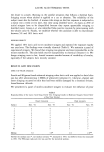
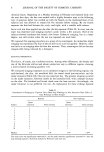
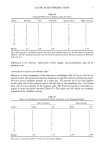
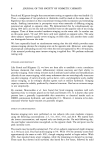
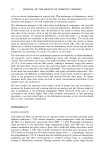
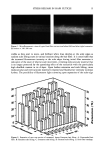
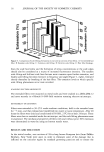
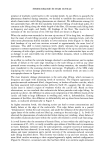
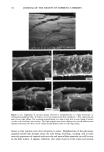
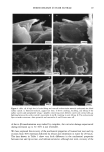
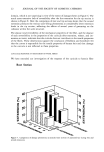
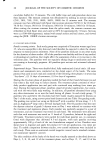
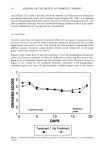
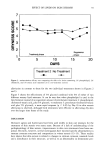
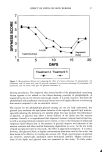
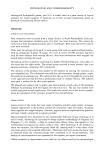
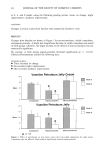
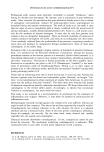
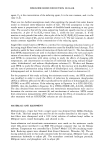
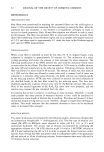
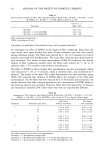
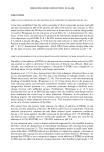
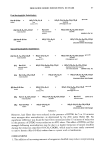
EFFECT OF LIPIDS ON SKIN XEROSIS 35 7 "'6 Regression Treatrner•t phase 1 ' , i • i phase • 0 5 10 15 20 DAYS Treatment 2 No Treatment Figure 3. moisturization efficacy test comparing the effect of a lotion containing 1% phospholipid, 2% cholesterol, and 1% stearic acid (treatment 2) to a no-treatment control. alleviation in contrast to those for the two individual treatments shown in Figures 2 and 3. Figure 5 shows the effectiveness of 5% glycerol combined with 4% of either of two different ternary lipid mixtures. It can be seen that when phospholipid is used in the lipid mixture instead of an equivalent amount of petrolatum (treatment 4: phospholipid- cholesterol-stearic acid, plus 5 % glycerol, vs treatment 5: petrølatum-chølesterøl-stearic acid plus 5% glycerol), a more rapid response (p 0.05 by Day 8) in skin xerosis alleviation is observed, although both treatments were effective in alleviating dry skin over the larger time frame of the study. DISCUSSION Occlusive agents and humectants have been used widely in skin care products for the treatment of skin xerosis over many years. Because of a lack of understanding of the pathophysiology of skin xerosis, improvements in skin care treatments have been em- pirical. Recently, however, several investigators have reported specific abnormalities in stratum corneum structure and composition in winter xerosis (13-15). These studies have shown that skin xerosis is related to changes in stratum corneum ceramide levels and a disturbance in their structure, as well as to an abnormality in desmosome pro-

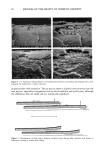
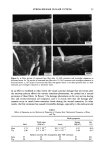
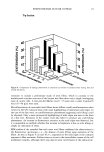
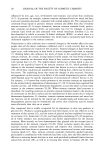
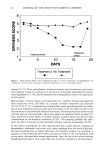
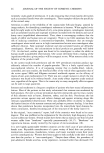
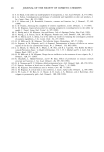
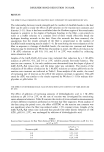
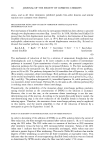
36 JOURNAL OF THE SOCIETY OF COSMETIC CHEMISTS 6 iJJ z cI 5 4 3 2 Regression Treatment phase 1 ' , I • I Phase 0 5 10 15 20 DAYS Treatment 3 No Treatment Figure 4. Moisturization efficacy test comparing the effect of a lotion containing 1% phospholipid, 2% cholesterol, and 1% stearic acid, plus 1% glycerol (treatment 3) to a no-treatment control. cessing (14,15). Thus, perturbation of stratum corneum lipid architecture and compo- sition appears to lead to a reduction in the activity of proteases responsible for desmo- some degradation (17,18), and the resultant faulty desquamation leads to the appearance of skin xerosis. Barrier lipids, occlusive agents, and humectants are, therefore, being investigated for their interactions with, and effects on, stratum corneum components and processes (19,20,25,26,27,31). Ceramides and ceramide-like lipids (pseudoceramides) in combi- nation with cholesterol and fatty acids have been shown to be very effective (28-31) for the treatment of experimentally induced skin xerosis. Petrolatum has been shown to mix with the stratum corneum lipids, which may explain its beneficial effects on skin (27). Also, glycerol has been shown to fluidize stratum corneum lipids and prevent their crystallization in low-humidity conditions (25,26). This property probably also influ- ences the effect of glycerol on the proteolysis stratum corneum desmosomes (19,20). In the present investigation we have demonstrated that a lipid mixture consisting of phospholipid, cholesterol, and stearic acid, when combined with low levels of glycerol, functions synergistically to deliver efficacious skin benefits. Indeed, the synergism is apparent in that neither the lipids alone, nor glycerol alone, at the concentrations used in this study, alleviated skin xerosis significantly. Also, the use of the bilayer-forming phospholipid provided a more rapid reduction in xerosis compared to the non-bilayer-
Purchased for the exclusive use of nofirst nolast (unknown)
From: SCC Media Library & Resource Center (library.scconline.org)