42 JOURNAL OF THE SOCIETY OF COSMETIC CHEMISTS (4). He has classified a large number of substances according to their comedogenic potential. He states categorically that manufacturers should automatically exclude in- gredients that are comedogenic at any concentration. This caveat has brought to the fore a vexing problem for manufacturers, namely, the substantial number of desirable and seemingly safe substances that have been "blacklisted" by Fulton. Nelson and Rumsfield, too, have published lists of "unacceptable ingredients" (5). They go so far as to recom- mend products that do not contain "unacceptable ingredients." Draelos, too, has sharply commented on the complexities and uncertainties of evaluating cosmetic components by the rabbit ear model (6). Especially notable in Fulton's multitudinous list of come- dogenic substances are D & C red dyes and a large variety of fatty substances that contribute to the aesthetic and functional properties of cosmetics. These have not been demonstrated to be acnegenic in humans. Because of these conflicts, I updated the rabbit ear assay in a 1990 publication, adding specifications that, hopefully, would substan- tially reduce inter-laboratory disagreements (7). REASSESSMENT OF THE COMEDOGENICITY OF OILS This wordy introduction brings us to the issue that is central to the focus of this paper. Using the original model, Kligman and Mills stated that petrolatums and mineral oils from different sources were uniformly comedogenic (1). With the updated model, it turns out that these were "false positives" (see below). This is far more than an academic controversy since it strongly impacts on the credibility of safety claims for skin care products. Seborrhoea, the excessive production of sebum, is a prerequisite for the development of acne (8). Persons with seborrhoea are also greatly discomforted and try to remove excess oil by frequent washing or by oil-absorbing papers. It is understandable that acne patients intuitively wish to avoid oily and greasy cos- metics. Indeed, it has become the universal mantra for cosmetic manufacturers to claim that their products are "oil-free." Dermatologists, too, routinely proscribe oil- containing facial products for acne sufferers. Patients are advised to read the labels and avoid medicaments and cosmetics that contain "oils." The assumption is that oily substances are intrinsically comedogenic. A justification for this belief stemmed from an earlier publication that described pomade acne in Afro-American men (9). Adult black men use a variety of greasy products daily to groom curly, kinky hair. Dense crops of open and closed comedones sometimes develop on the glabrous skin adjacent to the scalp. The case would seem to have been made for a general warning against products that contain greases and oils. As a matter of fact, the shelves are now loaded with a wide variety of products that claim that they are "oil-free." "Oils," however, comprise a great variety of chemically unrelated materials. The implication is that viscosity (greasiness) alone determines comedogenicity. Morris and Kwan have also become vexed by contradictory reports and question the usefulness of the rabbit ear test for formulating non-comedogenic cosmetics (10). The present study was undertaken to seek a resolution of these disputes. Petrolatum was selected as the centerpiece of this investigation for two reasons: (1) Petrolatum is the

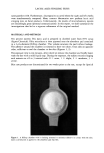
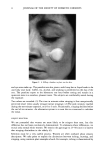
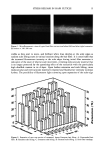
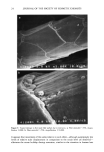
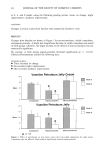
PETROLATUM AND COMEDOGENICITY 43 archetypical hydrophobic grease, and (2) it is widely used in a great variety of topical products for varied purposes. It behooves us to have accurate information about its potential for producing adverse effects. METHODS SUBJECTS AND TREATMENTS Paid volunteers were recruited from a single district in South Philadelphia. Each par- ticipant had persistent, moderate acne of at least two years duration. The criteria for entry was at least ten papulo-pustules and 15 comedones. Both mild and severe cases of acne were excluded. There were two groups of ten each. In each group there were six males and four females, with an average age of about 18 (range 14 to 22). A variety of OTC products had been used by most subjects with varying efficacy. Anti-acne medications were stopped one month before starting the study. One group received a product consisting of a highly refined petrolatum, twice daily, to the entire face for eight weeks. The second group received a cream product that is an aqueous emulsion containing 30% petrolatum. The identity of the products was masked to the subjects by putting the contents into new unmarked jars. The volunteers were told that the treatments, though greasy, might be beneficial in soothing acne. We indicated that the use of oily formulations in acne was a new approach and that this was a preliminary study to evaluate efficacy. The subjects were paid a modest fee for their participation. We showed each subject how to apply a pea-sized amount to both sides of the forehead, followed by spreading with the fingers over the entire face. The face was washed with a mild soap prior to each application. The study was carried out in the winter months, when the greasiness of the products would be less discomforting. OBSERVATIONS Lesion counts of the entire face were made at baseline and after eight weeks. A derma- tologist experienced in the method counted all comedones, open and closed, recording these together as a single category. Likewise, papules were not separated from pustules, and were simply categorized as papulo-pustules. Microcomedones were estimated by the cyanoacrylate follicular biopsy technique at 0 and 8 weeks, following the quantitative image analysis methodology of Pagnoni and Kligman (11,12). Briefly, a drop of cyanoacrylate (Krazy Glue) was applied to the mid-forehead and spread out under a plastic slide. After hardening of the polymer in about two minutes, the slide was gently lifted off, carrying with it a thin sheet of the outer horny layer with attached veilus hairs. Those hairs that were encased by horny casts as observed under the stereomicroscope were considered to be microcomedones. The density of microcomedones was expressed as the number per square centimeter. Global estimates of improvement were made by the subjects and by the dermatologist
Purchased for the exclusive use of nofirst nolast (unknown)
From: SCC Media Library & Resource Center (library.scconline.org)