48 JOURNAL OF THE SOCIETY OF COSMETIC CHEMISTS (3) S. B. Frank, Is the rabbit ear model prophetic ofacnegenicity,J. Am. Acad. Dermatol., 6, 373 (1982). (4) J. A. Fulton, Comedogenicity and irritancy of commonly used ingredients in skin care products, J. Soc. Cosmet. Chem., 40, 321 (1989). (5) F. P. Nelson and J. R. Rumsfield, Cosmetics, contents and function, Int. J. Dermatol., 27, 665 (1988). (6) Z. D. Draelos, Assessing the complexity of cosmetic ingredients, Cosmet. Der•tol., 7, 17 (1994). (7) A.M. Kligman, Improved procedure for assessing acnegenicity (comedogenicity) in the rabbit ear model, J. Toxico/. C•tan. Oc•/. Toxicol., 4, 395 (1990). (8) G. Plewig and A.M. Kligman, Ache and Rosacea, 2nd ed. (Springer-Verlag, New York, 1993). (9) G. Plewig, J. E. Fulton, and A.M. Kligman, Pomade ache, Arch. Dermatol., tot, 580 (1970). (t0) XV. E. Morris and S.C. Kwan, Use of the rabbit ear model in evaluating the comedogenic potential of cosmetic ingredients, J. Soc. Cosmet. Chem., 34, 215 (1983). (11) O. H. Mills and A.M. Kligman, The follicular biopsy, Der•tologia, 167, 57 (1983). (12) A. Pagnoni, A.M. Kligman, and S. el Gammal, Determination of density of follicles on various regions of the face by cyanoacrylate biopsy, Br. J. Der•tol., 131, 862 (1994). (13) J. A. Mezick, G. Thorne, M. C. Bhatia, L. M. Shea, and R. J. Capetola, "The Rabbit Ear Micro- comedo Prevention Assay," in klodds in Derr•tology, Vol. 3, H. I. Maibach and N.J. Lowe, Eds. (S. Karger, Basel, 1987), p. 68. (14) O. H. Mills and A.M. Kligman, Drugs that are ineffective in the treatment of ache vulgaris, Br. J. Der•to/., 128, 371 (1983). (15) R. Ghadially, L. Halkier-Sorensen, and P.M. Elias, Effects of petrolaturn on stratum corneum structure and function, J. Am. Acad. Der•tol., 26, 387-396 (1992). (16) B. A. Newman and F. F. Feldman, Adult premenstrual ache, Arch. Der•tol. Syph., 69, 350 (1954). (17) E. Epstein, Incidence of facial ache in adults, Dermato/. Digest, 7, 49 (1968). (18) A.M. Kligman, Post-adolescent ache in women, C•th, 48, 75 (1991). (19) A.M. Kligman, A critical look at ache cosmetica. J. C•tan. Aging Cosmet. Dermatol., 2, 109 (1989). (20) A. XV. Lucky, F. M. Biro, G. A. Huster, A.D. Leach, J. A. Morrison, and J. Ratterman, Ache vulgaris in premenarchy girls, Arch. Der•tol., 130, 308 (1994).

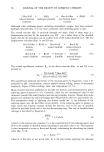
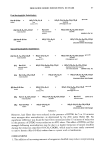
j. Soc. Cosmet. Chem., 47, 49-58 (January/February 1996) The kinetics of disulfide bond reduction in hair by ammonium thioglycolate and dithiodiglycolic acid MELISSA A. MANUSZAK,* EDWARD T. BORISH, and R. RANDALL WICKETT, The University of Cindnnati College of Pharmacy, 3223 Eden Avenue, Cincinnati, OH 45267 (M.A.M., R.R.W. ), and L & F Products, I Philips Parkway, Montvale, NJ 07645-I575 (E.T.B.). Received July I, I994. Synopsis A study was conducted tO determine the physical behavior of human hair in the presence of ammonium thioglycolate (ATG) and the effect of dithiodiglycolic acid (DTDG) on this behavior. The method utilized in this study was a modification of the single fiber tensile kinetics (SFTK) method (1). SFTK experiments were performed using the miniature tensile tester (Dia-stron) on virgin hair from a single source (DeMeo Brothers) by monitoring stress-relaxation and stress/strain behavior (20% index). The results indicate that the addition of dithiodiglycolic acid does not affect the kinetics of stress relaxation when the fiber is held under a constant strain (1.5 %). Similarly, the addition of dithiodiglycolic acid does not diminish the extent of fiber weakening prior to neutralization. However, hair reduced in the presence of dithiodiglycolic acid is stronger after neutralization then hair reduced in the absence of dithiodiglycolic acid. INTRODUCTION Numerous studies have been undertaken to determine the effects, both physical and chemical, that reducing agents have upon the hair. It has been well established that the mercaptans used to produce a permanent wave attack the disulfide bonds in the hair, cleaving these bonds so that they may later be reformed in a new configuration. Previous studies have investigated the kinetic behavior and mechanisms of action of various mercaptans by monitoring the stress-relaxation and stress/strain behavior of hair or wool fibers (1-11). The findings of these studies indicate the dramatic effects that may result when parameters such as temperature, pH, or concentration are varied. The overall reactions involved in the waving of hair (Eqs. 1 and 2) are: Ker-S-S-Ker + 2RS-H • 2 Ker-S-H + R-S-S-R keratin mercaptan reduced keratin disulfide (cystine) (cysteine) (1) *Current addresses: Melissa Manuszak, Department of Chemistry, Louisiana State University, Baton Rouge, LA 70803 (504) 388-2985. email: mmanusz@unixl. sncc. lsu.edu Edward Borish, Zotos Corporation, 100 Tokeneke Road, Darien, CT 06820 49
Purchased for the exclusive use of nofirst nolast (unknown)
From: SCC Media Library & Resource Center (library.scconline.org)