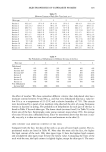
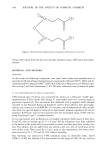
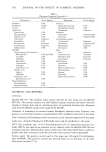
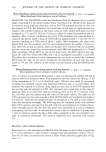
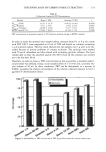
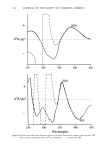
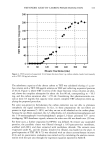
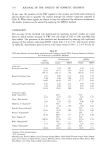
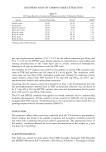
316 JOURNAL OF THE SOCIETY OF COSMETIC CHEMISTS Table I Phototoxic Drugs and Chemicals (1) Phototoxin Action Spectra Phototoxin Action Spectra Psoralens UVA Diuretics Porphyrins Visible Hydrochlorothiazide UVA Coal tar UVA Bendroflumethiazide UVA Antibiotics Furosemide Unknown Tetracyclines UVA Retinoids Fluroquinolones UVA Isotretinoin UVA/pos.UVB Nalidixic acid UVA Etretinate UVA/pos.UVB Ceftazidime Unknown Antineoplastic agents Griseofulvin UVA 5-Fluoruracil Unknown Ketoconazole Unknown Dacarbazine UVA/pos.UVB Trimethoprim Unknown Methotrexate Unknown Sulfonomides UVB Vinblastine UVB NSAIDS Dyes Arylproprionic acid derivatives Eosin Unknown Benoxaprofen UVA and UVB Fluoroscein dye Unknown Carprofen UVA Methylene blue Unknown Ibuprofen UVA Rose bengal Unknown Ketoprofen UVA Miscellaneous Nabumetone UVA Amiodarone UVA Naproxen UVA Diltiazern UVA Tiaprofenic acid UVA Fibtic acid derivatives UVB Salicylic acids Phenothiazines UVA Aspirin UVA Quinine UVA Diflunisal UVA Quinidine UVA Anthranilic acids Sulfite food derivative UVB Meclofenamic acid UVA Pyrazolidinediones Phenylbutazone UVA Oxyphenbutazone UVA MATERIALS AND METHODS MATERIALS MatTek EPI-100. The artificial tissue system selected for this study was the MatTek EPI-100. This system consists of a well-defined stratum comeurn and barrier function similar to human skin and an underlying layer of epidermal keratinocytes. Reagents used with the MatTek system were supplied by MatTek. Monolayer. A monolayer of neonatal human fibroblasts, obtained from Clonetics, was grown in a serum-free medium to approximately 80% confluence and used in the assay. Yeast. Commercial Fleischmann's yeast was selected as the indicator organism for this assay. Light source. A bank of fluorescent UVA bulbs were used for irradiation in this assay. MTT. The metabolic dye, (3-[4,5-dimethylthiazol-2-yl]-2,5-diphenyltetrazolium bro- mide) (MTT), was used as an indicator of cell viability with the MatTek EPI-100 and monolayer systems. Mitochondria within viable cells will reduce MTT from a yellow to purple color that is retained inside the cells until later extracted with isopropanol. Positive control. The positive control used in this assay was 400 I•g/ml 8-methoxypso- talin (8-MOP). This positive control was selected based on its inclusion in the pub- lished yeast method. (2-4).

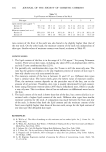
NEW PHOTOTOXICITY METHODS 317 METHODS &ITT com12•tiai/ity. Cell viability, the endpoint for phototoxicity with the MatTek EPI- 100 and monolayer systems, was measured using MTT. In some cases, test materials are capable of reducing MTT and causing its color change from yellow to purple, which would normally be indicative of cellular metabolic activity. This is controlled by com- bining equal volumes of test materials and MTT and incubating them in the dark for a time equal to that used for MTT exposure in the assay. At the end of the incubation period, materials that have not caused a color change to purple are considered MTT- compatible, while materials that have caused a color change to purple are incompatible. Further steps are taken for MTT-incompatible materials to ensure these materials do not cause false readings in the assay. None of the test materials used in this study were MTT-incompatible. In the monolayer and MatTek EPI-100 systems, materials that show a significant (p • 0.05) increase in toxicity after UVA irradiation, when compared to the toxicity of the same materials without irradiation, are considered phototoxic. Statistical signifi- cance is important in the interpretation of results, as statistical measurements effectively account for biologic variability. Results that directionally appear to indicate phototoxic- ity may be attributable to biologic variability unless the difference between treatment and no treatment is large enough to preclude the effects of biologic variability. Al- though statistical significance is a more objective endpoint for measuring phototoxicity, Duffy et•/. have established a protocol in which the cutoff for phototoxicity is based on the magnitude of difference in viability between non-irradiated and irradiated cell cul- ture (5). &Io,o/ayer. Since test materials cannot easily be assayed neat in monolayer systems, test materials were diluted to 1% of their stock concentration. Dilution of test materials also served to avoid cytotoxicity, which was noted with several of the materials at higher concentrations in previous assays with monolayer culture. Fibroblasts were suspended in Dulbecco's Modified Eagles medium with 10% fetal bovine serum (DMEM). One (1) ml aliquots of this mixture were then seeded into wells of 24-well plates at a titer of 2 X 10 4 cells/well. The cells were allowed to fix to the plate for six hours, and then fresh DMEM containing test material, was added in tripli- cate using duplicate plate sets, one set for UVA exposure and one set that was not ex- posed to UVA. The final volume of each well was 1.5 ml, with the final concentration of test material being 1% of the neat concentration. Once dosed, both plate sets were in- cubated for 24 hours at 37øC and 5% CO 2 to allow for material metabolism. After 24 hours' incubation, the set for UVA irradiation was removed from incubation and placed under a bank of UVA bulbs at approximately 1.5 mw/cm 2 for 30 minutes, resulting in a UVA dose of about 3 joules. After irradiation, the plates were placed back into the incu- bator with the non-irradiated plates for another 24-hour period. After this second 24- hour incubation, both plate sets were removed from the incubator and the DMEM was aspirated and replaced with 1 mg/ml MTT prepared in DMEM. The plates were incu- bated at 37øC and 5% CO 2 in the presence of MTT for two hours. At the end of this period, the MTT solution was aspirated, the cells were rinsed with PBS, and 1 ml of isopropanol was added to each well. The plates were incubated at room temperature for one hour to extract the converted MTT from the cells. At the end of incubation, the ab- sorbance of each well was measured at 570 nm. The viability of the culture was deter- mined using the following formula:
Purchased for the exclusive use of nofirst nolast (unknown)
From: SCC Media Library & Resource Center (library.scconline.org)