300 JOURNAL OF THE SOCIETY OF COSMETIC CHEMISTS against the forehead, cheek, chin, and the top of the nose separately for five seconds (4). Then the test papers are examined carefully by eye to evaluate the skin type, since the oil residue will make the test papers translucent. However, oil secretion alone cannot determine the skin type. Both lipid content and moisture content are required. Nogueira and Gabrielle classified skin into six types: oily skin, normal skin, oil-depleted skin, oily dehydrated skin, dehydrated skin, and oil-de- pleted dehydrated skin (5). However, they ignored the combination skin type. Other measurements of skin properties are moisture transmission, viscoelastic response, ultrasound properties, electrical properties, and facial line counting (5-12). Changes in these skin properties are very useful in evaluating the effectiveness of skin care products. Most young Taiwanese women start to apply skin care products around age 20, at which time the skin is supposed to be in its optimum condition. However, there is not much understanding of the skin type of young Taiwanese women, nor of the skin properties of the neck. The purpose of the present research is to study the skin characteristics of face and neck for young Taiwanese women. The results should be helpful for the cosmetic industry in producing skin care products suitable for Oriental people. EXPERIMENTAL The lipid content and moisture content of the skin of forty-nine young Taiwanese women, from ages 19 to 23, were measured at a temperature of 22-25øC and a relative humidity of 70-75%. They were required not to apply any cosmetic products before the test. The measurements were made two hours after their faces were washed by water. Each face was divided into 12 sections and the neck into two sections, as follows: Sections of the face 1. Forehead 2. Side of the eye (R) 3. Side of the eye (L) 4. Under the eye (R) 5. Under the eye (L) 6. Upper cheek (R) 7. Upper cheek (L) 8. Lower cheek (R) 9. Lower cheek (L) 10. Top of the nose 11. Under nose/upper lip 12. Chin Sections of the neck 13. Fore neck 14. Rear neck MEASUREMENT OF LIPID CONTENT The lipid content of each section of face and neck was measured using a sebumeter (Courage and Khazaka Electronic GmbH, Germany). A piece of matted plastic film was pressed against the skin with a force of 4 N for 20 seconds. The measured area was 64 mm 2. Absorption of lipid made the plastic film transparent, which was analyzed by photomerry. The results were evaluated by a microprocessor and transferred to a digital instrument so that the final data could be indicated digitally.

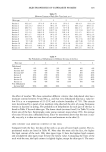
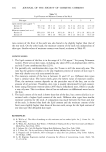
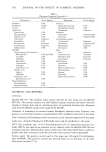
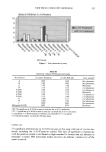
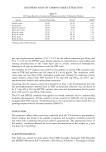
SKIN PROPERTIES OF TAIWANESE WOMEN 301 MEASUREMENT OF MOISTURE CONTENT The moisture content of the skin was determined using a corneometer CM 820 (Courage and Khazaka Electronic GmbH, Germany). A probe was pressed against the skin with a force of 1.5 N for 1 second. The measured area was 49 mm 2. Because the di- electric constants of water differ considerably from those of other substances, the mois- ture content of the skin could be determined by the change of capacity of the measuring capacitor. The results were recorded digitally in arbitrary units. RESULTS AND DISCUSSION LIPID CONTENT OF THE FACE The lipid content of the face is in the range of 4-254 }zgcm -2 for young Taiwanese women. Nogueira and Gabrielle defined skin type by different criteria for different parts of the face: a lipid content between 90 and 200 }zgcm -2 is defined as normal skin for the forehead, between 90 and 160 •gcm -2 for the cheek, and between 60 and 100 }zgcm -2 for the neck (5), because oil secretion is different in different parts of the face and neck. However, the same criteria should be used to determine skin type for different parts. An appearance of oily skin depends on lipid content only, not on loca- tion. Nogueira and Gabrielle also ignored the fact that weather is also a very important factor in oil secretion. Hot weather promotes more oil secretion, while cold weather suppresses it. To exclude the effect of weather, our measurements were taken at a temperature of 22-25øC and a relative humidity of 75%, and oil secretion was allowed to reach equi- librium before the measurements were taken. The same criteria were used to determine skin type for different parts of the face and neck. This criteria was determined by ob- serving the skin of young Taiwanese women in daytime in spring. Their skin surfaces were examined under an image through photofibers. If the lipid content was greater than 100 }zgcm -2, the skin was classified as oily. If the lipid content was smaller than 50 }zgcm -2, the skin was regarded as oil-depleted. A lipid content between 50 and 100 }zgcm -2 was taken as normal. The skin types of young Taiwanese women were then classified into six categories, listed in Table I. Twenty percent of the women had oily skin. Only ten percent had oil-depleted skin. Most women (70%) had combination skin Table I Skin Type of Young Taiwanese Women Skin type 1 2 a 3 b 4 • 5 a 6 Oily O/Normal Partially O/N O/oil-depleted Partially O/D Oil-depleted combination combination combination combination Percent (%) 20 16 23 6 25 10 aType 2: oily T-zone/normal combination. bType 3: partially oily/normal combination. CType 4: oily T-zone/oil-depleted combination. aType 5: partially oily/oil-depleted combination.
Purchased for the exclusive use of nofirst nolast (unknown)
From: SCC Media Library & Resource Center (library.scconline.org)