j. Soc. Cosmet. Chem., 48, 127-131 (May/June 1997) Gel permeation chromatography: An effective method of quantifying the adsorption of cationic polymers by bleached hair B. BLANCO, B. A. DUROST, and R. R. MYERS, Calgon Corporation, Pittsburgh, PA 15230. Accepted for publication July 31, 1997. Presented at the Annual Scientific Seminar of the Society of Cosmetic Chemists, Nashville, May 1-2, 1997. Synopsis Gel permeation chromatography (GPC) was validated as a method and used to measure the adsorption by bleached hair of cationic conditioning polymers out of aqueous solution. Cationic polymer uptake by bleached hair was measured indirectly by determining the depletion of polymer concentration of the treatment solutions following the treatment of hair. Nine commercially available cationic conditioning polymers were evaluated. The uptake ofpolyquaternium 7 on very damaged bleached blond hair determined by GPC correlated with previously published results measured by radiotracing. No direct correlation was found between substantivity of the polymers under the tested conditions and their molecular weight or their mole percent of cationic net charge. The latter two factors, plus the ability of the polymer to form hydrogen bonding and Van der Waals attraction forces with the hair, appear to work together to provide polymer substantivity to hair. INTRODUCTION Cationic polymers have been used in the cosmetics industry to improve the detangling and wet combing of hair after shampooing. Cationic polymers are also used to impart softness, shine, and volume to hair. To provide all of these performance benefits, the cationic polymer must attach to the hair. Various mechanisms (ionic interactions, hy- drogen bonding, etc.) that are beyond the scope of this paper act simultaneously to make this attachment possible. Many approaches have been used to quantify the amount of cationic polymer deposited on the hair after treatment. Methods such as wettability, electrophoresis, streaming potential, and the dye uptake test provide only relative in- formation about the surface condition of the hair they do not quantify the amount of polymer on the hair. Quantification of adsorbed polymer has been demonstrated by methods such as radiotracer techniques, ESCA, and colloid titration. Radiolabeling using C t4 has proved to be the most sensitive and reliable method, but this method is very expensive and time-consuming. The cosmetic industry requires an effective, repro- 127

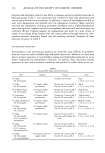
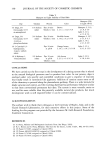
128 JOURNAL OF THE SOCIETY OF COSMETIC CHEMISTS ducible, simple, and quick method to measure cationic polymer substantivity on hair. For this purpose, gel permeation chromatography (GPC) has been validated as a method to measure the adsorption of cationic polymers on hair. The uptake of nine cationic conditioning polymers on bleached hair was measured indirectly by determining the difference in polymer concentration in solutions before and after the treatment of the hair. This paper describes, in detail, the GPC procedure needed for the determination of cationic polymer uptake by hair. The effects of polymer molecular weight and mole percent of cationic net charge on the substantivity of the polymers are also reported. EXPERIMENTAL CONDITIONS Bleached blond hair 8 inches long from De Meo Brothers, New York, was used in this investigation. The cationic polymers used are listed in Table I, and the treatment solutions were 0.10% aqueous polymer solutions, pH 6.0 + 0.1. The study was con- ducted at 22øC. PREPARATION OF HAIR SAMPLES Bleached blond hair tresses were thoroughly washed by alternately immersing them in 15% active Triton X-100 solution and rinsing them with deionized water. After this treatment, the hair tresses were immersed for 1 hour in a 60% acetone/1% NaC1 aqueous solution and then rinsed thoroughly. SUBSTANTIVITY STUDY SAMPLE PREPARATION Washed hair (2.30 g) was allowed to soak in 150 ml of treatment solution for 30 minutes. A reciprocating mixer with a speed of 420 min -1 was used to agitate the Table I Cationic Polymers Used in the Investigation Trade name INCI name Merquat 5501 Merquat 280 • Merquat 20001 Merquat Plus 33301 Merquat 1001 Gafquat 755N 2 Gafquat HS 1002 Polymer JR 4003 Celquat L-2004 Polyquaternium 7 Polyquatermum 22 Polyquaternmm 47 Polyquatermum 39 Polyquatermum 6 Polyquatermum 11 Polyquatermum 28 Polyquatermum 10 Polyquatermum 4 1 Calgon Corporation, Pittsburgh PA 15230. 2 International Specialty Products, Wayne, NJ 07470. 3 Amerchol Corporation, Edison, NJ 08818. 4 National Starch and Chemical Company, Bridgewater, NJ 08807.
Purchased for the exclusive use of nofirst nolast (unknown)
From: SCC Media Library & Resource Center (library.scconline.org)