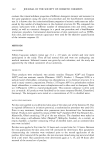
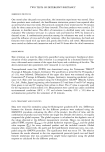
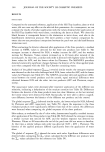
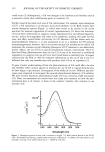
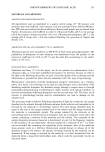
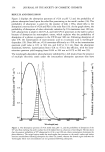
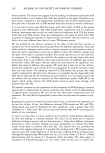
134 JOURNAL OF THE SOCIETY OF COSMETIC CHEMISTS large volumes of powder are needed to obtain adequate color coverage on a whole head of hair. Also, because the product is applied to hair as a thick paste and the dyeing times range from one to two hours, the paste usually dries on the head during this time and becomes quite difficult to rinse out after dyeing. Probably the most serious deficiency, though, is the very limited range of colors available. These types of colors usually exclude the products from use for gray coverage, which is one of the major reasons that con- sumers turn to hair color products. While there are clearly a number of opportunities for product improvements in this area, we have chosen to take a different approach in our development of natural dye products. This paper is an account of our progress. MELANINS AND MELANOGENESIS Human hair and skin are colored by the presence of melanins, materials that are also responsible for coloration in many other animals and some plants. Many of the biological processes that form melanins are now adequately understood, and much research has been carried out in recent years on the structure and properties of the various melanins (1). Two different melanins are found in human hair: blonde, brown, and black hair contains eumelanin, while pheomelanin is found in red hair. It is believed that the melanins share a common biosynthetic pathway (1) with the selection controlled by the presence or absence in the melanocyte of thioIs such as cysteine. Eumelanins are polymers of 5,6- dihydroxyindole and its 2-carboxylic acid, both of which result from the enzymatically controlled oxidation and subsequent cyclization of dopa. In pheomelanocytes, however, dopaquinone, the oxidation product of dopa, reacts with cysteine to produce a mixture of cysteinyldopas that subsequently cyclize to benzothiazines, the building blocks of pheomelanin. A simplified reaction scheme is shown in Figure 1. The color of hair is thought to be largely produced by light scattering from the melanin CYS •OH OH $ENZOTHIAZIN•. ALANINE •i PHEOMELANIN8 EUMELANIN$ HO COOH H DHICA Figure 1. Simplified scheme for melanogenesis.

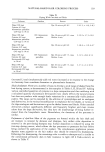
NATURAL-BASED HAIR COLORING PROCESS 135 pigment particles, and therefore the observed color is dependent on the size and shape of the particles, their distribution in the keratin matrix, and their concentration. In addition, there is probably some contribution from the weak chromophores thought to be present in the pigments. In line with this, the two pigment types have been found to have significantly different physical properties. In a recent publication (2), we described an efficient way to convert dopa into 5,6- dihydroxyindole on hair using selected oxidants, thus allowing us to form eumelanins within the hair by a process that closely follows the natural pathway. We have now made additional significant developments in this area by establishing conditions that also allow us to exploit the pheomelanin pathway, thereby markedly broadening the color palette and the consumer appeal of this novel, natural-based dyeing system. MATERIALS AND METHODS All dye materials were either purchased from commercial suppliers or synthesized by the methods referred to in the text. Where necessary, appropriate techniques were used to verify the structures. Hair dyeing followed standard industry practice and was generally carried out by soaking 2-g hair tresses (usually white hair) in 5 g of dye solution for the required time. Water was the solvent of choice, although frequently a small amount of methanol or diethyleneglycolmethylether was needed to dissolve the dye precursors. After a rapid rinse under running tap water, the tress was either shampooed or the second oxidative treatment was applied prior to the shampoo. Shampoo resistance was evaluated by washing the tress by hand with a commercial shampoo after the dyed tress had been air dried. Color hue and intensity were evaluated by eye and where necessary by Hunter- Lab Tristimulus instrumentation. RESULTS AND DISCUSSION EUMELANIN FORMATION Conditions for polymerizing 5,6-dihydroxindole (DHI) and 5,6-dihydroxyindole-2- carboxylic acid (DHICA) into eumelanins are well known. In general, any oxidant including atmospheric oxygen is effective, although copper ions or the combination of hydrogen peroxide and iodide ions seem to be the most effective reagents according to the patent literature (3,4). Our recent publication (2) describes a simple and convenient process for converting dopa into a mixture of DHI and DHICA by use of a controlled amount of potassium ferricyanide in buffered solution. By combining these two pro- cesses in sequence, gray hair is dyed a very intense black color by forming high yields of melanin from only low concentrations of dopa. In order to produce colors other than black and therefore broaden the consumer appeal, a number of modifications and improvements to the original process were developed. Some of the reactive sites on dopa have been blocked by less reactive substituents so that the subsequent chemistry is then modified. In this way, much lighter brown colors are produced on hair from materials such as dopa methyl ester (which cannot easily decar-
Purchased for the exclusive use of nofirst nolast (unknown)
From: SCC Media Library & Resource Center (library.scconline.org)