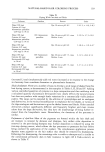
142 JOURNAL OF THE SOCIETY OF COSMETIC CHEMISTS evaluate the irritant/mildness properties of different detergents (anionic and nonionic) in the same population using the patch test procedure and the hand/forearm immersion test. It is known that the irritation/mildness properties of anionic surfactants are influ- enced by the number of ethoxylations in the chemical structure (8). We compared two anionic surfactants with a different number of ethoxylations (two and seven, respec- tively), as well as a nonionic detergent in a patch test procedure and a hand/forearm immersion procedure. Instrumental determination of skin parameters such as TEWL, skin color, and stratum corneum capacitance were used for the objective quantification of the irritative response (4). METHODS VOLUNTEERS Fifteen Caucasian subjects (mean age 21.4 + 2.9 years six women and nine men) participated in the study. They all had normal skin and were not undergoing any medical treatment. Informed consent was given by each volunteer, and the study was approved by the ethical committee of our university. PRODUCTS Three products were evaluated: two anionic tensides (Texapon N28 © and Texapon ASV ©) and one nonionic tenside (Plantaren 1200©). Product 1 (Texapon N28) is a sodium lauryl ethersulfate, containing two ethoxylations in its chemical structure. It is used in many cosmetic preparations. Product 2 (Texapon ASV) is a polyethylene sodium lauryl ethersulfate it contains seven ethoxylations and is often used in shampoos. Prod- uct 3 (Plantaren 1200) is a lauryl polyglycoside. This nonionic substance is often used as a co-tenside. All products were furnished by the same company (Henkel, Dusseldorf, Germany). The detergents were tested at a concentration of 2% in distilled water. PATCH TEST PROTOCOL Patches were applied to six delimited skin areas of the volar part of the forearms (9). Due to regional differences in irritation potential, a randomization procedure was used (10). Prior to any treatment, baseline skin parameters were determined (see Instruments, below). Products were applied by means of Hill Top © chambers (Hill Top Research Inc., Miamiville, Ohio) containing 150 lal of the test solution. The chambers were sealed to the skin using a self-adhesive fabric (Mephix ©, Mi51nycke, Sweden). As a control, an empty chamber, a chamber containing 150 lal of distilled water, and an untreated skin area were included. Patches were applied a first time for 24 hours and a second time for 21 hours. Between the two applications the skin areas were left untreated for three hours. Skin parameters characterizing the irritation were evaluated prior to the second application of the patches. After removal of the patches, the test sites were rinsed using tap water and dried with a soft towel. Skin parameters were determined again at 3, 24, and 48 hours after removal of the second set of patches.

TWO TESTS OF DETERGENT IRRITANCY 143 IMMERSION PROTOCOL One month after the patch test procedure, the immersion experiment was started. Since three products were evaluated, the hand/forearm immersion protocol was repeated after an interval of at least two weeks. The protocol consisted of one immersion for 30 minutes daily for three consecutive days (24-hour interval). The three products were tested at 2% solutions in distilled water. The effect of immersion in distilled water only was also evaluated. The solutions were put in a plastic tank and heated at 40øC by means of a thermal stirrer. A randomization procedure among the volunteers was used in order to avoid the influence of time and left-right variations. After the immersion, the hand and forearms were rinsed with tap water and gently dried with a soft towel. Measurements were carried out before each immersion and at 8 and 24 hours after the third immersion. INSTRUMENTS Skin irritation can now be objectively quantified using noninvasive biophysical deter- mination of skin properties. Skin irritation is accompanied by a decreased barrier func- tion, a decreased water content of the upper skin layers, and a reddening of the skin. The above-mentioned skin parameters were measured in our experiment. Transepidermal water loss (TEWL) was determined using the Tewameter TM820 © (Courage & Khazaka, Cologne, Germany). The guidelines as prescribed by Pinnagoda et al. (11), were followed. Dehydration of the upper skin layers was estimated using the Corneometer © (Courage & Khazaka, Cologne, Germany), measuring epidermal capaci- tance (12). Skin color was assessed using the Chromameter CR200 © (Minolta Camera Co., Ltd., Osaka, Japan) registering color luminance (L*) and hues a* and b* (a* ranging from green to red and b* ranging from yellow to blue). The a* value is especially used for the registration of skin redness (13). Measurements were carried out under controlled environmental conditions (20øC + 2øC and relative humidity 45% + 5%) after an acclimatization period for the volunteers of 30 minutes. DATA TREATMENT AND STATISTICS Data were tested for normality using the Kolmogorov goodness-of-fit test. Differences between the kinetics obtained for the different products were analyzed using the MANOVA procedure, evaluating the effect of the product, the effect of time, and the combination of product and time within one single test. Besides the kinetics, we equally compared the global response. The global response is calculated as the algebraic sum of the values obtained at the different measurement intervals. Hence, we calculated the global TEWL response (•TEW•), the global hydration response (•i•yd), and the global color response (•a*) for every evaluated product and the included controls. Global response after, respectively, the patch and the hand/forearm immersion tests, was com- pared using the ANOVA procedure. The significance level was set at 5 %. The relation between the results obtained in the two experimental protocols (patch test and hand/ forearm immersion test) was calculated by simple linear regression using the global response as calculated for the different products.
Purchased for the exclusive use of nofirst nolast (unknown)
From: SCC Media Library & Resource Center (library.scconline.org)