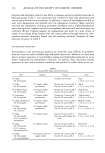
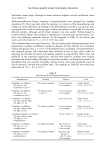
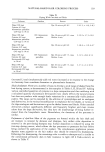
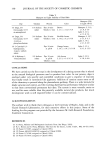
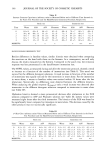
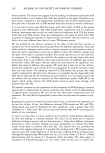
140 JOURNAL OF THE SOCIETY OF COSMETIC CHEMISTS Table V Shampoo and Light Stability of Dyed Hair Dye Shampoo (5X) Oxidant Process Color or Light (48 h) 1% Dopa, 6% ferricyanide, 0.3 % m-aminophenol 1% Dopa, 6% ferricyanide, 0.3 % 2-nitro-p- phenylenediamine 1% 2-Cysteinyl- 1,4- hydroquinone, 4-equiv. sodium iodate 1% 6-Hydroxy-1, 4-benzothiazine 1% Sodium Dye 20 rain Brown Shampoo: L 21.9, iodate Oxidize 2 rain L 21.7, a 1.8, b 4.8 a 1.8, b 4.9 Light: L 22.5, a 2.2, b 5.4 5% Sodium Dye 20 rain Reddish brown Shampoo: L 19.7, iodate Oxidize 2 min L 19.6, a 4.3, b 4.0 a 4.5, b 4..3 Light: L 19.5, a4.1, b4.0 Dye 10 rain Orange brown Light: L 35.3, at pH 8 L 34.7, a 10.7, b 14.8 a 9.3, b 13.9 1% Sodium Dye 10 rain Ash brown Light: L 22.9, iodate at pH 8 L 21.1, a 1.4, b 5.9 a 2.8, b 6.6. Oxidize 2 rain CONCLUSIONS We have carried out the first steps in the development of a dyeing system that is related to the natural biological processes used to produce hair color. In our process, dopa is oxidized under very specific and controlled conditions to give a sequence of reactions that finally result in eumelanin-like pigments. Addition of cysteine causes some or all of the chemistry to proceed along the pheomelanin pathway. There is a wide latitude for shade variation and control, and the resulting dyed hair has performance behavior similar to that from conventional permanent hair dyes. The system is more versatile, easier to use, and far more reliable than the presently available natural dye products, but much development work is still required before it can be commercialized. ACKNOWLEDGMENTS The authors wish to thank their colleagues at the University of Naples, Italy, and in the Clairol Research Laboratories, for their extensive efforts in this project. Some of the funding for this program was provided by the Lawrence M. Gelb Research Foundation, Stamford, Connecticut. REFERENCES (1) G. Prota, Melanins and Melanogenesis (Academic Press, San Diego, 1992). (2) K. C. Brown and G. Prota, Melanins: Hair dyes for the future., Cosmet. Toiletr., 109, 59-64 (1994). (3) US Patent 5173085, assigned to Clairol (1992). (4) US Patents 4804385,4808190, assigned to L'Oreal (1989). (5) US Patent 5374288, assigned to Clairol (1994). (6) US Patent 5435810, assigned to Clairol (1995).

J. Soc. Cosmet. Chem., 48, 141-149 (May/June 1997) Comparison of three detergents using the patch test and the hand/forearm immersion test as measurements of irritancy P. CLARYS and A. O. BAREL, Vrije Universiteit Brussel, Pleinlaan 2, 1050 Brussels, Belgium. Accepted for publication July 31, 1997. Synopsis Two anionic surfactants and a nonionic surfactant were tested in two different irritation test protocols. The two anionic surfactants differed in the number of ethoxylations. The latter is known to influence the mildness properties of the detergents. The irritation test protocols used were a patch test procedure (two repetitions) and a hand/forearm immersion procedure (three repetitions) that is much closer to real user conditions. Skin irritation was quantified using bioengineering methods. The patch test procedure delivered a clear rank order for the test products: the anionic surfactant with two ethoxylations was found to cause a more severe irritation compared to the anionic surfactant with seven ethoxylations, and the nonionic surfactant was the mildest. The hand/forearm immersion test provoked a much weaker irritation, making the discrimination between the products less obvious. A moderate-to-good correlation was obtained when comparing the product rank order obtained in the two protocols. INTRODUCTION The patch test on human volunteers is a widely used in vivo method for the evaluation of the irritant properties of detergents. However, this procedure is susceptible to several experimental factors influencing the outcome of the results in a significant way. Indeed, the literature reports on the type of chamber used (1), the temperature of application (2), the concentration of the detergent used (3), etc. When taking into account these ex- perimental factors, the patch test method is known to be a reproducible test procedure. The objective quantification of different skin parameters, through instrumental readings characterizing the irritation, increased the value of the patch test procedure (3-4). Nevertheless, the conditions of the patch test are far from the conditions under which the products are normally used. Hence, several test procedures were developed that are closer to real user conditions (5). It was demonstrated that procedures like the hand/ forearm immersion test equally require a high standardization of experimental condi- tions in order to assure reproducibility (6). Only a few studies have compared the irritant properties of detergents using both the patch test and a procedure close to domestic user conditions (7). It was our aim to 141
Purchased for the exclusive use of nofirst nolast (unknown)
From: SCC Media Library & Resource Center (library.scconline.org)