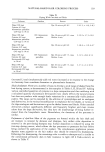
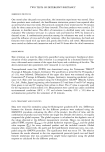
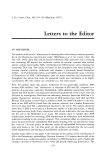
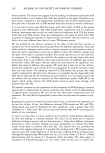
136 JOURNAL OF THE SOCIETY OF COSMETIC CHEMISTS boxylate) and adrenaline (which is less likely to undergo extensive polymerization due to blocking groups at the l- and 3-positions and is known to form only adrenolutin and various isatin derivatives on oxidation). In addition, a variety of nucleophi!es are able to react with dopaquinone and radically alter the subsequent chemistry. Many currently used hair dye ingredients, including permanent developers such a p-phenylenediamine and p-aminophenol, couplers such as m-aminophenol and resorcinol, and direct dyes, are extremely efficient trapping reagents for dopaquinone and result in a wide variety of yellow to red shades being formed from the colored adducts through which the chro- mophore becomes chemically bound into the resulting melanins. Examples of these processes are given in Table I. PHEOMELANIN FORMATION Intermediates in the pheomelanin pathway are somewhat more difficult to synthesize than the relatively easily available dopa and indole derivatives. However, we have been able to prepare quantities of cysteinyldopa analogs and hydroxybenzothiazines to act as model compounds for pheomelanin formation. In general, these derivatives formed pigments on hair under oxidative conditions and resulted in stable colors in the yel- Table I Dyeing With Dopa and Its Derivatives Dye Oxidant Process Color 1% Dopa, 6% ferricyanide 1% Dopa, 1% Copper sulfate 6% ferricyanide pretreatment 1% s-Methyl dopa, 1% Copper sulfate 6% ferricyanide pretreatment 1% Adrenaline, 1% Copper sulfate 6% ferricyanide pretreatment 1% Dopa methyl ester, 1% Copper sulfate 6% ferricyanide pretreatment 1% Dopa, 1% Copper sulfate 6% ferricyanide, pretreatment 1% resorcinol 1% Dopa, 5% Sodium iodate 6% ferricyanide 0.3% 2-methyl-5- aminophenol 1% Dopa, 5 % Sodium iodate 6% ferricyanide, 0.3% 2-nitro-p- phenylenediamine 1% Dopa, Pretreatrnent with 1% 6% ferricyanide, copper sulfate 1% p-aminophenol At pH 8, for 30 min Gray L 29.6, a 0.3, b 5.2 Pretreat for 5 rnin at pH 8 Black Dye for 30 rnin at pH 8 L 14.1, a 0.4, b 0.6 Pretreat for 5 rnin at pH 8 Dark brown Dye for 30 rnin at pH 8 L 20.5, a 1.9, b 2.5 Pretreat for 5 rnin at pH 8 Yellow brown Dye for 30 min at pH 8 L 22.4, a 1.8, b 6.1 Pretreat for 5 min at pH 8 Medium brown Dye for 30 min at pH 8 L 27.8, a 2.5, b 5.5 Pretreat for 5 min at pH 8 Dark brown Dye for 30 min at pH 8 L 17.3, a 0.6, b 2.5 Dye for 30 min at pH 8 Red brown Post-treat with oxidant for L 23.5, a 2.0, b 4.8 2 min Dye for 20 min at pH 8 Post-treat with oxidant for 2 min Pretreat for 5 min at pH 8 Dye for 30 min at pH 8 Red brown L 19.6, a 4.3, b 4.0 rown 23.1, a 1.8, b 3.7

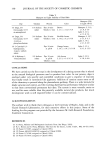
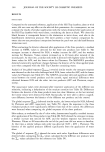
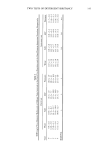
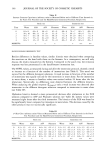
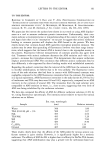
NATURAL-BASED HAIR COLORING PROCESS 137 low/brown shade range, although in some instances brighter red and red/brown colors were produced. Hydroxybenzothiazines. Several hydroxy-l,4-benzothiazines were prepared by standard procedures (5). Hair was dyed either by soaking in a mixture of the benzothiazine and oxidant or, more preferably, by soaking in the benzothiazine and then, in a separate step, treating the hair with an oxidizing agent. Sodium periodate at neutral pH was the most effective oxidant, although several other oxidants were also useful. Yellow-blonde to medium brown shades were produced, depending on the particular benzothiazine, oxi- dant, and oxidizing conditions selected. In the examples in Table II, the solvent was water, and white hair (L 67, a -0.6, b 18.5) was used. Thio-substituted dopa and catechol derivatives. The thio-substituted dihydroxybenzenes were prepared by a number of different standard techniques (6) that allowed us to introduce various thio groups onto 1,2- and 1,4-dihydroxybenzenes, including 2-aminoethanethio- and cysteinyl groups. All compounds were oxidized on hair to give color, either by applying the benzene derivative and oxidant together or sequentially. More color was produced in the sequential application, and the most effective oxidants were sodium periodate and sodium iodate, although several other oxidants, including ferricyanide and persulfate, were also suitable. Generally, intense brown colors were produced, many of which reflected a marked red or yellow tone. The examples in Table III were dyed onto white hair (L 70, a -0.5, b 18.7). Table II Hair Dyeing With Hydroxybenzothiazines Benzothiazine Oxidant Process Color 8-Hydroxy- 1,4-dihydro- (20 mg in 5 ml/ bicarbonate to pH 7) 8-Hydroxy- 1,4-dihydro- (20 mg in 5 ml/ bicarbonate to pH 7) 6-Hydroxyl-1,4-dihydro- (20 mg), sodium iodate (36 mg), in 5 ml 6-Hydroxy-l,4-dihydro- (20 mg), sodium iodate (36 mg), in 5ml 2-Carboxy-6-hydroxy- 1,4-dihydro- (20 mg), sodium iodate (36 mg) in 5 ml methanol/water 6-Hydroxy- 1,4-dihydro- (50 mg) in 5 ml methanoi/water 6-Hydroxy-l,4-dihydro- (50 mg) in 5 ml methanol/water 2% Sodium periodate 2% Sodium iodate at pH 4.2 2% Sodium periodate 1% Sodium periodate 1% Sodium periodate 10 min dye/rinse 2 min oxidant Golden blonde L 40, a 5.5, b 15.1 10 min dye/rinse Ash blonde 2 min oxidant L 42.5, a 2.3, b 10.7 pH 5 for 10 min 10 min dye/rinse 2 min oxidant 10 min at pH 7.2 Violet brown L 24, a 4.7, b 1.3 Dark violet gray L 20.7, a 3.5, b 0.0 Orange brown L 41.5, a 7, b 14.8 Dye 20 min at Dark brown pH 10, rinse L 20, a 1.4, b 2.8 5 min oxidant Gray hair, dye Medium brown 20 min at L 25.3, a 1.1, b 3.9 pH 10, rinse 5 min oxidant
Purchased for the exclusive use of nofirst nolast (unknown)
From: SCC Media Library & Resource Center (library.scconline.org)