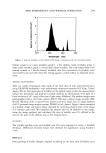
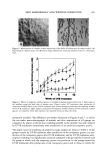
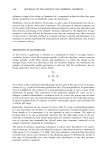
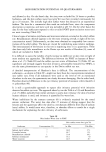
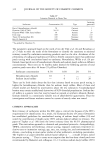
SKIN MORPHOLOGY AND WRINKLE FORMATION 299 o 200 300 400 500 Wavelength (nm) Figure 1. Spectral irradiance of the unfiltered SE lamps as measured with the radiospectrometer. follows: grade 0, no coarse wrinkles grade 1, a few shallow coarse wrinkles grade 2, some coarse wrinkles grade 3, several deep coarse wrinkles. The scale ranged from 0 for normal animals to 3 for the heavily wrinkled skin. For convenience in grading, mice were held by the tail with their feet resting against a solid surface to diminish move- ment. WRINKLE MEASUREMENT After ten weeks, impressions were made of the back skin of nine unrestrained mice, using EXAFINE hydrophilic vinyl polysiloxane impression material (GC Corp. Tokyo, Japan). We set the impression of wrinkles on the sample stand so that the measurement surface was horizontal, and produced wrinkle shadows by illumination with light of a fixed intensity at 30 ø, using a fiber optic light source (Nikkon). The shadow images were photographed with a still video camera (MS-C1100) and a digital image recorder (MS- R1100, Minolta) with a macro50 lens system and were input into an image analyzer (LA555 personal image analysis system, PIASS Co Ltd., Japan). Figure 3 shows examples of a shadow image and binary image obtained by extracting shaded areas of the image at a constant gray level. We measured the shadow area for all shadows in one image, using the image analyzer, and calculated the ratio of wrinkle area (%), defined as the ratio of the sum of the shadow area to the measured area. STATISTICS The wrinkle grading score and wrinkle area (%) were expressed as mean + standard deviation. Differences between means were checked for significance using Student's t-test. RESULTS From grading of visible changes, original wrinkling on the back skin of hairless mice

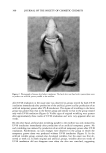
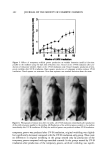
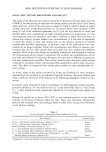
300 JOURNAL OF THE SOCIETY OF COSMETIC CHEMISTS Figure 2. Photographs of mouse skin before irradiation. The back skin was fixed with cyanoacrylate resin to produce an artificial groove parallel to the midline. after UV-B irradiation in the usual state was observed in groups treated by both UV-B irradiation immediately after production of the artificial groove and by production of an artificial temporary groove after UV-B irradiation. The degree of wrinkling in the latter group was greater than that in the former group and similar to that in the group treated only with UV-B irradiation (Figure 4). Visible signs of original wrinkling were present after approximately three weeks of UV-B irradiation and were very apparent after ten weeks. On the other hand, artificial skin wrinkling parallel to the midline was only induced by UV-B irradiation immediately after production of an artificial temporary groove. No such wrinkling was induced by production of an artificial temporary groove after UV-B irradiation. Furthermore, no such changes were observed in the group in which the temporary groove alone was produced without UV-B irradiation (Figure 5). In the artificial wrinkle group, animals also developed wrinkles, but the onset was first ob- served at week six. In both original and artificial groups, wrinkles after ten weeks of UV-B irradiation did not disappear even when the skin was stretched, suggesting
Purchased for the exclusive use of nofirst nolast (unknown)
From: SCC Media Library & Resource Center (library.scconline.org)