j. Soc. Cosmet. Chem., 48, 297-306 (November/December 1997) Skin morpholoDy at the time of UV irradiation is important for wrinkle formation YOSHINORI TAKEMA, AYUMI NISHIJIMA, HIROYUKI OHSU, TSUTOMU FUJIMURA, and MICHIHIRO HATTORI, Biological Science Laboratories, Kao Corporation, Tochigi 321-34, Japan. Accepted for publication December 1, 1997, Synopsis Hairless mice (HR/ICR) were irradiated chronically with suberythemal doses of UV-B radiation (ultraviolet radiation in wavelength 290-320 nm) immediately before and after production, with cyanoacrylate resin, of an artificial temporary groove parallel to the midline, which is an unusual direction for wrinkle formation. Data for UV radiation-exposed skin beibre or after production of an artificial groove and in chronological age-matched control mice or mice treated only by production of an artificial temporary groove were compared. Visible signs of artificial wrinkling were present after approximately six weeks of UV-B irra- diation and were very apparent after ten weeks of irradiation. From image analysis of skin impressions after ten weeks, artificial wrinkling in skin treated by UV-B irradiation after production of an artificial groove was significantly increased compared with skin in which an artificial groove was produced after UV-B irradiation. These results indicated that both an artificial temporary groove in the skin and UV-B irradiation immediately after production of the temporary groove are necessary for wrinkle formation in this mouse model, and suggested that the skin morphology at the time of UV-B irradiation is important for wrinkle formation. INTRODUCTION Wrinkles are the most common of all the signs of aging. There have been many histological studies of wrinkles in the skin of aged human subjects (1-3). Wrinkles of facial expression occurring on the facial skin are the most well developed and become permanent with chronological aging (4-7). The facial skin responds to every movement of the underlying muscles in smiling, frowning, and physical movement, and such movement produces temporary but repeated wrinkling of the same portion of the face. This repeated temporary wrinkling has been suggested to play an important role in the formation of permanent wrinkles. Hairless mice have been used extensively in studies of the formation of wrinkles after chronic UV-B irradiation (ultraviolet radiation in wave- length range 290-320 nm) (8-12). Kiss et aL (11) reported that there are other factors in addition to total cumulative UV-B dose that are important for the appearance of wrinkling in this model. Despite the suggestion that repeated temporary wrinkling 297

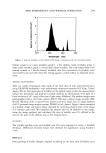
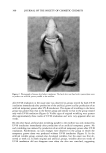
298 JOURNAL OF THE SOCIETY OF COSMETIC CHEMISTS plays an important role in the formation of permanent wrinkles, there have been few studies of the factors associated with wrinkle formation using hairless mice. We previously evaluated the effects of temporary skin fixation on wrinkle formation using the back skin of hairless mice (13). In the group exposed for 20 weeks to UV-B irradiation immediately after production of the artificial groove parallel to the midline, a wrinkle formed at right angles to the groove, which is an unusual direction for wrinkle formation. Therefore, in this study, we examined the first ten-week period quantita- tively, using image analysis to determine how early wrinkle formation can occur, and we also studied the effects of production of a temporary groove in the skin. MATERIALS AND METHODS ANIMALS HR/ICR albino hairless mice were used in this study. This strain was derived by crossing hairless mice (HR/HR), originally obtained from Nisseiken Corporation, Japan, and the albino strain HaM/ICR. The HR/ICR strain represents a line maintained under con- ventional conditions in our laboratory for several generations of hairless brother/ phenotypically normal haired sister mating. All experiments were performed with hair- less female mice only, which had free access to food and water throughout the experi- mental period. Animals were housed in rooms where the lighting without UV emission was automatically regulated on a 12-hour light/dark cycle. RADIATION SOURCE AND PRODUCTION OF ARTIFICIAL TEMPORARY GROOVE The hairless mice were divided into five groups from the same stock at six weeks: group 1, UV-B irradiation immediately after production of the artificial temporary groove group 2, production of the artificial temporary groove immediately after UV-B irradia- tion group 3, production of the artificial temporary groove only (no irradiation) group 4, UV-B irradiation only group 5, no treatment. Group 1 and 2 UV-B mice were placed in cages in groups of nine animals each and were irradiated by a bank of six Toshiba SE lamps with no filtering for UV-B. The distance from the lamps to the animals' backs was 35 cm. The animals were exposed to UV-B at a dose of 65 mJ/cm 2 (1 MED = 70 mJ/cm 2) five times weekly for ten weeks, yielding a total dose of 32.5 J/cm 2. The energy output of the lamps (at 35 cm) was measured with a Topcon Co. Ltd. UV-radiometer 305/365DII. The spectral irradiance of these lamps was measured with an Optical Science Co. Ltd. MSR7000 radiospectrometer, the spectral output of which is shown in Figure 1. The mice in the test groups were anesthetized with ether ten minutes before irradiation, and the back skin was fixed with cyanoacrylate resin to produce an artificial groove parallel to the midline (Figure 2). The control groups were not treated or were treated similarly but without UV irradiation. During the period of exposure, the animals could move around freely in their cages. The template (cyanoacrylate resin)-induced groove seen after completion of the UV irradiation protocol was confirmed to be restored to the previous state after one to two hours. GRADING OF VISIBLE CHANGES Skin wrinkling in hairless mice was assessed weekly as described by Bisett et al. (8), as
Purchased for the exclusive use of nofirst nolast (unknown)
From: SCC Media Library & Resource Center (library.scconline.org)