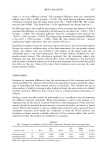
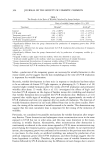
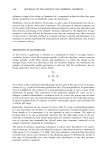
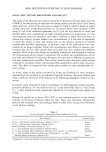
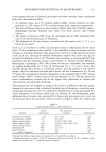
SKIN IRRITATION POTENTIAL OF QUATERNARIES 309 EARLY SKIN TESTING PROCEDURES AND RESULTS The study of the skin and eye irritation potential of quaternaries began about the time of WW II, and the ranking of surfactants was based primarily on the results of the Draize rabbit skin test. A few of the early data are shown in Table I, which is based on results of rabbit skin tests, as described by Draize (1). The data in Table I were obtained in 1967 using 0.5 ml of the undiluted quaternary (or 0.5 g of the dry) material on intact and abraded rabbit skin, establishing the high irritation potential of quaternaries (3). The concentrations tested are unrealistic and make it difficult to assess their pertinence to human skin irritancy at more modest (use) concentrations. It is also next to impossible to relate the results of these and similar tests to the irritancy potential of modern commercially available quaternaries in addition, some of the trade-named test com- pounds are no longer available. These early investigators were forced to examine qua- ternaries that did not differ greatly from each other but were produced by different suppliers. Much of the early testing was probably tendentious and designed to confirm the innocuousness of the sponsor's compound. The excellent and comprehensive review by Cutler and Drobeck (3) shows the divergence of results due to differing test protocols that were inadequately controlled. Their review correctly notes that most studies concern irritation by accidental contact with antimicrobial quaternaries used in high concentra- tions. The efforts to categorize these results often resulted in some unexplainable irri- tancy ratings. As noted, many of the studies reviewed by Cutler and Drobeck (3) were company- sponsored and not recorded in the published (journal) literature. Retrieval of these data today is difficult, and much of the material in the following paragraphs is based on their review. In another study reviewed by Cutler and Drobeck (3), dihydrogenated tallow benzyldi- monium chloride at 5% was rated as mild. It is also noteworthy that in a third study C•2_•6 alkyl dimethyl benzyl ammonium chloride (0.3%) was found only mildly irri- tating. During the period up to about 1965-1970, it was common practice to rate dermal irritancy on the basis of (Draize) rabbit eye tests. These tests sometimes followed the protocol and included seven-day readings, while at other times scoring was terminated at the 48-hour reading. Table I Irritancy Ratings of Quaternaries (Draize Rabbit Skin Test)* Test material Irritancy rating Di Cs_•o alkyl benzyl methyl ammonium chloride (53.5%) Di Cs_•o alkyl dimethyl ammonium chloride (50.6%) Didecyl dimethyl ammonium chloride (55.7%) C•2_•6 alkyl dimethyl benzyl ammonium chloride (50%) C•2_•6 alkyl dimethyl benzyl ammonium chloride (92.6% powder, i.e., Zephiran ©) C•2_•s alkyl dimethyl ethylbenzyl ammonium chloride plus C•246 alkyl dimethyl benzyl ammonium chloride (50%) Severe Severe Severe Severe Moderate Severe * Reported by Cutler and Drobeck (3), based on data by Duprey and Hoppe (1970).

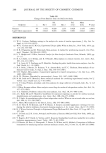
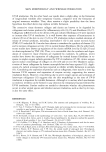
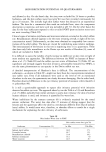
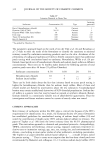
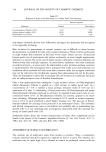
310 JOURNAL OF THE SOCIETY OF COSMETIC CHEMISTS Finally, the Draize eye test procedure was modified by instillation of graded concentra- tions (in saline) from 0.063% up to 0.5% in order to assess the relative irritancy of various quaternaries. This test was intended to identify safe-use levels for surfactants used in finished formulations. The results [for details consult Table 2 in Cutler and Drobeck (3)] can be summarized as follows: quaternaries that include a benzyl group (benzalkonium types) appear to be milder than those with two fatty alkyl groups. Nevertheless, there is no compelling reason to conclude that human dermal irritancy shows the same pattern as eye damage in the Draize test. Table II below shows the maximum tolerated concentrations of active surfactants. Draize's data and the ensuing discussion during the May 1952 Toilet Goods Association meeting (4) are important. Draize noted that different grades of sodium lauryl sulfate and different lots of the (supposedly) identical commercial grade elicited different levels of eye damage. Although Draize's readings suggest that 100% concentration of sorbitan esters were tolerated, one questioner reported that in his tests many non-ionics elicited corneal opacity. These important comments are included as an Appendix since few readers today have ready access to the TGA proceedings. Despite these uncertainties, Hazelton (5) confirms the previously established order of cationics anionics nonionics as the best initial criterion for predicting eye irritation potential. How and where the same pattern was established for human skin irritation remains a mystery. The intense research activity of the early fifties was followed by a hiatus. Researchers and formulators accepted the ratings of surfactants as skin irritants on the basis of the classic model (5). The work of van der Valk eta/. (6) initiated the period of research in which rabbit eye irritation and erythema were replaced by parametric measurements on human subjects. The work was based on the concept that skin exposed to surfactants would show enhanced TEWL long before visible eythema appeared. Their ranking of irritancy of surfactants (2%) based on evaporimetric scores is: sodium lauryl sulfate cocobetaine sodium laurate polysorbate 60. These studies included a quaternary surfactant, as defined above, and their approach was followed by Berardesca eta/, (7), who included another quaternary. Briefly, 0.03 ml/cm 2 of four different surfactants at different con- centrations were applied to eight subjects once daily for three days to 16-cm 2 test sites Table II Maximum Tolerated Concentrations* of Active Surfactants Surfactant Concentration (%) Lauralkonium chloride 0.5 Benzalkonium chloride 0.5 Benzethonium chloride 0.5 Cetethyl dimonium chloride 0.8 Stearalkonium chloride 3.0 Sodium lauryl sulfate 20.0 Octoxynol-9 5.0 Polysorbate 80 100.0 * Rabbit eye instillation concentration at which no corneal or iris lesions were evident by the seven-day reading (4).
Purchased for the exclusive use of nofirst nolast (unknown)
From: SCC Media Library & Resource Center (library.scconline.org)