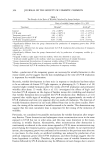
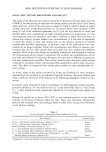
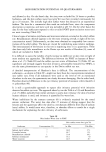
SKIN IRRITATION POTENTIAL OF QUATERNARIES 311 and allowed to dry. On the fourth day, the sites were occluded for 24 hours to produce hydration, and the skin surface water loss (g/m2hr) was then recorded continuously for up to 25 minutes. The initially high skin surface water loss decayed in an exponential fashion. The data for a commercial skin wash are excluded here, since the component description is imprecise, and lactic acid was included at pH 5.0. On the other hand, the data for the four surfactants exposed to this so-called POST (post-occlusion stress test) are most revealing (Table III). Clinical signs of irritation (erythema and microvesiculation) occurred at the alkyl sulfate site. Benzalkonium chloride appears to be the most irritating overall, in light of the low concentration tested. Unfortunately, no data were obtained at comparably low concen- trations of the alkyl sulfate. The data are crucial for establishing some relative rankings. The innocuousness of the betaine in this test is surprising since it is a quaternary. These data bear only little resemblance to the Draize eye test results of Hazelton (4), some of which are included in Table IV. It is difficult to assess the validity of early testing via rabbit eye or skin tests in light of more modern test approaches. The differences between the POST on humans of Berar- desca et al. (7) (Table III) and the rabbit eye test scores of Hazelton (5) (Table IV) are significant and strongly suggest that skin irritancy, presumably measured via TEWL, is not the same phenomenon as eye opacity in the Draize rabbit eye test. A detailed interpretation of Hazelton's data is difficult. The concentrations of the surfactants--as shown in Table IV--might not have been the concentrations introduced into rabbit eyes. Even if all substances were used at the level of 1% as mentioned elsewhere in the text, the quaternaries are clearly the most damaging. On the other hand, Hazelton observed differences in the eye irritancy potential of nonionic ethers (laureth-4 vs polysorbate 80). It is still a questionable approach to equate skin irritancy potential with irritation observed in rabbit eye tests. The approach taken by van der Valk et al. (6) and Berardesca et •l. (7) differs radically from earlier attempts to assess skin irritancy: the skin of normal human subjects is used, and irritancy is quantified by water loss. Water imbibition by the stratum corneum (8) is evidently maximal for the tested anionic surfactant. The water loss data after 25 minutes of drying suggest that the betaine and the quaternary affect the skin by a mechanism different from that of sodium lauryl sulfate. It would seem wise, therefore, to abandon efforts to search for a single mechanism for explaining the skin irritancy of surfactants. Table III Skin Surface Water Loss in POST Skin surface water loss (g/m2/h) Surfactant Concentration (%) 1st Min 25th Min Sodium lauryl sulfate 7 64.0 27.1 Cocamido betaine 7 44.7 12.1 Benzalkonium chloride 1 33.8 10.3 Sorbitan monolaurate 10 36.1 7.8 Water (control) 40.5 8.7

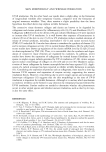
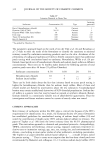
312 JOURNAL OF THE SOCIETY OF COSMETIC CHEMISTS Table IV Irritation Potential in Draize Test Irritation Surfactant Concentration (%) Type potential* Roccal (benzalkonium chloride) Hyamine 2389 (CTAC) Duponol WAT (TEA lauryl sulfate) Ivory soap Tween 80 (polysorbate 80) Brij 30 (laureth-4) 50 Cationic 1 50-52 Cationic 1 50 Anionic 20 100 Anionic 10 100 Nonionic 100 100 Nonionic 20 * As graded by Hazelton (5). The parametric approach based on the work of van der Valk et •l. (6) and Berardesca et az/. (7) fails to meet the needs of the formulator to identify the transitory or minimal irritancy caused by surfactant-containing products used on the skin. Avoidance of the phenomena of scaling and tightness are likely to benefit consumers more than additional patch testing with conclusions based on erythema. Nevertheless, Willis et M. (9) per- formed closed patch tests of benzalkonitu-n chloride and sodium lauryl sulfate at different concentrations. Their tests on 42 healthy males showed the following pattern of total positive patch tests after 48 hours (15 lal/Finn Chamber): Surfactant concentration 0.5 % 1.0 % 2 % 5 % Benzalkonium chloride Sodium lauryl sulfate 10 7 -- 6 12 2O There can be little doubt about the fact that irritancy based on acute patch testing is higher for benzalkonium chloride than for sodium lauryl sulfate. Most of these and related studies are flawed by uncertainties about the test substances: Cocamidopropyl betaine may contain unalkylated derivatives of N,N-dimethylpropylamine. Sodiurn lau- ryl sulfate is a generic mix that may be based on natural or synthetic alkanols. Benzal- konium chloride is a notoriously variable mix of alkyl-derived quaternaries. Thus the investigators and future students cannot be certain of exactly what was tested. CURRENT APPROACHES Skin irritancy of surfactants within the EEC plays a critical role because of the EEC's requirements for classification. As a result, the European Society of Contact Dermatitis has established guidelines for standardized testing of sodium lauryl sulfate (10) and noted the contribution of (high) purity (99% sodium dodecyl sulfate) to irritancy. The paper of Tupker et •l. (10) notes the lower irritancy from the 96.5% pharmacopeial grade. This meticulous approach to chemical and procedural protocols--histopathology, TEWL, colorimetry (of erythema), clinical scoring, exposure conditions (repetitive oc- clusive tests or immersion testing), age, race, sex, testing site, and environmental con- ditions--was lacking in most earlier studies of other surfactants, including quaternaries. The Tupker et•/. paper identifies sodium lauryl sulfate as "... a model irritant, suited for precise testing..." Thus it comes as no surprise that the four-hour closed patch test recommended by Basketter and colleagues (11-13) utilizes sodium lauryl sulfate (20%)
Purchased for the exclusive use of nofirst nolast (unknown)
From: SCC Media Library & Resource Center (library.scconline.org)