222 JOURNAL OF COSMETIC SCIENCE (3) J. A. Swift, "The Hair Surface," in Hair Research, Orfanos, Montagna, Stuttgen, Eds. (Springer-Verlag, Berlin, Heidelberg, 1981). (4) C. R. Robbins, Chemical and Physical Behavior of Human Hair, 3rd ed. (Springer-Verlag, New York, 1994), pp. 211-226. (5) V. N. E. Robinson, A study of damaged hair, J. Soc. Cosmet. Chem., 27, 155-161 (1976). (6) M. L. Garcia, J. A. Epps., R. S. Yane, and L. D. Hunter, Normal cuticle wear patterns in human hair, J. Soc. Cosmet. Chem., 29, 155-178 (1978). (7) E. Hoting, M. Simmermann, and S. Hilterhaus-Bong, Photochemical alterations in human hair. I. Artificial irradiation and investigations of hair proteins, J. Soc. Cosmet. Chem., 46, 85-99 (1995). (8) M. L. Tate, Y. K. Kamath, S. B. Reutsch, and H. D. Weigmann, Quantification and prevention of hair damage, J. Sot'. Cosmet. Chem., 44, 347-371 (1993). (9) C. R. Robbins and C. H. Kelly, Weathering of human hair, Text. Res. J., 37, 337 (1967). (10) S. B. Reutsch and H. D. Weigmann, Mechanism of tensile stress release in the keratin fiber cuticle. I. J. Soc. Cosmet. Chem., 47, 13-26 (1996). (11) An experimental product of Croda. (12) A commercial Croda product with the name of Crodasone W. (13) A commercial Croda product with the name of Crodasone Cystine. (14) M. Gamez-Garcia, Morphological Changes in Human Hair Cuticles Upon the Simultaneous Action of Cyclical Mechanical and Thermal Stresses: Their Relevance to Grooming Practices, presented at the Annual Conference of the Society of Cosmetic Chemists, December 1997 M. Gamez-Garcia, The cracking of human hair cuticles by cyclical thermal stresses, J. Cosmet. Sci., 49, 141-153 (1998). (15) W. A. Nash, Strength of Materials, Schaum's Outline Series (McGraw-Hill, Inc., New York, 1972), pp. 7, 16, 17. (16) F. Ziegler, Ed., Mechanics of Solids and Fluids (Springer-Verlag, New York, 1981). (17) H. Baumann, in Fibrous Proteins: Scientifi6 Industrial, and Medical Aspects, D. A.D. Parry and L. K. Creamer, Eds. (Academic Press, London, 1979), pp. 1,299.

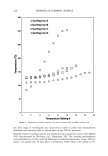
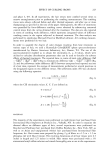
j. Cosmet. sd., 49, 223-244 (July/August 1998) Thermal degradation of hair. I. Effect of curling irons R. McMULLEN and J. JACHOWICZ, International Specialty Products, Wayne, NJ 07470. Accepted for publication July 15, 1998. Synopsis The effects of thermal treatments on human hair induced by conventional curling irons, operating in the temperature range from 130øC to 164øC, have been investigated. The fibers were thermally exposed by continuous heating for extended periods of time (5-15 min) or by short (15 s) intermittent heating cycles. The model calculations of heat transfer through a fibrous assembly, based on heat conduction through a semi-infinite solid, were performed. The calculated data have shown that near-uniform temperature distri- butions are reached in the hair samples within a few seconds of thermal exposure, suggesting that continuous and intermittent modes of treatment are equivalent. The resulting damage to the fibers has been investi- gated and quantified by the use of fluorescence spectrophotometry, Hunter colorimetry, and combing analysis. The fluorescence analysis has shown that thermal treatment results in a decomposition of hair chromophores, specifically tryptophan (Trp) and its oxidation products (kynurenines). The calculated first- order rate coefficients of Trp decomposition were in the range from 0.03 to 0.12 (min-•), with an estimated activation energy of 6.6 kcal/mol. Hunter colorimetry was employed to quantify thermally induced color changes in hair, such as an increase in the yellowness of white and Piedmont hair or simultaneous yellowing and darkening of bleached hair. Combing analysis has revealed a gradual increase, as a function of exposure time, in combing forces that were measured in the tress sections exposed to curling irons. The extent of the combing increase was found to be dependent on the mode of thermal treatment in which intermittent heating cycles, separated by rinsing, resulted in a higher degree of fiber damage. INTRODUCTION The deleterious effects of chemical treatments on hair, such as permanent-waving, bleaching, relaxing, or oxidative dyeing, have received significant attention in cosmetic literature (1). Also, physical changes produced as a result of grooming operations have been thoroughly discussed (2). In addition to this, the photodegradation of human hair has been of growing interest to scientists and has warranted considerable attention (3,4). On the other hand, the literature reflects a limited amount of research focusing on the irreversible chemical or physicochemical changes occurring in hair as a result of thermal treatments applied to hair in conjunction with the use of curling irons or hairdryers, i.e., in the temperature range from 100øC to 170øC (5-9). This area has been investigated primarily in the context of reversible thermally induced effects such as hair drying (5,6) or hair softening at elevated temperatures (96øC) in aqueous solutions (7). Also, high-temperature decomposition of keratin at temperatures greater than 200øC has been 223
Purchased for the exclusive use of nofirst nolast (unknown)
From: SCC Media Library & Resource Center (library.scconline.org)