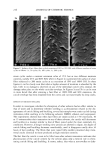
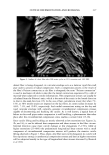
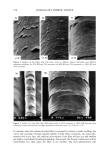
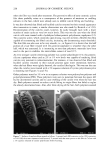
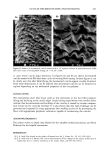
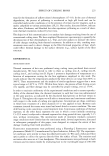
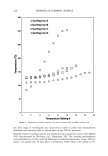
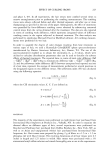
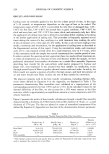
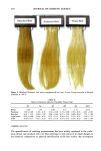
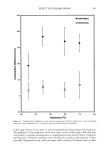
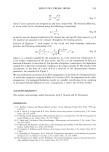
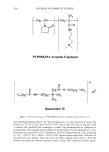
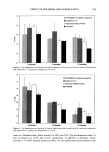
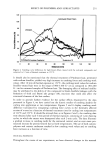
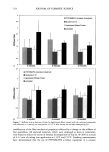
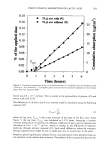
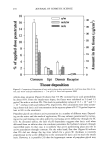
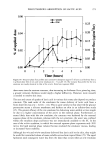
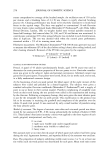
220 JOURNAL OF COSMETIC SCIENCE when the fiber was rinsed after treatment. The preventive effect of some cosmetic actives like these probably arises as a consequence of the presence of moisture or swelling solvents in the hair, which were already seen to inhibit cuticle lifting and buckling. It was also observed that lifted and buckled cuticles returned to their normal appearance after immersion in water a similar observation was also made by Reutsch et aL (10). Decementation of the cuticles could, however, be easily brought back with a lower number of strain cycles at very low strain levels. This was not the case when the lifted cuticle cells were treated with a hydrolyzed wheat protein polysiloxane copolymer (12). This cosmetic active, which crosslinks upon drying, was seen to form a flexible thin film capable of recementing the lifted cuticles, increasing the decementing strain threshold. The thin film was also seen to be very smooth, i.e., in Figure 6 it is shown that the half portion of a hair fiber treated with this protein/copolymer is smoother than the other half, which was untreated. It is interesting to note that polymeric materials have been used in the past to stabilize the intercellular cement of wool (17). An even stronger cuticle-cementing polymer was cystine polysiloxane (13) this protein- silicone copolymer when used at 2% or 3% w/w levels was capable of rendering lifted cuticles very resistant to redecementation. For instance, it was observed that lifted and buckled cuticles returned to their natural position upon water immersion however, when the hair fibers were tightly knotted, the cuticles lifted again. This was not the case when the cuticles were treated with a 3% aqueous solution of cystine polysiloxane prior to knotting (see Figures 7a and 7b). Other polymers tested at 3 % w/w in an aqueous solution were polyacrylate polymer and polyethylenimine (PEI). These polymers were seen to penetrate between the spaces left by the decemented cuticles and to cause swelling of the cuticle even when the hair was dry. Both polymers seemed to reduce cuticle lifting in virgin fibers but failed to reglue the already decemented ones. Also, after blow-drying of the hair, both polymers seemed 7b Figure 7. Surfaces of two hair fibers treated as follows: 7a treated with 200 extension cycles, 20% extension, at 10% RH, then water immersed and knotted 7b treated with the same process as the fiber in 7a but with a 3% aqueous solution of cystine polysiloxane before knotting.

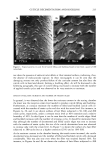
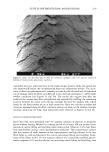
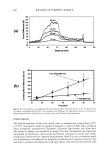
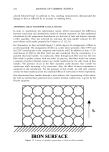
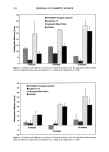
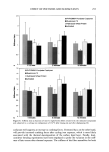
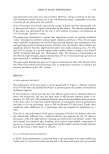
CUTICLE DECEMENTATION AND BUCKLING 221 8b Figure 8. Surfaces of decemented cuticles treated with a 3% aqueous solution of polyethylenimide (PEI) after three cycles of wetting/blow drying. 8a x770 8b x2500. to cause severe cuticle shape distortion. In Figures 8a and 8b are shown decemented cuticles treated with PEI after three cycles of wetting/blow drying. In these figures it can be clearly seen that after blow/drying the decemented cuticles appear severely distorted. From these observations it can be inferred that decemented cuticles can be distorted or reglued depending on the mechanical properties of the dry polymer. CONCLUSIONS The experiments show that strain cycles at low extensions in dry hair fibers produce lifting and buckling at the cuticle edges. Strain-cycling experiments with swollen fibers indicate that decementation and buckling of the cuticles is caused by circular compres- sion stresses on the cuticular envelope. It is also shown that this type of damage can be prevented and repaired by using appropriate hair swelling actives or by pretreating the fibers with appropriate polymeric substances capable of recementing the cuticles. ACKNOWLEDGMENTS The author wishes to thank Ann Harder for her valuable technical assistance and Herb Eldestein for his helpful discussions. REFERENCES (1) J. A. Swift Fine details on the surface of human hair, Int. J. Cosmet. Sci., 13, 143-159 (1991). (2) J. A. Swift and A. C. Brown, The critical determination of fine changes in the surface architecture of human hair due to cosmetic treatment, J. Soc. Cosmet. Chem., 23, 695-702 (1972).
Purchased for the exclusive use of nofirst nolast (unknown)
From: SCC Media Library & Resource Center (library.scconline.org)