244 JOURNAL OF COSMETIC SCIENCE (9) (10) (11) (12) (13) (14) (15) (16) (17) (18) (19) (20) (21) (22) (23) (24) (25) (26) (27) (28) (29) (30) (31) (32) (33) (34) R. Arnaud, G. Perbet, A. DeFlandre, and G. Lang, ESR study of hair and melanin-keratin mixtures-- The effects of temperature and light, Int. J. Cosmet. Sci., 6, 71 (1984). M. Feughelman, A two-phase structure for keratin fibers, Textile Res. J., 29, 223 (1959). I. Watt, Properties of wool fibers heated to temperatures above 100øC, Textile Res. J., 45,728 (1975). K. Lee, Some low-angle X-ray evidence on the structural changes in thermally- and plasma-treated wool, Textile Res. J., 46, 779 (1976). R. Asquith and M. Otterburn, Self-crosslinking in keratin under the influence of dry heat, Appl. Polymer Symp., 18, 277 (1971). E. Menefee and G. Yee, Thermally-induced structural changes in wool, Textile Res. J., 35,801 (1965). I. Rusznak, L. Trezl, A. Bereck, and G. Bidlo, Influence of short thermal treatments on wool, Appl. Polymer Symp., 18, 175 (1971). H. Launer and D. Black, Gases produced from wool by light and heat, Appl. Polymer Symp., 18, 347 (1971). D. Goddinger, K. Schaefer, and H. Hoecker, Photooxidation of aromatic amino acids in keratin fibers by UV light, DWI Rep., 113, 467 (1994). R. Asquith, L. Hirst, and E. Rivett, Effects of ultraviolet radiation as related to the yellowing of wool, Appl. Polymer Symp., 18, 333 (1971). F. Howitt, 12--The yellowing of wool: A survey of the literature, J. Textile Inst. Trans., 55, 136 (1964). J. Marten and J. B. Speakman, Action of heat on wool, Chemistry and Industry, 35, 955 (1957). P. Auer and M. Pailthorpe, The effect of antioxidant/quenchers and a fluorescent whitening agent on the quantum yield of photoinduced degradation of tryptophan in a rigid, oxygen-permeable medium, J. Photochem. Photobid. A: Chem., 86, 267 (1995). H. Carlsaw and J. Jaeger, Conduction of Heat in Solids, 2nd ed. (Oxford University Press, London, 1959), pp. 5O-92. J. Brandrup and E. Immergut, Eds., Polymer Handbook, 3rd ed. (John Wiley & Sons, New York, 1989), p. V/114. W. Morton and J. Hearle, Physical Properties of Textile Fibres (Butterworth and The Textile Institute, London and Manchester, 1962), p. 553. J. Welty, C. Wicks, and R. Wilson, Fundamentals of Momentum, Heat, and Mass Transfer, 3rd ed. (John Wiley & Sons, New York, 1984) pp. 755-780. J. Jachowicz, B. Locke, and R. McMullen, Spectroscopic analysis of photo and thermal degradation of hair, XIII Congreso Latinoamericano e Ibdrico de Quoemicos Cosmdticos, 227 (1997). A. Mehler and W. Knox, The conversion of tryptophan to kynurenine in liver. II. The enzymatic hydrolysis of formylkynurenine,J. Biol. Chem., 187, 431 (1950). S. Benson, The Foundations of Chemical Kinetics (McGraw-Hill, New York, 1960), pp. 316-318. W. Newman, G. Cohen, and C. Hayes, A quantitative characterization of combing force,J. Soc. Cosmet. Chem., 24, 773 (1973). M. Garcia and J. Diaz, Combability measurements on human hair, J. Soc. Cosmet. Chem., 27, 379 (1976). Y. Kamath and Hans-Dietrich Weigmann, Measurement of combing forces,J. Soc. Cosmet. Chem., 37, 11 (1986). J. Jachowicz and M. Helioff, Spadally-resolved combing analysis,J. Soc. Cosmet. Chem., 48, 93 (1997). For a more general discussion on heat transfer through a semi-infinite solid, the reader is referred to: J. Welty, C. Wicks, and R. Wilson, Fundamentals of Momentum, Heat, and Mass Transfer, 3rd ed. (John Wiley & Sons, New York, 1984), pp. 252-286. F. Kreith and M. Bohn, Principles of Heat Transfer, 4th ed. (Harper, New York, 1986), pp. 107-111.

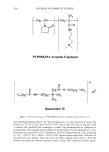
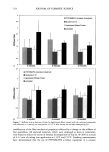
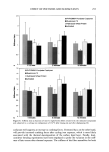
j. Cosmet. Sci., 49, 245-256 (July/August 1998) Thermal degradation of hair. II. Effect of selected polymers and surfactants R. McMULLEN and J. JACHOWICZ, International Specialty Products, Wayne, NJ 07470. Accepted for publication July 15, 1998. Synopsis Fluorescence spectroscopy, combing analysis, and texture analysis with a dual-cantilever bending accessory have been employed to study the effect of pretreatments on the thermal damage of hair. The pretreatments, applied to hair as 1% aqueous solutions, included a cationic polymer (PVP/DMAPA acrylates copolymer), a protein hydrolyzate (hydrolyzed wheat protein), and a cationic surfactant (quaternium 70). Fluorescence spectroscopy was used to probe the content of tryptophan (Trp) in hair, which is gradually destroyed by the application of curling irons at 132 øC and 152 øC. All pretreatment materials were found to reduce the extent of Trp decomposition by 10-20% as a result of 4-12 min of thermal exposure. Surface damage has been quantified by combing analysis and has shown that the use of PVP/DMAPA acrylates copolymers or a cationic surfactant can suppress an increase in combing forces, which is observed in unmodified hair subjected to thermal exposure. The variation in stiffness of hair tresses has been studied by texture analysis with a dual-cantilever bending accessory. From the texture analysis, an increase in the stiffness ratio of the fiber assemblies was evident for polymer-modified and intact (unmodified) hair. INTRODUCTION The thermal degradation of hair has been discussed in several publications (1-5) that have demonstrated various aspects of hair damage. Changes in hair coloration, decom- position of hair chromophores, and damage to the fiber surface were found to be typical manifestations of hair damage after exposure to temperatures greater than 130øC. The changes in fiber structure and properties, as a result of the use of milder thermal conditions ( 100øC) that accompany drying by hair dryers, have also been discussed (6). On the other hand, the thermal protection of hair keratin has not been a topic of scientific inquiry, with only patent literature reflecting several studies pertaining to this subject. Currently, there are several commercial products sold on the retail market that claim to protect hair from thermal styling appliances. These formulations often contain a wide range of actives, including protein hydrolyzates, enzyme cofactors, fatty acids, saccha- rides, surfactants, and various polymers. It has been suggested that hydrolyzed wheat protein, wheat oligosaccharides, wheat amino acids, and panthenol, formulated together, increase the strength and moisture retention of hair fibers when used in conjunction with 245
Purchased for the exclusive use of nofirst nolast (unknown)
From: SCC Media Library & Resource Center (library.scconline.org)