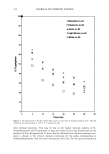
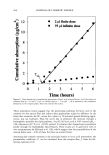
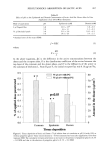
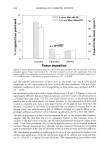
246 JOURNAL OF COSMETIC SCIENCE a thermal styling appliance (7). Several patents specifically identify the compound or formulation as a protectant against thermal hair dryers or hot irons. For hair dryer protection, the following systems were identified as effective: high-molecular-weight silicone and fatty acid alkanolamide(s) (8) mono-N-acyl basic amino acid lower-alkyl- ester salt and/or cationic surfactant, liquid oil, and heme iron compound (9) quaternary ammounium salt(s), fruit extracts, and a water-soluble cationic polymer (10) and con- ditioners containing stearyltrimethyl-ammonium chloride and polyethylene-polypropyl- ene glycol butyl ether as its actives (11). For patents that strictly apply to protecting hair from hot irons, one formulation includes a two-phase system and a surfactant in which the oil phase contains hydrocarbon or silicone oils, an aqueous phase comprised of glycerol, propylene glycol, and polyethylene glycol, and a surfactant possessing nonionic or ionic character (12). Another composition, consisting of polyoxyethylene sorbitol tetraoleate, polyoxyethylene castor oils, fatty acids (from animal or vegetable sources), and a nonionic surfactant, has also been suggested to protect hair from hot irons (13). Several compounds have also been used as thermal setting agents, in which the active is applied to hair prior to or during thermal treatment. Specifically, the application of a thermoplastic polyester fixative resin used in conjunction with a thermal styling appli- ance has been described in the patent literature (14). The objective of this study was to compare the thermally induced interactions of hair with selected materials including a cationic polymer, cationic surfactant, and a protein hydrolyzate. The thermal protection potential of these materials has been evaluated by previously developed methodology, i.e., combing analysis to detect hair surface modi- fication, fluorescence spectroscopy to analyze the decomposition of tryptophan (Trp), and texture analysis to provide information about the mechanical properties of the fiber assemblies. EXPERIMENTAL INSTRUMENTATION The instrumentation used to quantify thermally induced changes of hair, in terms of combing forces and fluorescence, has been described in the first publication of this series (5). Additionally, we have conducted experiments in which the mechanical properties of hair tresses, before and after thermal treatment, could be quantified. This was achieved using a texture analyzer (Model TA-XT2, Texture Technologies Corp.) equipped with a custom-made attachment in order to perform dual-cantilever bending measurements (15). The texture analyzer had a load sensitivity of 0.1 g and was operated using XTRA dimension software 3.7 from Stable Micro Systems. The bending measurements were performed by placing a hair tress on cantilevers separated by a distance of 1.25 in. and fastening it to a clamp from one side. During the test, a blade-shaped probe attached to the texture analyzer produces a deformation in the hair tress of 3.0 mm after detection of a 2.0 G trigger force. The ratio of the forces recorded at the 3.0-mm deformation, for modified and unmodified hair, is defined as the stiffness ratio and is discussed further in the context of various treatments in this paper. MATERIALS AND METHODS The thermal treatment of hair was performed using a Soft Sheen, Optimum Styling

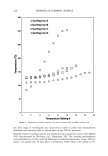
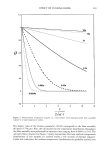
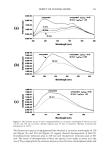
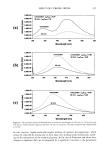
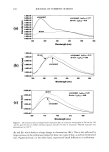
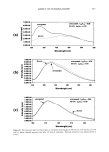
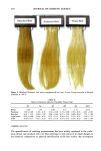
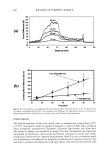
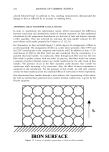
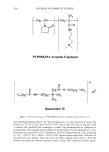
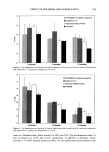
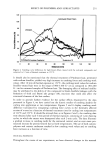
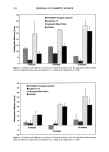
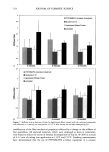
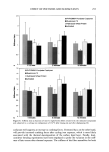
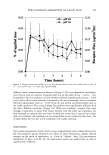
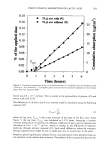
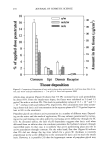
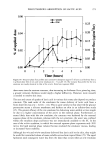
EFFECT OF POLYMERS AND SURFACTANTS 247 Tools, curlin 8 iron (Model SOC125S) manufactured by Continental Hair Products, Glendale, AZ. This curling iron model was chosen for the analyses since its temperature profile was the most representative of the commercially available curling irons. As indicated by our previous studies (5), thermal treatment to each hair tress was admin- istered in the same position in order to maintain experimental uniformity. The thermal treatment of hair was administered for a duration of 1 min, at which time the samples were thoroughly rinsed and pretreated with the indicated compound. The sum of all heating cycles constitutes a total treatment time, normally 12 min in duration. After each 2-min cycle, the samples were thoroughly rinsed, followed by shampooing. After each 4-min cycle, all instrumental measurements were performed. These consisted of combing analysis and texture analysis after thoroughly rinsing the samples and, again, after shampooing the samples. Once the mechanical measurements were completed, we obtained fluorescence spectra in order to monitor the Trp degradation. For each fluo- rescence measurement, readings were obtained from the thermally exposed and unex- posed regions of the hair tress. The hair tress treatments were administered with 1% solutions of the indicated active. The fibers were wetted prior to treatment, followed by towel drying. Then the damp hair was saturated with a solution of active (2.5 8), with the excess amount of treatment removed by paper towel blotting, resulting in a 0.55-8 application of the 1% solution (3.46 m 8 of active/1 8 of hair). The treated tress was then air-dried (23øC) with an Elchim Professional hair dryer (model EC 35227), distributed by Elchim-USA, Inc., Union, NJ. After drying, the hair tresses were subjected to thermal treatment as de- scribed above. Experiments were performed on light-brown hair purchased from Inter- national Hair Importers & Products, Inc., Valhalla, NY, and Piedmont hair, purchased from DeMeo Brothers, Inc., New York, NY. POLYMERS AND SURFACTANTS PVP/DMAPA acrylates copolymer, quaternium 70, and hydrolyzed wheat protein are commercial products sold under the trade names of Styleze CC-10 (ISP), Ceraphyl 70 (ISP), and Hydrotriticum 2000 (Croda), respectively. Additionally, we examined sodium bisulfite (Aldrich), which was used for studies on Piedmont hair. The structures of PVP/DMAPA acrylates copolymer and quaternium 70 are presented in Figure 1. RESULTS AND DISCUSSION SPECTROSCOPIC ANALYSIS The effect of polymers and surfactants on the thermal decomposition of Trp in hair was investigated at 132øC and 152øC, with intermittent heating periods of 1 min, for a total treatment time of either 10 min or 12 min. We also explored other temperatures and treatment schedules in which the observed effects were generally similar to those re- ported for the conditions specified above. The data analysis suggests that the thermal decomposition of Trp may be impeded by pretreatin 8 the fibers with a polymer or surfactant. Figures 2 and 3 demonstrate the progression of Trp damage, on light-brown hair at 132øC and 152øC, as a function of thermal treatment time for an untreated control, and for hair modified with PVP/DMAPA acrylates copolymer, quaternium 70,
Purchased for the exclusive use of nofirst nolast (unknown)
From: SCC Media Library & Resource Center (library.scconline.org)