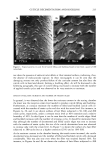
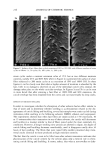
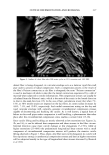
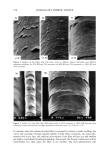
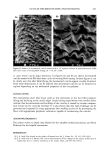
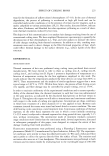
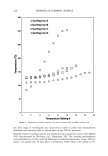
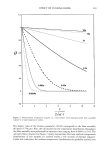
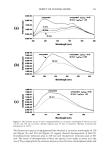
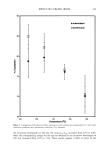
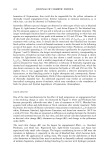
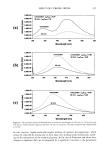
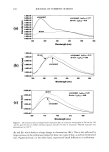
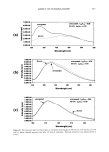
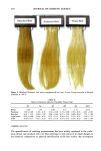
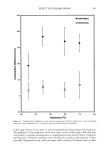
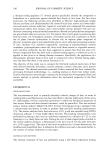
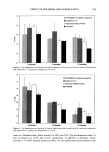
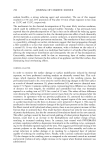
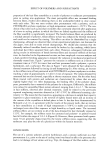
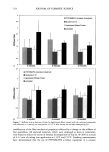
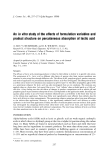
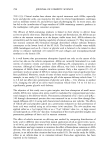
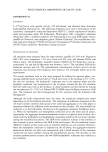
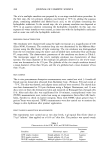
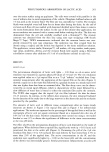
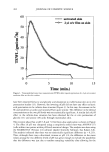
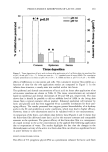
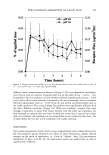
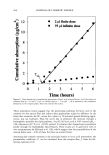
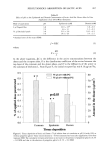
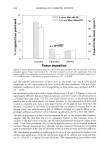
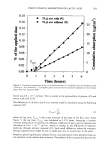
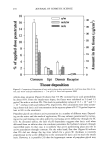
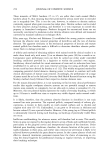
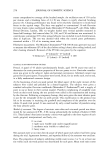
218 JOURNAL OF COSMETIC SCIENCE 4a 4b 4c • xl.2k .. xl.2k Figure 4. Surfaces of hair fibers after 200 strain cycles at different relative humidities and different extensions as follows: 4a, 65% RH and 15% extension 4b, 80% RH and 15% extension 4c, 100% RH and 30% extension. 5a 5b El. E:2k x :- O . 77k x $k:.• 43E -- -- Figure 5. Surface of a hair fiber after 200 strain cycles at 30% extension at 100% RH showing deep transversal cracks and cuticular envelope detachment from the cortex. 5a x220 5b x770. In contrast, when the volume of a hair fiber is increased by solvent or water swelling, the cortex and cuticular envelope expand radially. Under these conditions, two main phe- nomena will occur: first, the endocuticular regions of the fiber will act as a soft swollen gel highly crosslinked by hydrogen bonding, and second, the Poisson contraction will be considerably less than when the fiber is not swollen. The first phenomenon will

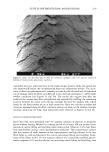
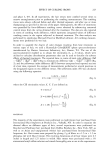
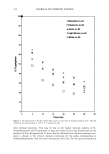
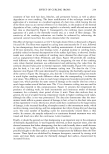
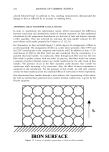
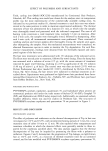
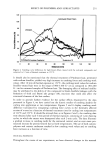
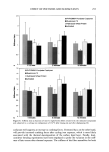
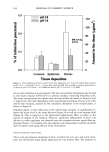
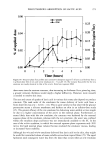
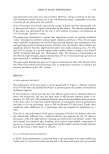
CUTICLE DECEMENTATION AND BUCKLING 219 4kx Sky 277 Figure 6. Surface of a hair fiber half of which was treated by capillarity with a 3% aqueous solution of hydrolyzed wheat protein polysiloxane copolymer. strengthen and give more elasticity to the endocuticular regions, while the second one will substantially reduce the circumferential shear and compression stresses. The occur- rence of these two phenomena will, certainly, account for the observed lack of individual cuticle damage when the fibers are subjected to low and high extensions (7-40%) under swollen conditions (see Figures 5a and 5b). The results also suggest that after the endocuticular regions have been strengthened and expanded by swelling, the cementing junction between the cortex and cuticular envelope becomes the weakest link, which breaks by the shear stresses set up at high extensions. Once the cuticular envelope and cortex are separated along the fiber, extension stresses act alone on the swollen cuticular envelope, producing the long, deep transversal cracks observed in Figures 5a and 5b. EFFECTS OF FIBER PRETREATMENT Hair fibers that were pretreated with 3% aqueous solutions of glycerin or propylene glycol without rinsing, followed by a drying period of six hours, did not present severe patterns of cuticle lifting and buckling when strain-cycled. However, if the hair fibers were rinsed before cycling, cuticle decementation took place. These experiments indicate that the presence of small amounts of low-vapor-pressure swelling solvents in the hair fibers helps to swell and plasticize the cuticle, preventing lifting and buckling. Treat- ment of hair fibers with a 3% w/w aqueous solution of a cationically modified glucon- amide compound (11) was also effective in preventing cuticle lifting and buckling, even
Purchased for the exclusive use of nofirst nolast (unknown)
From: SCC Media Library & Resource Center (library.scconline.org)