DENTAL STAIN PREVENTION 277 This paper discusses a new evaluation technique for examining abrasive stain prevention by dentifrices, and demonstrates its predictive function in relation to stain prevention studies in vivo. The principal object of the new model was to simulate relatively im- mature 12-to-24-hour-old pellicle films on smooth hydroxyapatite surfaces. MATERIALS AND METHODS LABORATORY STUDIES Substrate. In order to ensure maximum reproducibility consistent with reality within the test, a model hard substrate was employed. Thus highly polished sintered 17-ram hydroxyapatite (HAP) discs (Calcitek Inc, Carlsbad, California) were used to simulate enamel tooth surfaces. This was achieved by lapping the discs using a rotary grinder/ polisher (Buehler UK Limited, Coventry, UK) on wet P600, then P1200 metallographic grinding papers to give a mirror finish. Typical degrees of roughness (Ra) measured profilometrically were of the order 0.1-0.2 microns, similar to that of teeth. Care was taken not to touch these surfaces after polishing. Soil. A self-indicating model organic film intended to simulate the gross mechanical properties of up-to-24-hour pellicle was formed by precipitating an iron (III) complex with tannic acid from aqueous solution directly onto the polished HAP discs. Freshly mixed solutions (0.1% w/w) of diammonium iron (II) sulphate 6-hydrate and tannic acid (GPR grades, BDH, Poole, UK) are initially colorless, but form a dark colloidal iron (III) tannic acid complex ("ferric tannate") on contact with air. The fresh mixture is thus painted onto HAP surfaces with a fine squirrel-hair brush and gently dried with a warm hairdryer. Three thin applications were found to provide a colored organic film of thickness about one micron, which is believed to be of the correct order of thickness to simulate the immature pellicle of interest (14). This film on HAP discs gives a darkness measurement of L* = 50 + 5 (CIE 1976 L*a*b* system) as determined by a Minolta Chromameter © (Minolta Limited, Milton Keynes, UK). Although it is conceded that a ferric tannate film cannot simulate the chemical prop- erties of stain-precursive dental pellicle, it displayed upon inspection many of the key physical properties of such a layer. Thus it proved resistant to brushing with nylon filaments in the presence of all common toothpaste ingredients except abrasive agents. This is consistent with the findings of Kitchin and Robinson (5) and others (11) that regular brushing with abrasiveless systems cannot prevent long-term stain formation. The model soil/substrate additionally proved to be stable, rapidly and easily prepared, and progressively and reproducibly sensitive to different dental abrasive types and slurry concentrations under mechanical brushing conditions. This prompted an investigation of the abrasive performance of a series of paste systems with a view to determining to what extent this might mirror clinical stain prevention data. Mechanical brushing regime. The ferric tannate (FT) stained hydroxyapatite discs were mounted horizontally in the bottom of a trough containing the aqueous toothpaste slurries under test, and weighted toothbrush heads oscillated over the disc surface by way of a mechanical scrubbing machine. A modified Martindale abrasion tester (Goodbrand- Jeffreys Ltd., Stockport, UK) was found to be particularly suitable. In this apparatus the brush heads describe Lissajous' figures, which combine linear and elliptical motions to

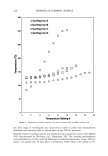
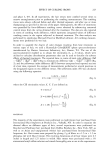
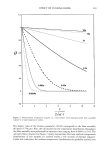
278 JOURNAL OF COSMETIC SCIENCE ensure comprehensive coverage of the brushed sample. An oscillation rate of 150 cycles per minute and a brushing force of 4.4 N was chosen to typify observed brushing practice (4). Cleaning performance was found to be relatively insensitive to brush head forces in the typical range. The force was applied to conventional 34-tuft fiat-trim 0.2-mm bristle nylon toothbrush heads (Mentadent P Professional ©, soft Elida Gibbs Dental Division, London, UK) via weights loaded onto vertical spindles mounted in linear ball bearings. Soil removal after 50, tOO, and 150 oscillations was monitored. A control paste containing 10% silica xerogel abrasive was included in each determination, done in duplicate. The test was deemed valid when the control paste performance remained within + 5% of its running mean value. Photometric measurements. The Minolta Chromameter © CR-300 (8-mm aperture) was used to measure the wh'iteness (L*) of the discs before soiling (clean), after soiling (soiled), and after cleaning (cleaned). Removal of the FT film was given by the equation: L* (cleaned)- L* (soiled) % Removal = X tOO L* (clean)- L* (soiled) CLINICAL STAIN-PREVENTION STUDIES Protocol. A panel of 45 adults (predominantly female, aged 18-50 years) was used to determine the stain-prevention properties of the test pastes in vivo. Particular consider- ation was given to the subjects' rights and personal convenience. Informed consent was gained for all participants. Four pastes were tested, blind, for six weeks each, end to end, in a fully randomized crossover design. At the beginning of each six-week period the labial aspect of the eight incisors of the subjects were scaled and polished by a dental hygienist. The subjects were given a standard soft-nylon fiat-trim toothbrush (Mentadent P Professional ©) and a supply of paste to use at home in their normal manner. Panelists complaining of unsightly stain levels on their teeth during the test periods were called in for examination and scoring by the clinicJan. Following a temporary cleanup, they were given the most abrasive paste to use for the remainder of the six-week period. This modification to the protocol was felt to be necessary in retaining the goodwill and compliance of the panelists over the whole 24-week trial period. It was exercised by only a small number of panelists using the least abrasive paste. Method of assessment. The degree of extrinsic stain after each six-week period was deter- mined by two assessors (J.E.W., T.M.) using substantially the method of Lobene (1968) (t 1). Thus Lobene's four-point intensity criteria were applied to the three regions of each tooth: gingival, interproximal, and body, viz., 0: no stain t: light stain (visible only under magnification) 2: moderate stain (visible to naked eye) 3: heavy stain The assessors were at no time directly aware of which paste each subject had been using during the trial. Agreement between, and reproducibility of, the assessors was excellent. Data. The proportion of subjects exhibiting visible stain (scores 2 or 3) on at least one site within each six-week period was determined for each paste. Mean total stain scores
Purchased for the exclusive use of nofirst nolast (unknown)
From: SCC Media Library & Resource Center (library.scconline.org)