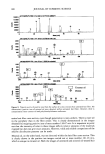
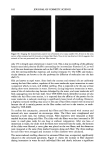
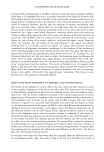
180 JOURNAL OF COSMETIC SCIENCE UNTREATEDP2.TDG + Ions 1211zn 11320•g c•ts untmated UNTREATEDP2.TDC + Ions 1211•n 1132059 cts untreated 2500• o lOO 140 160 uass [m/z] UNTREATEDP2,TDC * Ions 121vm 1132059 cls unimated 221 229 • 265 279 •ass [m/z] UNTREATEDP2.TDC + lens 1211]m 1132059 •s untreated • [ • Cocooil [2E] PUS 300 400 500 600 Mass InVzl Figure $. Typical spectra of positive ions oerom the surface of a cross section of an untreated hair fiber. No characteristic positive ions o• mineral oil were de[ec[ed within contamination f•om coconu• oil •nd polydime•hylsilox•ne entire hair fiber cross section, even though penetration is non-uniform. There is more oil in the periphery than in the fiber center. This is clearly demonstrated in the images obtained by mapping positive ions of mass number 126.67 m/z. It is important to point out that the intensity of color in these images reflects relative amounts of the materials mapped but does not give exact amounts. However, valid and reliable comparisons of the relative distribution patterns can be made. Mineral oil, on the other hand, was not detected within the hair fiber cross section. This is clearly shown in the positive ion images carried out at mass number 361.26 m/z, which is unique to mineral oil. Both the images of untreated and mineral oil-treated hair

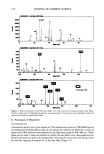
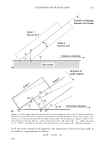
PENETRABILITY OF OILS IN HAIR 181 2O0O00- 0 0 TREATEDP1.TI• + Icx• t211Jm 2082•1 ols l(X)oo TREATEDP1.TDC + • 1211.,m __2n6z•___1 117 137 IL,_ ..L, ............ ,ILl, &, l,•la., t,, ., , .............. 100 120 140 180 180 Ma. [.Vz] TREATEDP1.'1OC + Ions 1211.•n 2082321 ct• .... ...,.i , ........ TREATEI•I.TDC + Io•1 t21pm 20e2•2! Figure 9. Spectra of positive ions from the surface of a cross section of mineral-oil-treated hair fibers. No characteristic positive ions of mineral oil were detected within mineral-oil-treated hair fibers. However, there is contamination from coconut oil and polydimethylsiloxane surfactants. fiber cross sections show little activity, suggesting that the penetration of mineral oil into hair is negligible. The difference seems to be the polarity of the two oils. Coconut oil, being a triglyceride, is polar compared to the nonpolar mineral oil. Therefore, coconut oil has a greater affinity for the cortex of hair, which is also polar in character. III. Effects of Oil Penetration on Swelling Untreated, unaltered hair is known to swell up to 16% in the diametral dimension but
Purchased for the exclusive use of nofirst nolast (unknown)
From: SCC Media Library & Resource Center (library.scconline.org)