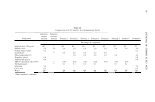
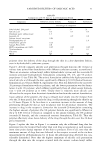
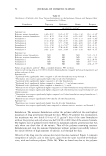
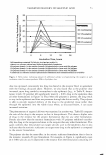
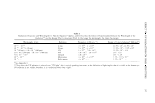
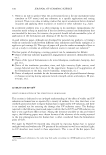
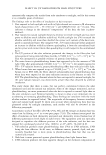
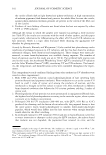
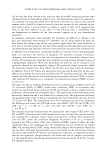
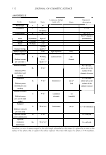
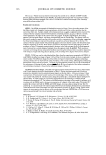
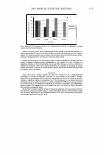
110 JOURNAL OF COSMETIC SCIENCE would be suitable to compare different UV absorbers (some are hydrophobic, some are water-soluble, some are oily substances, some are powders!). While a number of authors made a considerable effort in the comparison of two or more UV filters, there was no straightforward solution to the problem: a system that would work with some UV absorbers would not work for others, making the comparison difficult. It is clear, though, that a number of UV absorbers were shown to "protect" the hair fiber from physical degradation as well as from color degradation. UV absorbers that were specifi cally developed for hair care applications (cationically modified), as well as vehicles that would impart affinity to the hair to oil-soluble sunscreens, showed effectiveness and ease of application. A different approach to photoprotection is offered by the evidence that shows that artificial hair color (permanent or not) protects the hair's mechanical integrity from the damaging effect of light (VIS or UV). Another note of considerable importance is the possible, and in many cases probable, lack of correlation between the radiation emitted by the sun and that emitted by the solar simulator. More importantly, it is known that even small differences, at very high energy frequencies (UV), can result in big differences in results when comparing the effect of natural light exposure to that of artificial light. A comparison between the irradiance or irradiation energy used by the different authors whose articles are reviewed is shown in Table IV. The values were converted into SI units and, where it was not reported by the authors, the irradiance was transformed into irradiation energy and vice versa, thus simplifying the task of comparing different exposure conditions. It is important to note that although it may appear that some of the exposure conditions for solar simulators are similar to the irradiation energy coming from the sun for a period of a few days or a few months, this table does not mean to imply that equal radiant energy of exposure is a guarantee of realistic results (i.e., in vitro = in vivo). Since it is useful to present some hypothetical cases of exposure to sunlight, the follow ing cases are rough approximations of possible exposures and are all the result of calculation and not actual measurements: 1. Spending all day outdoors in a sunny week of summer: between 70 x 106 and 140 x 106 J m- 2 week- 1 (UV-VIS-IR) and 6 x 10⁶ J m- 2 week- 1 (UV only). 2. Spending half a day outdoors: approximately 60 x 106 J m- 2 week- 1 (UV-VIS-IR) and 3 x 10⁶ J m- 2 week- 1 (UV only). 3. Spending only a few hours per day outdoors, probably in the later afternoon and evening: approximately 20 x 106 J m- 2 week- 1 (UV-VIS-IR) and 1.15 x 10⁶ J m- 2 week- 1 (UV only). Most of the authors used reasonable exposure conditions, although the only real way to know would have been to carry out a parallel test using natural sunlight. Most of the irradiation energies used in the studies reviewed were in the same order of magnitude as the exposure for a whole year (case 1 calculated above). For future experiments involving hair photoprotection, it would be advisable to carefully balance the steps in the testing protocol to reflect a reasonable amount of UV-VIS radiation and moisture and to allow for the hair to be washed with shampoo and perhaps treated with a rinse-off conditioner, in order to achieve a higher degree of confidence for the correlation of laboratory versus real-life conditions. Despite the many differences in approach that the different authors chose to adopt, there is an overall agreement on what the most important factors are in hair photodamage.

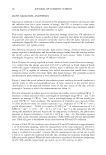
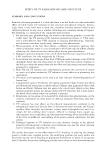
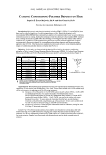
EFFECT OF UV RADIATION ON HAIR STRUCTURE APPENDIX I Planck's equation: E= energy of one photon (J) h = Planck's constant (6.62 x 10⁻³⁴ J s) v = frequency of radiation (s-1 also Hz) Also: A = wavelength of radiation (m) c = speed of light (3 x 10⁸ m/ s) Therefore: Also: E=hv v = c/A E = (h c)/A energy per molecule E' = NA (h c)/A energy per mole Where NA is Avogadro's number (6.022 x 10²³ mol-1) and E' is expressed in J mol- 1 The relationship between wavelength (nm) and E'(kJ mol'l) can be summarized: A (nm) = 11.96 104 / E' (kj/mol) N.B.: 1 cal = 4.184 joule Prefixes for units 1Q6 103 10-2 mega kilo (k) centi (c) Some conversion factors 10-3 10-6 lQ-9 milli (m) micro(µ) nano (n) 111 1 KJ cm-2 = 107 J m-2 1 J cm-2 = 104 J m-2 1 mW cm-2 = 10 W m-2 1 day = 86400 sec
Purchased for the exclusive use of nofirst nolast (unknown)
From: SCC Media Library & Resource Center (library.scconline.org)