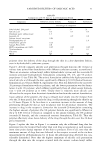
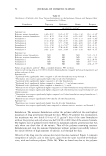
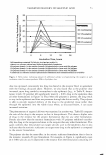
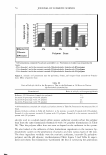
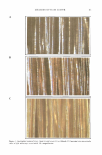
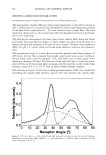
108 JOURNAL OF COSMETIC SCIENCE The following points summarize the results presented in this paper: 1. Gray hair changes color, turning yellow upon exposure to UV radiation. CATC effectively prevents gray hair from changing color when compared to the untreated samples. 2. Brown hair treated with CATC changes less in color (photobleaching) than the untreated, UV-exposed sample. 3. The OMC-treated hair was substantially less protected from UV radiation, with results more similar to the untreated hair than to the CATC-treated hair (OMC deposited on the hair in much lower concentration than CATC from the test for mulation studied). The test hair samples were analyzed for changes in color, wet combing force, tryptophan concentration, cuticle abrasion, and change in contact angle. 4. When the treated hair tresses were tested for tensile strength (Young's modulus and stress-to-break), all four hair tresses tested (not exposed to UV, CATC + SLS, OMC + SLS, and SLS alone) scored with approximately the same difference, from one to the other. The most damaged was the SLS-treated hair, and the least was the unexposed CATC + SLS gave more protection than OMC + SLS. A similar trend was observed when transverse swelling was measured. 5. Hair tresses pretreated with SLS + CATC, and irradiated with UV, showed improved wet compatibility when compared to the unirradiated samples. 6. Gray hair is more sensitive to UV-induced damage than dark brown hair. This study investigates the properties of two UV absorbers that have different solubility and intrinsic charges it is not surprising that OMC performed quite differently from CATC in the tests described. The mechanism of deposition of the UV absorbers onto the hair was not described by the paper, but it is reasonable to assume that the mechanism would involve both hydrophobic forces (OMC, CATC) as well as ionic interactions (CATC). It is interesting that although OMC was solubilized by the surfactant system, it did show some degree of efficacy in some of the experiments. A totally different approach to photoprotection was investigated by Pande et al. (20). They investigated the role of hair dyes (oxidation, as well as direct dyes for hair color) in the photoprotection of human hair (as monitored by tensile strength measurements). The total irradiation time was between 96 hr and nine days (13.9 kJ cm- 2 , 31.2 kJ cm - 2 ), depending on the dye product investigated. The instrument used was an Atlas Fadeometer Ci35A, 50°C, 50% RH. The data presented in this article showed that natural unpigmented hair (Piedmont) is more damaged by irradiation than naturally pigmented hair (brown). In addition, hair color (artificial) does provide protection from UV-VIS irradiation in all cases, the darker the color shade, the more the protection. A distinct difference was also identified between oxidation hair color and direct hair color. The testing protocol used involved subsequent cycles of hair dying and shampooing, which is very appropriate when studying the fading behavior of artificially colored hair, even if the dyes used are oxidation colors (oxidation dyes are usually considered to be less prone to fading by shampoo however, red shades are more sensitive to it than dark shades). Another aspect to keep in mind is that while oxidation colors have the ability to penetrate completely though the hair fiber, direct dyes do not always penetrate much into the fiber. Depending on the depth of the shade, this may have a substantial impact on the results of irradiation. A direct dye that has heavily deposited on the surface of the hair fiber may act as an effective screen for any radiation to penetrate into the fiber, thereby protecting it.

EFFECT OF UV RADIATION ON HAIR STRUCTURE 109 SUMMARY AND CONCLUSIONS From the discussion presented it is clear that there is no real doubt as to the undesirable effect of visible and/or UV radiation on hair structure and physical integrity. Surpris ingly, there is very little data to show the correlation between natural radiation and artificial radiation. In any case, a number of findings are consistent among all reports. The following is a summary of the commonly shared results: 1. For the most part, photobleaching, the attack to the melanin granules, is caused by visible light the UV portion of the radiation promotes/accelerates it. UV A radia tion is more effective than UVB radiation in inducing photobleaching. Humidity and moisture contribute significantly, enhancing this phenomenon. 2. Photo-oxidation of the hair fiber follows a different mechanistic pathway than chemical oxidation water is a crucial medium in which free radicals diffuse, thereby enhancing the chemical reactions taking place during photodegradation. 3. Damage to protein and lipids in the cuticle of the hair fiber are caused by UVA and UVB irradiation, but only marginally by VIS rays. 4. It was shown that irradiation of hair with UVB light induces damage to the Sl003A disulphide bonds that link this protein to the rest of the hair matrix, resulting in the ability to elute the protein from the hair fiber and indicating structural damage produced by irradiation. 5. Both VIS and UV radiation can, independently, promote the conversion of cystine to cysteic acid (photo-oxidation) UV radiation is more effective at promoting this degradation. 6. The amino acid tryptophan can be used as an early indicator of photodegradation of human hair. 7. Unpigmented (gray or Piedmont) and lightly pigmented (light brown) hair fibers are substantially more prone to photo-induced damage than pigmented fibers (dark brown and black). Melanin does not protect the cuticle layer (which is free from melanin granules) against the damage induced by UV radiation, but it does protect the whole fiber (cortex, where the melanin is present). 8. Eumelanins are less prone to be degraded by irradiation than pheomelanins on the contrary, eumelanins are more prone to chemical oxidation (bleaching) than phe omelanin. 9. UV radiation has clear effects on the physical measurements correlated to the strength and integrity of the hair fiber: it decreases the stress-to-break, the Young's modulus (fiber strength), and dynamic contact angle (hydrophobicity), and it in creases the wet-combing force (coarser, difficult to manage hair), copper up take (negative sites in the fiber), and the transverse swelling of the hair fiber (index of the level of unaffected cross-linking of the proteic matrix constituent, the hair cortex). 10. Prolonged exposure to UV radiation can cause dramatic changes to the physical properties of human hair in extreme cases irradiation can cause the whole cuticular layer to disintegrate, exposing the cortex. The studies that report on the effectiveness of UV absorbers in reducing the damage present a rather more complex picture the underlying problem that every author was faced with was the one of choosing an appropriate formulation in which to incorporate the UV absorber. Even more challenging was the choice of one or more formulations that
Purchased for the exclusive use of nofirst nolast (unknown)
From: SCC Media Library & Resource Center (library.scconline.org)