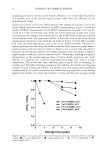
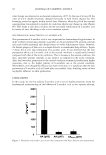
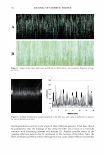
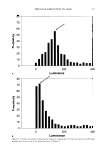
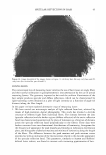
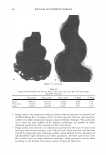
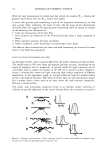
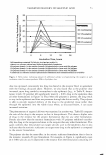
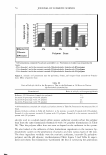
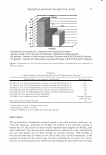
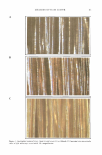
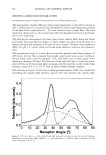
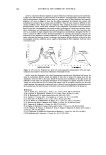
A B SPECULAR REFLECTION IN HAIR 35 11,t1·j,"•, 'l ·1·,:, ,i\Ji'1 I � ,.., • i ''ii' :�•t· . . •I •:1 , · . : l j 'l ' 1 � ' ! } t I', 1 '. 1 ' ' ,:1' , ! ' , I I d . · \ . i t .... , 1 ,. . ' ,, ' • \ I • !I . I '.II 1: . . . . I • ' : • 1,, I I •• • 1 ' , i � • ' ••• • ' •:. , ' , 1 •, I , : . f • . t •, • , ·t ' ·,. i i' r. I . . ,i • ·, . 11 I.·. ·Ir•l ·•1' . .!!-.· ,1 ',l\.i• :, I,' •• I, •• ,�: ,.,. {!'11 . .;. •, :! !.1 1 1 · •• ;.' I t · 1 •· • , • t , ·• ' I \ :, I 'I ·, · ·1 � • , • i , • 1 • • 1 • · , t • • · •· ·t l .' \ . •, I • I I • : I. • ( •• � I' ' � l � . j. 1 · ' • I ,· ' � ' -� . • • . ' • l � . .. . I . i . j ' . ·J '.• . , r . . . f . • : . . \I• t • • • ,,. . • \ ' • • • • I • 1· . · ,·• .,· 1·1··. .. ,i .,•:1,,•.··,,! 1 1\· ·.·t·,." ':· .. :·,·. ,i, · �•�lkf•t• ·•it .,l , ·r.l f 'it l .1 : I I ' ' . • l l .• : J -. ' 1: ... • . I I I. . I . I I •.. , i . lil I, • · • - l , · . 'I '. • , , 1 • ' I I I • l ' e, '• • 0 • 1 ., I ♦ k • i l ·, . . , . \ , ·., . . . : : .,' - \ � i • • j1· .. , " , '. ·, ,. • I I ' . . ' . I • • •• I . • l ♦ l ' • l I • I ' ! i .. I ( I I l ' ! '. , . I l i , • l1 . Ii • I " •• I• ' , \ • . . . . :, • ,:• I! ' •.! I i I .... I • • I · • • 1 t ·.! 1 ' •• / • •: • r � : 1 • 1 • • : • • • • ! • f 1 Figure 4. Images of (A) untreated virgin dark brown and (B) sebum-treated dark brown hair at close proximity. Exposure settings: f8, 1/13s. We also employed image analysis to measure the distances between neighboring mi croreflection centers along the length of fibers. This was accomplished by scanning an image with vertical lines (in contrast to the analysis above with horizontal lines) that were one pixel wide and whose length depended on the length for a particular vertical series of microreflection patterns. The lines were drawn manually with Sigma Scan Pro 5 .0 to ensure that each light intensity plot contained a series of microreflections along a given fiber. After drawing anywhere from 169 to 308 lines, depending on the nature of the image examined, we exported the light intensity data to a text file that could be further analyzed with MathCAD 2001. We then used macros within MathCAD 2001 to determine the distance between neighboring peak maxima for each vertical line in the scanned image. Histograms were then constructed in order to examine the frequency of appearance for the peak maxima data in which a bimodal distribution for each type of hair examined was observed. As an example, Figure 9 contains a histogram for dark brown hair in which the bimodality of the distribution can be observed at distances between peak maxima of 81 µm and 145 µm. Further, Table II provides the frequency of appearance of the peak maxima distances as well as the total sample population of peak maxima distances for various types of hair. Overall, the data shown in Table II suggest that the distances between the reflection centers fall somewhere in the range of 81-145 µm. In almost all cases, the distance between peak maxima of 81 µm occurs with greater frequency than that of 145 µm. In addition to the data presented above, we also examined untreated dark brown hair and the same hair treated with artificial sebum, as shown in Table III. For both peaks, the effect of sebum treatment on the separation distance appears to be negligible and within the experimental error of the calculated average values.

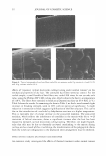
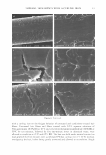
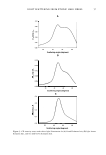
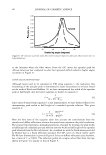
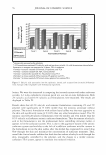
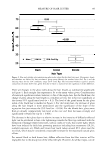
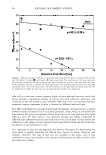
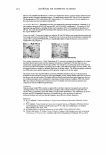
36 JOURNAL OF COSMETIC SCIENCE A B Figure 5. Images of (A) virgin dark brown and (B) natural white hair at close proximity. Exposure settings: f8, 1/13s. 300 250 GI 200 C C 150 .E 100 50 a a 5 10 15 20 25 30 Distance (rnn) Figure 6. Example of luminosity analysis horizontal to the fiber axes with a plot of luminance-vs-distance for one of the horizontal lines. Several possibilities exist as to the origin of these reflection patterns. le has been shown by profilomecry that the topology of hair along the fiber axis consists of a wave-like structure with alternating maxima and minima (2). Another possible source of the complex reflection pattern may be attributed to the twisting of the fibers. Since the fibers are elliptical, reflection from the larger face may cause greater reflectivity than chat
Purchased for the exclusive use of nofirst nolast (unknown)
From: SCC Media Library & Resource Center (library.scconline.org)