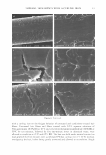
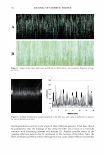
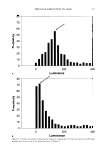
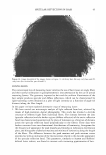
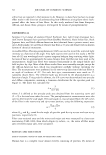
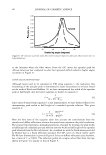
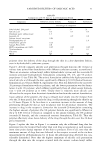
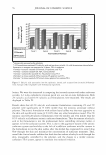
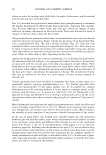
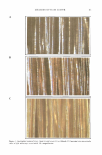
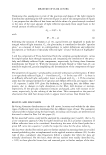
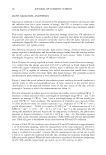
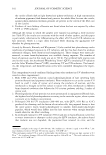
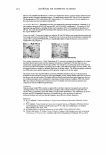
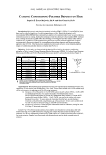
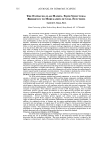
SPECULAR REFLECTION IN HAIR 33 Figure 2. (A) Image of dark brown untreated hair at close range with a Nikon 35-mm SLR camera. (B) Magnification of the inset shown in Part A. exported to a text file and further analyzed with Mathcad 2001 where the luminance values for the various peak maxima and minima were automatically determined by written macros. Each plot of luminance-vs-distance results in two histograms, showing

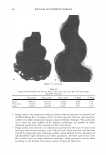
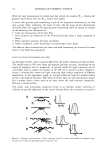
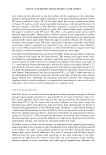
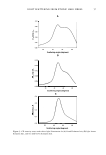
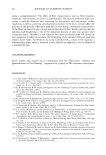
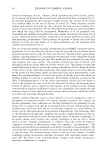
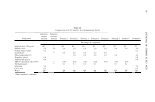
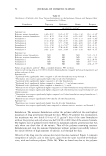
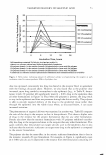
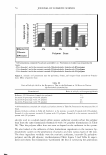
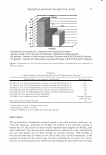
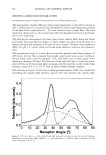
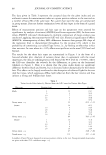
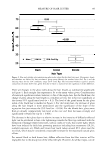
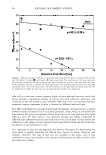
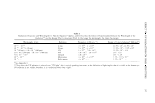
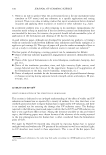
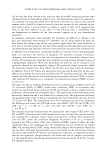
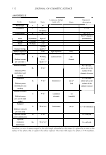
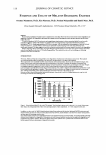
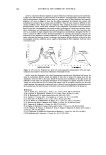
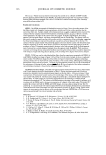
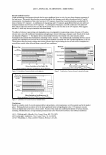
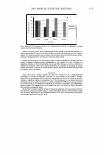
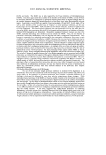
34 JOURNAL OF COSMETIC SCIENCE Figure 3. Image of a human subject's hair in which case reflection is a result of incident natural daylight. the distribution of the peak maxima (Figure 7 A) and peak minima (Figure 7B) in which the frequency of occurrence is plotted as a function of luminance. For each of the 250 maxima and minima histograms, we recorded the luminance value chat occurs with the highest frequency. Such data can be plotted as a function of the position of a horizontal line along the tress, as shown in Figure 8 for both maxima and minima. As expected, the peak maxima histograms provide larger luminance values than the peak minima. Also, a large peak occurs in the peak maxima curve corresponding to the region of the tress where the highest intensity specular reflection band occurs. A smaller peak is also evident for the peak minima curve. Taking the difference between the peak maxima and peak minima curves provides us with an indication of the microcontrast related to the doc-like appearance of the specular reflection band. Table I lists integrated values for the maximum, minimum, and difference curves for various types of hair. The integrated luminance parameters collected in Table I show that the microcontrast, based on the values of [Luminance(max) - Luminance(min)}, increases for hair with greater amounts of pigmentation. For example, dark brown hair provides greater con trast within the specular reflection band than natural white hair. This is in agreement with previous work, which also reported an increase in hair luster for darker hair (see Table I). This was ascribed primarily to higher contrast between the specular and diffuse reflections, which corresponded to different parts of an illuminated hair tress (1). The data presented in Table I suggest that the contrast calculated for doc-like highlights and shadows within the specular band follows the same trend and could be employed for the assessment of hair luster.
Purchased for the exclusive use of nofirst nolast (unknown)
From: SCC Media Library & Resource Center (library.scconline.org)