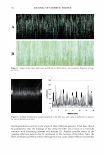
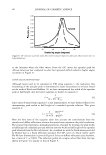
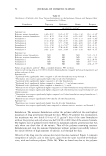
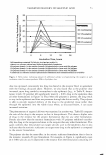
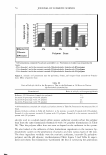
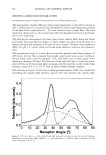
50 JOURNAL OF COSMETIC SCIENCE ethnic hair are reported in the literature (6-8). However, to date there has been no major effort made in the direction of understanding how differences arising from ethnic back ground affect the luster of hair fibers. In this study unaltered hair from European, African, and Asian ethnic groups is investigated by means of goniophotometry. EXPERIMENT AL Samples (15-cm-long) of unaltered blond Piedmont hair, light brown European hair, dark brown European hair (purchased from DeoMeo Brothers), black Indian hair, black Japanese hair, and black African-American hair (obtained from a private source) were used. Additionally, we used black Chinese hair from a 35-year-old female with no known history of chemical treatments. A modified Brice-Phoenix goniophotometer (GP) was used to record the scattered light intensity as a function of the angle. Two light sources were used in this study: a He-Ne laser of 632-nm wavelength and a quartz tungsten halogen lamp emitting white light. Sections of hair at approximately the same distance from the fiber root were used in the measurements. Single hair fibers were mounted horizontally in the sample holder and held in place by clips. Most of the fibers studied here were naturally straight, except for the African-American hair, which was straightened carefully without extending the fiber. The measurements were performed in the root-to-tip direction of the hair fibers at an angle of incidence of 45°. For each hair type, measurements were made on 25 randomly chosen fibers. The reflected light was detected by the photomultiplier as a function of angle. Using peak-fit software, the GP curve was deconvoluted into specular and diffuse components, assuming a Gaussian distribution for the specular peak (see Figure 1). The luster was calculated by s L=-- (S +D) (1) where S is defined as the specular peak area obtained from the scattering curve and (S + D) is the total area under the curve. The goniophotometric measurements were also used to determine the scale angle. The scale angle, a, was calculated from the GP curves of the fiber in the root-to-tip and tip-to-root position, using the following expression: 8TR - 8RT a=--- (2) 4 where 8 7R and 8RT stand for the angle of specular peak for tip-to-root and root-to-tip positions, respectively (9). Fiber cross-sectional areas and the minor and major axis were measured by a laser scan micrometer (LSM-3100), from which ellipticity indices, i.e., the ratios of fiber major axes over fiber minor axes, were calculated. RESULTS AND DISCUSSION EFFECT OF ETHNIC ORIGIN OF HAIR ON FIBER STRUCTURE Human hair is a complex tissue almost entirely consisting of proteins. By means of

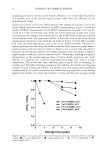
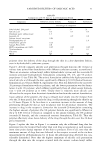
LIGHT SCATTERING FROM ETHNIC HAIR FIBERS 0.02 O.Q15 --:- 0.0 125 ➔···· ········································ ······ :::::, � j 0.01 C QJ - 0.0075+···················· ·· 0.005 0.0025 20 40 60 Scattering angle (degrees) 80 51 Figure 1. A typical goniophotometric curve and its deconvolution into specular and diffuse components. electrophoresis, the chemical composition of the hair proteins has not been found to depend on racial origin (7). Yet, a significant variation is found in the morphology of the hair of different ethnic groups. Generally, the hair fiber can be qualitatively divided into distinct regions such as the outermost cuticle layers, inner cortical cells bonded together with the cell membrane complex, and the porous medulla. However, depending on the ethnic origin, the relative dimensions of these layers could differ significantly. The outermost cuticle, consisting of flat overlapping scales is influenced by the sur rounding environment and surface modifying treatments that cause the thinning and fusion of the surface cuticle cell (10). These changes have a significant effect on the optical properties of hair. The cuticle of European and Asian hair consists generally of six to eight layers, whereas the cuticle of African-American hair has a variable thickness with six to eight layers at the ends of the minor axis of the fiber and only one to two layers at the ends of the major axis (11). In this region the structure is weakened and vulnerable during grooming procedures. The structure of the medulla can appear as a continuous or a discontinuous channel, with significant differences in the packing of the medullary cells. It is important to note that in some cases the medulla is completely absent. Often, the absence of the medulla occurs for fine hair with a small diameter, whereas for medium- and large-diameter hair the medulla is generally present (the diameter of hair fibers varies from 40 to 100 µm). Thus, as the diameter of the hair can be related to its ethnic background, as shown below, the amount of medullation can change as well. The medulla is known to have a large effect on optical properties and hair shine (12).
Purchased for the exclusive use of nofirst nolast (unknown)
From: SCC Media Library & Resource Center (library.scconline.org)