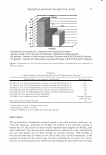
SPECULAR REFLECTION IN HAIR 47 In our subsequent work we would like to explore the effect of styling, conditioning, and special treatments on the luster of hair, utilizing mannequin or human model heads. We believe that digital photography and image analysis coupled with data analysis, similar to that presented in this paper, could lead to a quantitative luster evaluation in natural hair assemblies. REFERENCES (1) R. McMullen and J. Jachowicz, Optical properties of hair: Effect of treatments on luster as quantified by image analysis,]. Cosmet. Sci, 54, 335-351 (2003). (2) M. Zielinski, A new approach to hair surface topography: Fourier transform and fractal analysis,]. Soc. Cosmet. Chem., 40, 173-189 (1989). (3) S. Nagase, N. Satoh, and K. Nakamura, Influence of internal structure of hair fiber on hair appearance. II. Consideration of the visual perception mechanism of hair appearance,]. Cosmet. Sci., 53, 345-361 (2002) Proceedings of the 12th International Hair-Science Symposium of DWI, Heidelberg, Germany, September 2001. (4) G. Sendelbach, M. Haller, C. Springob, and H. Schmidt, Hair luster measurements via image analysis and its use for cosmetically altered hair, Proceedings of the 12th International Hair Science Symposium of DWI, Heidelberg, Germany, September 2001.

J. Cosmet. Sci., 55, 49-63 CTanuary/February 2004) Studies of light scattering from ethnic hair fibers K. KEIS, K. R. RAMAPRASAD, and Y. K. KAMATH, TRI/Princeton, P.O. Box 625, Princeton, NJ 08542. Accepted for publication October 16, 2003. Synopsis One of the most desirable hair attributes to consumers, irrespective of ethnic background, is hair shine. The light reflected from a fiber has two components, specular and diffuse. The specular fraction of reflected light from the front surface of the fiber is generally recognized as a contributor to high luster. The distinction between specular and diffuse reflection is, however, not always clearly defined. In this study an attempt has been made to differentiate between specular and diffuse reflectance by analyzing mathematically goniopho tometric curves of light reflected from unaltered single hair fibers from European, African, and Asian ethnic groups. The effect of macroscopic characteristics of the hair fibers, such as fiber diameter, cross-sectional shape, and curvature on luster is demonstrated. Results indicate that broadening of the specular peak reduces luster values, and is related to these characteristics. Thus, specular peak broadening is one of the important features to take into account when evaluating luster. Therefore, a new method for luster evaluation from goniophotometric curves is proposed. Additionally, we present the general model for light scattering, showing how scattering by surface roughness of different origin and magnitudes, and the scattering and absorption processes by the hair's interior, affect the position of the specular reflectance peak and its broadening. INTRODUCTION During the last decade the cosmetic industry has increasingly formulated personal care products to meet the needs and expectations of ethnic consumers. For example, con sumers of African origin generally prefer straight hairstyles. As a result, they depend heavily on heat and chemical treatments to relax their hair, which result in significant damage to the hair. Therefore, multifunctional products are required to condition, balance moisture, repair damage, and add shine to the hair. Hair care products aimed at Asian and European consumers are required to endow different attributes, where addi tives to add shine to hair are also of primary importance. Obviously, shine is one of the most desirable hair attributes to consumers, irrespective of ethnic background. Generally, at TRI light scattering curves from goniophotometric measurements on single hair fibers are used to evaluate hair shine. In addition to quantitative information about hair shine, this method is also capable of providing information about the changes in hair shine due to product deposits and surface damage by various cosmetic treatments and combing (1-5). Apart from other factors, the appearance of hair and its shape is influenced by its ethnic origin. The differences in morphology and composition of some 49
Purchased for the exclusive use of nofirst nolast (unknown)
From: SCC Media Library & Resource Center (library.scconline.org)