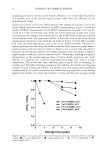
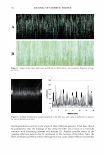
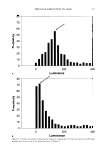
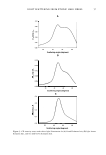
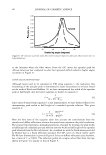
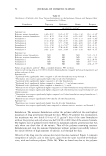
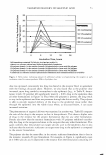
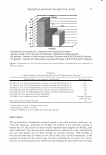
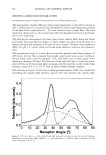
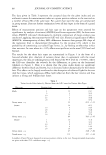
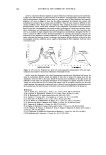
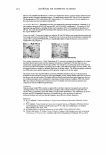
54 JOURNAL OF COSMETIC SCIENCE With the laser illumination the Indian hair had indeed the smallest W112 , whereas for Japanese and Chinese hair the W112 values were higher. It seems that specular peak broadening is one of the important characteristics to take into account when evaluating the luster of hair. On the basis of our observations described above, we suggest that specular peak broadening could be related to changes in the following hair characteristics: 1. Color (or transparency) of the hair fiber 2. Fiber diameter and ellipticity (if the illuminating light beam is larger compared to fiber) 3. Fiber curvature (presence of twists and kinks) 4. Surface roughness, either microscopic or macroscopic (scale angle) The effect of these characteristics on luster and peak broadening are discussed in more detail in the following paragraphs. EFFECT OF SURFACE ROUGHNESS ON LUSTER As mentioned earlier, luster is greatly affected by the surface condition of the hair fiber. The modification in GP curve shape and angular position can arise, depending on the origin of roughness and its magnitude. A general model for light scattering can be successfully used to explain the changes in the GP curve caused by surface roughness. Figure 2 schematically shows the light scattering from surface roughness of different magnitudes. In the uppermost graph, A, specular reflection from the smooth surface occurs at the angle of incidence. Hair fiber can reflect light in a specular manner, almost like a mirror, when a shine spray or oil layer covers the scale structure completely, forming a smooth surface. The surface with microscopic roughness results in an isotropic surface scattering in addition to specular reflection. In the case of the hair fiber, this situation is caused by Figure 2. Schematic representation of light scattering model for surfaces with different roughness mag nitudes and its effect on goniophotometric intensity scan.

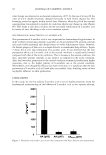
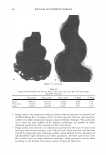
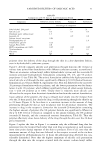
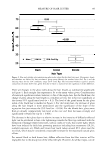
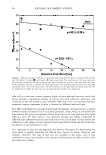
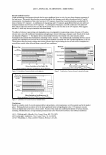
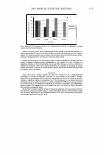
LIGHT SCATTERING FROM ETHNIC HAIR FIBERS 55 very small particles deposited on the hair surface and by roughness on the scale faces. Isotropic scattering from the surface contributes to the peak broadening observed in the GP curve as shown in Figure 2B. On the other hand, macroscopic roughness as shown in Figure 2C leads to a light scattering profile dominating in the forward direction. In this case, change in direction of the reflection maximum is caused by the macroscopic roughness (scale structure) and results in a peak shift towards higher angles compared to the angle of incidence in the GP curve. This effect is of a general nature and is indeed observed experimentally. Theoretically, a further increase in the magnitude of surface roughness can lead to backward light scattering, which would result in an angular peak position shift toward angles lower than the angle of incidence (Figure 2D). In order to introduce such changes in the GP curve, large particle deposits or extreme scale lifting is necessary, which is generally not observed in the case of ordinary hair. However, tip-to-root (T-R) measurements will lead to a shift of the GP peak to angles lower than the angle of incidence because of back scattering from the scale edges. Our experimental data allowed us to evaluate the effect of macroscopic surface roughness in the form of scale angles on GP characteristics. The average scale angle values calcu lated from the goniophotometric intensity scans from root-to-tip and tip-to-root posi tions are shown in Table I and can be summarized as follows: The lowest scale angle of 2.3° was found for African-American hair, whereas the highest scale angles (around 3.7°) were found for Chinese, Indian, and Japanese hair. The medium scale angle (around 2.9 ° ) was found for European hair independent of pigmentation level (blond, light brown, and dark brown). Examination of the data on luster and W112 in Table I shows that there is no relationship between these parameters and the scale angle within the range of scale angles studied here. Although the foregoing discussion indicates that microscopic roughness leads to peak broadening, its quantitative contribution to this could not be evaluated at this time but will be attempted in a separate study. EFFECT OF COLOR ON LUSTER Hair fiber derives its natural color from polymeric melanin pigment existing as discreet round-to-oval granules (length 0.4-1 µm, breadth 0.1-0.5 µm) in the hair cortex (15). The natural pigment shows semiconductor-like optical properties and absorbs/scatters light from UV to the IR region and has great influence on hair shine. Luster for European hair under monochromatic laser and white light illumination was found to increase with pigmentation in the following order: Piedmont light brown European dark brown European hair (see data in Table I). This is in agreement with other studies where the gradual increase in luster is found to be dependent on pigmentation either by melanin or dyes (16,17). We note that the dependence in absolute value of luster on the illuminating light source is caused by differences in light beam characteristics and other instrumental settings, and will not be discussed within this study. The effect of color on luster can, for instance, be explained by the general light scattering model described in the previous section. In addition to rays being reflected and scattered at the surface, the light is also partially refracted into the fiber. Retracted light may emerge after several internal reflections. The light so emerging and the light directly reflected from the outer surface both contribute to the total scattering by the fiber. Scattering of light from the interior of the fiber can occur because of the medulla, melanin granules or voids, inclusions, and other optical imperfections. Basically, the
Purchased for the exclusive use of nofirst nolast (unknown)
From: SCC Media Library & Resource Center (library.scconline.org)