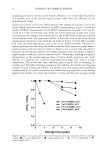
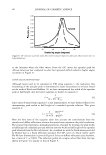
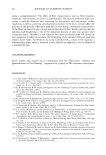
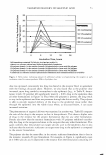
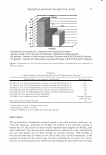
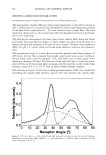
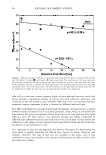
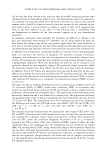
MEASURE OF HAIR LUSTER 91 In practice, hair shine is a very complex phenomenon (16,24), which involves physical, physiological, and psychophysical considerations. Gv on the other hand, provides an absolute, numerical scale. In this view, it has to be noted that consumer perception cannot be expected to follow an equisense scale in which a unit of difference indicates an equal sensory difference in luster (3). In practice, an expert or a consumer will generally rank product performance in a contrast situation (half-head test, before-vs-after, product A vs product B, etc.) relating to relative changes of appearance ( 4), rather than work on the basis of ordinal sensory units. As was shown in small scale panel tests (18,25), these rank differences appear to be closely related to the laboratory situation of gloss testing of single hair fibers described here. However, a somewhat more comprehensive argument for the feasibility of the gloss index to model the assessment of hair luster by a consumer panel is derived from the extensive investigations by Reich and Robbins (11). They found a linear relationship between the inverse of the width of the GP curve at half height and the luster ranking by panels. Applying the data given in Part I (1) for the pos1t10ns and widths of the Gaussian distributions describing specular and diffuse reflection, theoretical GP curves were calculated on the basis of equation 3, assuming the presence of Sand D5 only, for a wide range of GL values. Finally, the width at half-height w of the theoretical GP curves was 12--,....._.........,--,---.,---.,-,.---.-----------.------------ C' 10 "ii 8 ::c (;f � d 1a .c , p J -i ' 0 4 C, Q T'" , 0 2-----------------......----------"' 0 20 40 60 80 100 Gloss Index In % Figure 5. Inverse of the width at half-height for calculated GP curves on the basis of a presumed value for the gloss index. The largely linear relationship for GL values beyond 25% is indicated by the straight line.

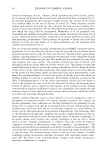
92 JOURNAL OF COSMETIC SCIENCE derived. Figure 5 shows the relation between the data derived in this manner for 1/w and the presumed gloss index values. When appreciable hair gloss is generated, i.e., when the peak for specular reflection starts to dominate the GP curves, which occurs around GL 20-30%, a largely linear relationship is observed, as marked in Figure 5, which corresponds to Reich and Rob bins' observation (11). In this view, the hypothesis that the gloss index is a valid measure for hair luster that correlates with the consumer's perception of hair shine is further corroborated. Furthermore, more elusive facets related to hair gloss, such as "silky" or "greasy" hair shine, are the objective of current investigations. REFERENCES (1) F.-J. Wortmann, E. Schulze zur Wiesche, and A. Bierbaum, Analyzing the laser-light reflection from human hair fibers. I. Light components underlying the goniophotometric curves and fiber cuticle angles,]. Cos1net. Sci., 54, 301-316. (2) R. S. Hunter, Methods of determining gloss (RP958),J. Res. Nat. Bur. Stand., 19, 19-39 (1937). (3) D. Nickerson, A new cotton luscermeter for yarns and fibers, Text. Res.]., 27, 111-123 (1957). (4) S. Nagase, N. Satoh, and K. Nakamura, Influence of internal structure of hair fiber on hair appearance. II. Consideration of the visual perception mechanism of hair appearance,]. Cos1net. Sci., 53, 387--402 (2002). (5) R. F. Stamm, L. M. Garcia, and J.J. Fuchs, The optical properties of human hair. II. The luster of hair fibers,]. Soc. Costnet. Che1n., 28, 601-609 (1977). (6) W. Czepluch, G. Hohm, and K. Tolkiehn, Gloss of hair surfaces: Problems of visual evaluation and possibilities for goniophotometric measurements of treated strands,]. Soc. Cos1net. Che1n., 44, 299-318 (1993). (7) C. Scanavez, M. Zoega, A. Barbosa, and I. Joekes, Measurement of hair luster by diffuse reflectance spectrophotometry, J. Cos1net. Sci., 51, 289-302 (2000). (8) C. Zviak and C. Bouillon, "Hair Teatment and Hair Care Produces," in The Science of Hair Care, C. Zviak, Ed. (Marcel Dekker, New York, 1986). (9) I. van Reech, V. Caprasse, S. Postiaux, and M. Starch, Hair shine: Correlating instrumental and visual methods for measuring the effects of silicones, IFSCC Mag., 4, 21-26 (2001). (10) M. S. Starch, Screening silicones for hair luster, Cos1net. Toiletr., 114, 55-60 (1999). (11) C. Reich and C. Robbins, Light scattering and shine measurements of human hair: A sensitive probe of the hair surface,]. Soc. Cosrnet. Chern., 44, 221-234 (1993). (12) B. M. Reimer, R. L. Oldinski, and D. A. Glover, An objective method for evaluating hair shine, Soap!Cosrnet.!Chern. Spec., 71, 44-47 (1995). (13) Y. Tango and K. Shimmoto, Development of a device to measure human hair luster,]. Costnet. Sci., 52, 237-250 (2001). (14) G. Kigle-Boeckler, Measuring gloss and reflection properties of surfaces, TAPP!]., 79, 194-198 (1996). (15) H. K. Bustard and R. W. Smith, Studies of factors affecting light scattering by individual human hair fibers, Int. J. Costnet. Sci., 12, 121-133 (1990). (16) M. Haller, H. Schmidt, and G. Sendelbach, Measurement of the optical paths oflight in hair, Proc. 21st IFSCC Int. Congress, Poster 42, Berlin, 2000. (17) A. Guiolet, J. C. Garson, and J. L. Levecque, Study of the optical properties of human hair, Int. J. Costnet. Sci., 9, 111-124 (1987). (18) E. Schulze zur Wiesche, Untersuchungen zur haarpflegenden Wirkung von Henna, MSc thesis, DWI, Aachen University of Technology, 1995. (19) R. F. Stamm, M. L. Garcia, and J. J. Fuchs, The optical properties of human hair. I. Fundamental considerations and goniophotometer curves,]. Soc. Cosrnet. Che1n., 28, 571-599 (1977).
Purchased for the exclusive use of nofirst nolast (unknown)
From: SCC Media Library & Resource Center (library.scconline.org)