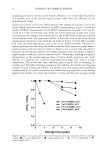
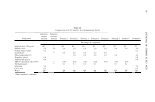
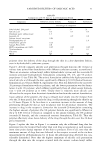
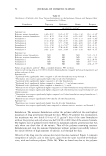
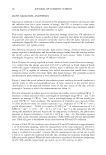
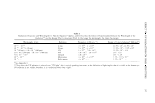
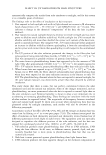
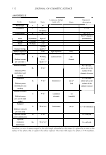
98 Bond C-H C-N C=O C-0 S-S 0-H S-H C-C C=C C-S JOURNAL OF COSMETIC SCIENCE Table II Bond Dissociation Energies (BDE) (4,5) Bond dissociation energy (KJ mol- 1 ) 413 293 707 335 213 463 364 348 619 259 It is important to note that although the BDE gives a good idea of the strength of a chemical bond, in practice, solvation can weaken bonds and cause great deviation from the value reported in this table. Solvation occurs when the "bonds" (molecules) are in a chemical environment where secondary chemical bonds are formed, e.g., H-bonds. As for substrate degradation, the IR portion of the energy contributes to increase the temperature of the substrate.a The energy associated with IR radiation is low compared to UV radiation. When the hair structure is considered, both melanin and the proteins compete for the absorption of light between 254 and 345 nm (7). As this article will review some of the most recently published papers on this subject, it will become clear that although it is not immediately perceived, UV damage to hair fibers plays an integral role in the overall aspects of hair damage. UV-RADIATION SOURCES, SOLAR SIMULATOR SYSTEMS Solar simulators are standard equipment for weathering studies. Although natural light is, in most part, readily available, the seasonal variability and the fact that it is available for only half of the day is a drawback. In addition, solar simulators can be set up to expose the sample to light of greater intensity than natural light. Two major factors need to be considered when using an artificial light source: 1. Correlation between natural solar radiation (visible and non-visible) and the artificial light source. Does the exposure to the artificial radiation produce the same effects on the test material as the exposure to natural radiation does? 2. Acceleration factor (if applicable): How many hours in natural light are equivalent to one hour of radiation exposure in the instrument (or vice versa)? A publication by Q-Panel (3) clearly describes the many aspects of establishing the correlation of real sunlight to artificially generated light and UV radiation. a Q-Panel, private communication.

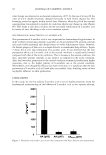
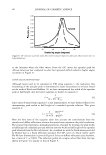
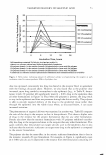
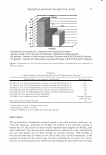
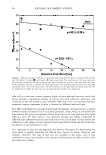
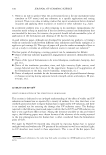
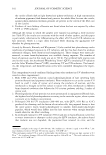
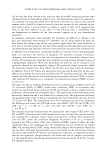
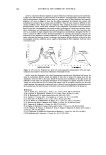
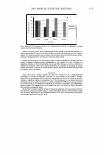
EFFECT OF UV RADIATION ON HAIR STRUCTURE 99 2.0 UV Region Visible Light 1.5 s u I c:: -- � � s 1.0 -- 100 nm � uvc 280 nm UVB 315 nm 0.5 UVA 380 nm ·- Visible 780 nm 0.0 250 350 450 550 650 Wavelength (nanometers) Figure 1. Solar spectral power distribution (Cleveland, OH, at noon, June 1986). Reproduced by permis sion of Q-Panel. The UVC, UVB, and UVA ranges were added by the author. Some important factors in weathering tests are: l. Moisture) condensation) and humidity. They have a great influence on the overall effect of solar radiation on different substrates. 2. Temperature and temperature changes. Photodamage is accelerated and influenced by the temperature of the substrate under scrutiny (also related to the amount of infrared radiation that the sample is exposed to). 3. Spectral distribution of the radiation. Some wavelengths are very crucial for specific materials (capable of breaking specific chemical bonds). The shorter the wavelength the greater the energy of the radiation even small portions of very energetic radiation can have dramatic effects (Table I, Table II). 4. Sun angle. The higher the sun angle the shorter the pathlength of the radiation through the atmosphere. Shorter wavelength radiations are preferentially absorbed by the atmosphere therefore, the higher the sun angle the greater the quantity of shorter wavelengths reaching the earth's surface (3). Table III Spectral Global Solar Irradiance (ASTM G 151) Wavelength range (nm) 300-400 UV 400-800 VIS Irradiance (W m- 2 ) 74.6 604.2 Percent of total 11% 89%
Purchased for the exclusive use of nofirst nolast (unknown)
From: SCC Media Library & Resource Center (library.scconline.org)