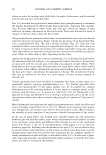
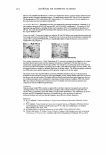
102 JOURNAL OF COSMETIC SCIENCE the cuticle of both dark or light brown hair (photo-oxidation). A high concentration of melanin pigments (dark brown hair) protects the whole fiber, but not the cuticle, against photo-oxidation (melanin granules are present in the cortex of the fiber, not in the cuticle). 4. Evidence of cross-linking of keratin was found when the hair was exposed by either UV A or UVB radiation. Although the energy to which the samples were exposed was perhaps a little excessive (see Table IV), the results are consistent with the work of other authors, and this paper is particularly informative for differentiating the effect of UV A and UVB radiation on hair structure, which is a topic often discussed while choosing the appropriate UV absorber for photoprotection. A study by Ruetsch, Karnath, and Weigmann (11) also studied hair photodamage under conditions of prolonged exposure to UV radiation, and hair has been found to undergo substantial changes, both chemical and morphological. These changes were more pro nounced, as more humidity/moisture was available during exposure. The number of hours of exposure used in this study was up to 700 hr. Two artificial light sources were used in this study: the Accelerated Weathering Testerc (QUV), simulating UV radiation and the Atlas Weather-Ometerd (AW), simulating UV and VIS radiation. The humid ity, the temperature, and humidification cycles were controlled throughout the experi ments. This comprehensive study confirmed findings from other authors (no UV absorbers were tested in these experiments): 1. Both UVB and UV A radiation caused photodegradation of hair involving both proteins (keratin) and pigments (melanin). Photo-oxidation occurs at the cystine C-S bond to yield 1 mole of cysteic acid among the products of reaction, and the mechanism is thought to be free radical in nature ( 12). This mechanism is different from chemical oxidation that follows the S-S scission pathway yielding 2 moles of cysteic acid. 2. Photodegradation of hair proteins was more pronounced in unpigmented/blonde hair, the highest level of photodegradation occurring in the cuticular region, where cystine is present at its highest concentration. 3. Prolonged (700 hr) UV irradiation (290-400 nm, with QUV, 95% RH at 42°C) produced the thinning and the fusion of cuticular cells the proposed theory is that the outer proteic layers would photodegrade to smaller, lower-molecular-weight peptides, which would then diffuse into the hair structure when enough humidity would allow for the fiber's swelling. 4. In prolonged exposure to UV radiation (700 hr) and also to humidification cycles (but no water immersion or shampoo cycles) using the QUV simulator, the authors found that melanin was not degraded, the pigmented hair retained its color, and the c Simulates sunlight in the range of 290-400 nm. The irradiance at 340 nm is equal to 0.97 W m - 2 the total irradiance between 300 and 400 nm was equal to 5.06 mW cm- 2 . cl This instrument emitted UV as well as visible light the irradiance at 340 nm was kept constant at 0.3 Wm ~ 2 the irradiance between 300 and 400 nm was equal to 4.46 mW cm ~ 2 . The total irradiance of this source was 41.272 mW cm- 2 .

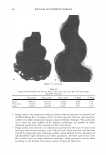
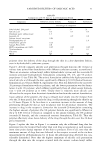
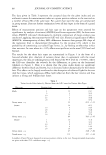
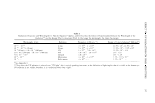
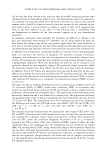
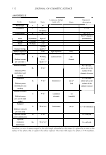
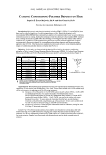
EFFECT OF UV RADIATION ON HAIR STRUCTURE 103 Table IV Summary of Solar Light Irradiation Energy and Power, and Exposure Time and Humidity Used by Several Authors in Their Studies (some quantities were derived to SI units from the quantities reported in the articles). Wavelength Spectral Irradiance range or Reference (nm) Irradiation Energy 300-315 0.7 Wm- 2 nm- 1 Solar radiation 315-380 0.5 - 1.2 Wm-2 nm- 1 Cleveland , OH, June 1986 380-700 1.2 - 1.9 Wm-2nm- 1 IQ-Panel) 300-400 74.6 Wm-2 Spectral Global Solar Irradiance 400-800 604.2 Wm-2 ASTM G151 Renewable Resource Data Center, National Renewable Energy Laboratory UV-VIS-IR 10 106 - 20 106 J m-2day- 1 and Bureau of Meteorology of Australia (Data available on the internet) 6,330 X 106 J m-2year -1 UV-VIS-IR = 520 X 106 J m-2month -1 = 17.3 X 10⁶ J m-2day-1 Q-P anel = 300 x 106 J m-2 year-I (Actual data for Florida, an average of UV = 25 x 106 J m-2month- 1 3 years) = 0,82 x 10⁶ J m-2day- 1 52 % of the total energy is VIS: (Personal Communication) VIS = 3,300 x 106 J m·2 year-I = 270 106 J m-2month-I = 8.9 106 J m-2 day-I IRRADIATION PARAMETERS USED BY THE DIFFERENT AUTHORS Wavelength Spectral Irradiation Source of range Irradiance Energy radiation Comments (nm) (Wm-2) 8 X 10⁴ - Solar (Dubief) Up to 3 months (natural light). 18 x 104 J cm-2 radiations, Up to 360 hr (15 days, 1.3 x 10⁶ s) of UV- VIS 615 - Suntest and exposure to artificial light. 1,384 (8 X 10⁸ - Xenon test Suntest: 40° C, 3-7 % RH 1.8 X 10⁹ J m-2) Xenotest: 25° C, 88% RH 280-350 UVB 2.5 9 X 10⁶ J m-2 320-400 UVA 48 1.8 X 10⁸ J m-2 (Hoting) Total irradiation time 1,008 hr 370-780 VIS 463 1.6 X 10⁹ J m·2 Lamp + filters (= 3.62 x 10⁶ s), 25-48° C at 22-94 % 750-2,800 IR 440 1.6 X 10⁹ J m-2 R.H. 280-1,100 1,037 3.7 X 10⁹ J m-2 Global 300-400 50.6 = 127 X 106 QUV solar (Rutsch) Up to 700 hr exposure (2.52 x UV Jm-2 simulator 106 s), 10-95 % RH, 40°-50° C. 300-400 44.6 = 112 X 106 AW solar Oxidative post treatments and water UV Jm-2 simulator immersion post-treatments. 300-700 412.7 = 104 X 107 (UV+VIS) Accelerated weather testing UV + VIS Jm-2 Atlas weather-Ometer 280-320 UVB 1.4 2.42 X 10⁶ (Gao) 20 days (1.73 x 10⁶ sec), 2T C, 65 Jm-2 Different lamps % RH, treatment repeated every 24 hr. 320-400 UVA 4.9 8.47 X 10⁶ were combined Jm-2 Daylight 139 X 106- Atlas Ci35A (Pantle) 96 hr-226 hr (=9 days), so· C, simulator 178-401 312 X 106 J m·2 50% RH. UV +VIS (up to 0.813 x 10⁶ sec) Daylight Heraeus (Bernhard) Up to 30 days, 50% RH, 25'- simulator 41.3 107 X 106 J m·2 Xenon Test 45' C. 5% Solids of different UV filters. UV+VIS (Up to2.59 x 106 sec) UVB 2.77 107 J m·2 UVB lamo (!novel 100 hr irradiation time Ir is important to note that an equivalence in the energy that the sun is radiating and that of a solar simulator does not necessarily reflect a true correspondence in terms of the effect on the substrate (hair) properties.
Purchased for the exclusive use of nofirst nolast (unknown)
From: SCC Media Library & Resource Center (library.scconline.org)